SOCIALISTS GOING DOWN: Spanish Anti-Corruption Police Raid the Headquarters of PM Sánchez’s PSOE Party in Probe of Illegal Funding
May 27, 2026
Sanchez is mired in corruption scandals all around him
The Spanish Socialists are crumbling under multiple corruption investigations.
Today (24), Spanish anti-corruption police have raided the headquarters of PM Pedro Sánchez’s socialist PSOE party.
This is yet another damaging development in a season of scandals that have sparked talks about the government having to resign and hold snap elections later this year.
I just woke up to the best news ever.
The Spanish police are raiding Dirty Sánchez’s office and those of other members of the Socialist Party.
They also raided the apartments of high-ranking members of the party.
“The agents were sent to secure evidence for an ongoing probe into the alleged illegal financing of the country’s ruling party.
The raid comes just days after the socialist former PM José Luis Rodríguez Zapatero was indicted on corruption charges linked to the Venezuelan regime.
Today’s raid is linked to an unrelated investigation overseen by Spain’s Anti-Corruption Prosecutor.
Many in the closest circle around PM Sanchez, including his wife and brother, are already under criminal investigation for corruption.”
Now there are mariachis at the Spanish Socialist party HQ while the anti corruption police is raiding the offices.
“Spain’s National Court confirmed agents of the Civil Guard’s elite Central Operative Unit (UCO) had been sent to obtain evidence for a probe into a plot to discredit critics engaged in legal proceedings against the government.
It also announced the indictment of Ana Fuentes, who has been in charge of managing the party’s finances since 2021, for her alleged role in that scheme and other fraudulent activities.
According to the National Court’s investigative dossier, first reported by El País, the alleged fraud began in 2024, when Sánchez considered stepping down after growing exasperated with the questionable legal complaints filed against members of his family.
Socialist Party officials are alleged to have spent tens of thousands of euros commissioning individuals to go after the right-wing organizations filing the complaints. Fraudulent invoices were allegedly used to cover up payments made to the party’s agents, who were ordered to ‘systematically obstruct any legal proceedings that could directly or indirectly impact the interests of the government’.”
The back and forth comes after Texas Attorney General Ken Paxton easily defeated incumbent Senator John Cornyn for the Republican nomination.
NEW: President Trump taking a victory lap after Ken Paxton’s GOP Senate primary win in Texas after his endorsement and taking aim at Democrats in the Lone Star State.
“Congratulations to Ken Paxton on such a tremendous win.”
Such rhetoric is a far cry from the days of the Obama presidency, when his wife Michelle famously urged Democrats to take the high ground.
”When someone is cruel or acts like a bully, you don’t stoop to their level,” she said at the time. “No, our motto is: ‘When they go low, we go high’.”
She later explained that Democrats should find “purpose” in their rage.
“For me, going high is not losing the urgency or the passion or the rage, especially when you are justified in it.”
“Going high means finding the purpose in your rage. Rage without reason, without a plan, without direction is just more rage. And we’ve been living in a lot of rage.”
Germany is moving toward what critics are calling a sweeping new form of state influence over online speech, after plans surfaced to force social media platforms to prioritize content from government-approved outlets—raising serious concerns about censorship, narrative control, and the future of free expression in Europe.
According to documents obtained by Apollo News, regulators are preparing a system that would require platforms such as X, Facebook, Instagram, and TikTok to give preferential treatment to content from so-called “reliable” media.
What makes the proposal particularly controversial is not just the intent, but the mechanism. For the first time, state-linked authorities would directly shape the algorithms that determine what information citizens see—effectively inserting government priorities into the digital public square.
At the center of the plan is the concept of “public value” media. In theory, these are outlets that provide socially beneficial information, but in practice, critics argue, they are media organizations vetted and approved by the same political system they are meant to scrutinize.
That distinction is crucial. The power to define what is “reliable” would rest with regulatory bodies tied to the state, not with citizens, readers, or independent market forces.
Once granted this status, approved outlets would receive algorithmic advantages. Their content would be pushed higher in feeds, made easier to discover, and given preferential visibility over competing voices.
The proposal does not stop there. Individual articles and videos could also be labeled as “public value,” creating a two-tier information system where some content is actively promoted while other viewpoints are quietly deprioritized.
Platforms would then be required to adjust their recommendation systems accordingly. In some cases, regulators are even discussing quotas to guarantee exposure for approved content, effectively turning private platforms into vehicles for state-guided messaging.
For many critics, this crosses a fundamental line. It transforms social media from an open marketplace of ideas into a managed information ecosystem shaped by political authorities.
Supporters of the initiative claim it is necessary to combat “disinformation” and preserve democratic discourse.
But that justification is precisely what alarms opponents. They argue that “fighting disinformation” has increasingly become a catch-all rationale for restricting dissent and controlling narratives.
“This is not about removing illegal content,” one observer noted. “This is about deciding which legal speech deserves to be seen—and which does not.”
Critics describe the system as a form of “soft censorship.” Instead of banning opposing views outright, it ensures they are drowned out by state-preferred content.
“It is reverse censorship,” analysts warn. “You don’t delete the message—you just make sure nobody sees it.”
The consequences for independent and alternative media could be severe. Outlets that challenge government policy or question mainstream narratives may find their reach quietly throttled, without any formal accusation or legal recourse.
Meanwhile, established media—many of them publicly funded or closely aligned with political institutions—stand to benefit. Major broadcasters like ARD and ZDF are already positioned to dominate under such a system.
Critics argue that this creates an uneven playing field that undermines genuine pluralism. Rather than promoting diversity of opinion, it risks reinforcing a narrow range of approved viewpoints.
The concept itself is not entirely new. A limited version of “public value” already exists in app stores and smart TV interfaces, where certain outlets are prioritized.
However, extending this model to social media marks a dramatic escalation. Social platforms are now the primary arena for political discourse, making algorithmic control far more consequential.
Under the proposed system, platforms would have to prove compliance. They would be required to demonstrate how they are boosting approved content and aligning with regulatory expectations.
This effectively places private companies under indirect state supervision. The distinction between platform autonomy and government control becomes increasingly blurred.
The authorities behind the proposal are not directly elected. The Commission for Licensing and Supervision (ZAK), composed of heads of state media authorities, would play a central role.
While officially independent, these bodies are deeply embedded within the political system. Their leadership is shaped through processes linked to regional governments and political institutions.
That reality raises fundamental questions about accountability. Who decides what qualifies as “truth,” and on what basis are those decisions made?
The timing of the proposal is also significant. Across Europe, governments are facing growing public pressure over issues like migration, security, and national identity.
These are precisely the topics where alternative media have gained traction. And they are also the areas where authorities appear most eager to regulate discourse.
Critics warn that the new system could disproportionately affect voices calling for stricter immigration policies or remigration strategies. These perspectives, while increasingly popular among voters, often fall outside the boundaries of accepted discourse.
At the same time, support for parties like the Alternative for Germany continues to grow. Many of these movements have built their base by addressing issues that mainstream outlets have been reluctant to confront.
For supporters, the connection is clear. As political alternatives gain ground, institutions are moving to reassert control over the flow of information.
The broader concern is not just about media regulation. It is about whether citizens in Western democracies will retain the ability to freely access and share information outside of government-approved channels.
If algorithms can be shaped to favor certain viewpoints, critics argue, then the very foundation of open debate is at risk. What emerges is not censorship in the traditional sense, but something more subtle—and potentially more effective.
The proposal is still in development. A draft Digital Media State Treaty could be introduced in the coming months.
But the direction is already clear. Germany appears to be moving toward a system where information is not just regulated—but actively curated by the state.
For defenders of free speech, the stakes could not be higher. The question now is whether public pressure will halt this trajectory—or whether Europe will continue down a path toward managed discourse and controlled narratives.
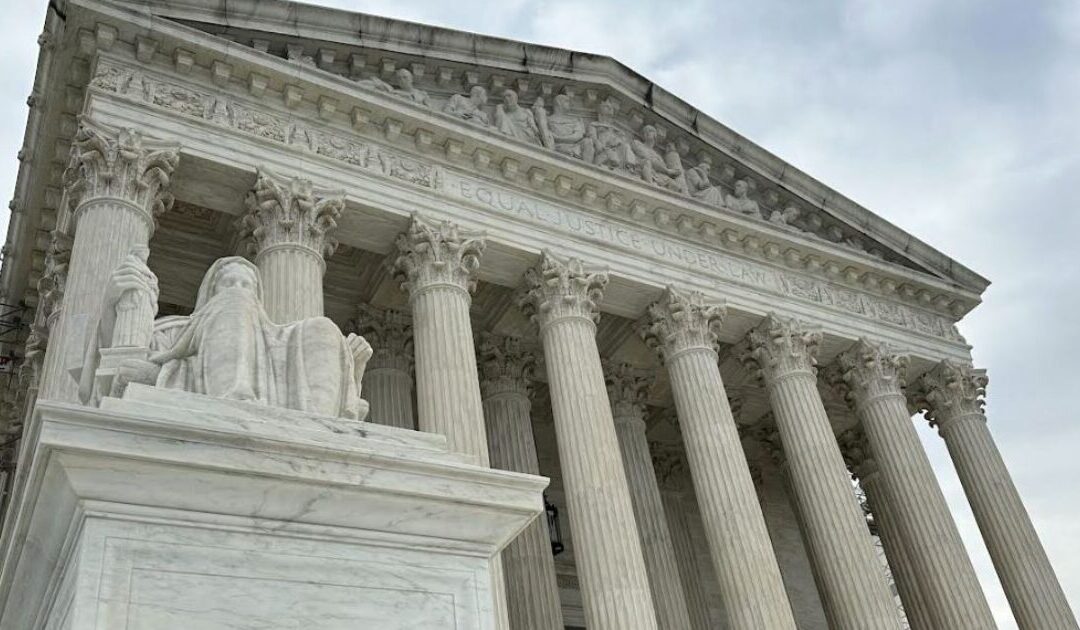
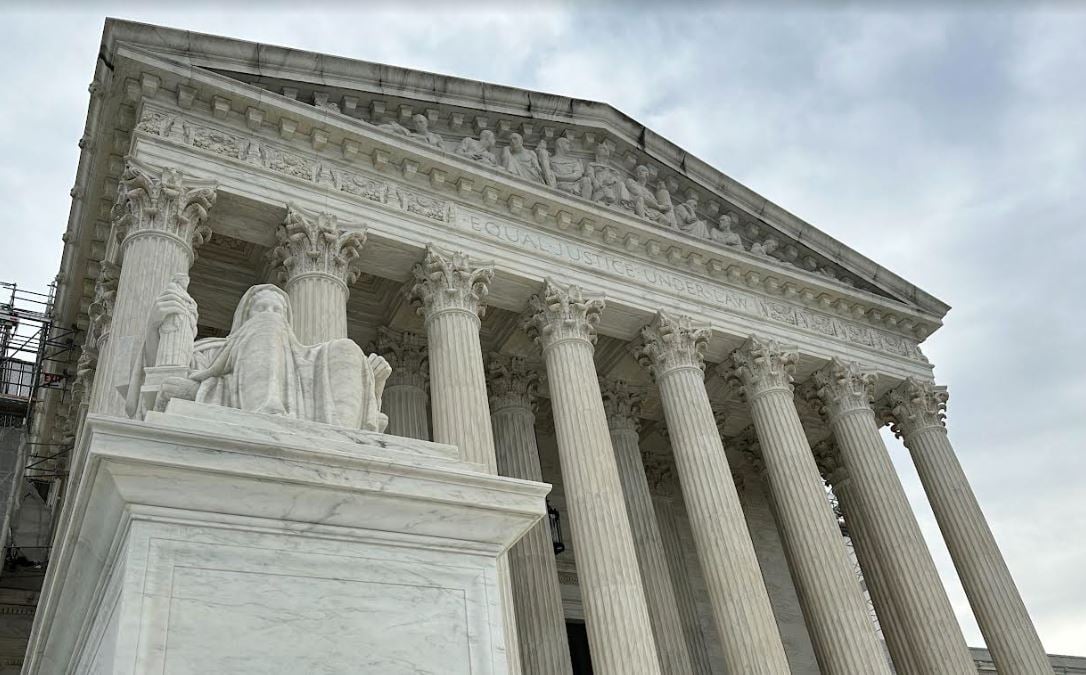
Alabama Asks Supreme Court to Intervene After Lower Court Blocks New Congressional Map – SCOTUS Sets Deadline
May 27, 2026
Alabama asked the Supreme Court to intervene after a lower court blocked its new congressional map.
Alabama’s request to toss out its racist, gerrymandered congressional map comes after the Supreme Court last month declared Louisiana’s newly-drawn Congressional map an unconstitutional gerrymander.
The case, State of Louisiana v. Phillip Callais (and the related Press Robinson v. Phillip Callais), stems from Louisiana’s woke lawmakers caving to left-wing judges and creating a second “majority-minority” congressional district.
Earlier this week, a three-judge panel ruled that Alabama’s new congressional map violated the Constitution’s 14th Amendment.
Alabama state officials asked the Supreme Court to overturn the lower court’s decision.
The Supreme Court set a Monday 4 pm ET deadline for the ‘civil rights’ attorneys to respond.
State officials in Alabama asked the Supreme Court on Wednesday to lift a lower-court ruling that thwarted a GOP congressional map that would likely leave Democrats with just one House seat.
Alabama Attorney General Steve Marshall filed an emergency appeal with the high court just one day after a three-judge panel ruled that the state could not use a map this year that the legislature approved in 2023, which was never implemented due to legal challenges.
The 2023 map would likely produce a 6-1 split between Republicans and Democrats in Alabama’s Congressional delegation, as opposed to the current 5-2 divide. The expected shift would come from eliminating one of the state’s two majority Black districts, which are both currently held by Democrats.
The unanimous three-judge panel ruled that violated the Constitution’s 14th Amendment by discriminating against African-Americans and diluting their votes, but the state argued in its high court filing Wednesday that the lower court’s decision is legally flawed because it essentially forces the state to prioritize creating two majority Black districts over all other considerations.
Earlier this month Alabama filed an emergency appeal at the Supreme Court asking the high court to allow it to throw out its current rigged congressional map.
The US Supreme Court previously cleared the way for Alabama to throw out its current rigged congressional map.
Despite claiming to be a feminist who wants to dismantle the patriarchy, the hijab is widely seen as a symbol of female repression intended to prevent Islamic women attracting the attention of men.
Also present at the event was Mayor Zohran Mamdani, who sported a English soccer shirt belonging to Arsenal, who were recently crowned Premier League champions.
“Today as we honor Prophet Ibrahim, Eid al-Adha reminds us that sacrifice is not a burden,” Mamdani wrote on X.
”It is an opportunity to see ourselves as part of something larger. To extend a hand to those who need it most.
“I am honored to be New York City’s first Muslim Mayor and I am determined to lead through solidarity.”
“Together, we are working to ensure every New Yorker can afford the groceries, housing, and child care they need.”
Eid Mubarak!
Today as we honor Prophet Ibrahim, Eid al-Adha reminds us that sacrifice is not a burden. It is an opportunity to see ourselves as part of something larger. To extend a hand to those who need it most.
— Mayor Zohran Kwame Mamdani (@NYCMayor) May 27, 2026
Earlier this week, it was reported that AOC is taking serious steps towards a run for the presidency in 2028, with some polls even showing her as the current favorite.
JUST NOW: Poll finds that AOC LEADS the 2028 Democratic presidential primary — AtlasIntel
According to Axios, the 36-year-old is taking increasingly national steps that Democrats see as laying the groundwork for a presidential bid, including rallies, endorsements, speeches across multiple states, and meetings with influential party figures.
However, she continues to insist her “ambition is way bigger” than seeking office and says she remains undecided on a presidential run.
We use technologies like cookies to store and/or access device information. We do this to improve browsing experience and to show (non-) personalized ads. Consenting to these technologies will allow us to process data such as browsing behavior or unique IDs on this site. Not consenting or withdrawing consent, may adversely affect certain features and functions.
Functional
Always active
The technical storage or access is strictly necessary for the legitimate purpose of enabling the use of a specific service explicitly requested by the subscriber or user, or for the sole purpose of carrying out the transmission of a communication over an electronic communications network.
Preferences
The technical storage or access is necessary for the legitimate purpose of storing preferences that are not requested by the subscriber or user.
Statistics
The technical storage or access that is used exclusively for statistical purposes.The technical storage or access that is used exclusively for anonymous statistical purposes. Without a subpoena, voluntary compliance on the part of your Internet Service Provider, or additional records from a third party, information stored or retrieved for this purpose alone cannot usually be used to identify you.
Marketing
The technical storage or access is required to create user profiles to send advertising, or to track the user on a website or across several websites for similar marketing purposes.








 JUST NOW: Poll finds that AOC LEADS the 2028 Democratic presidential primary — AtlasIntel
 AOC: 26%
