Netanyahu Orders Expanded Military Operations Against Hezbollah in Lebanon

Netanyahu Orders Expanded Military Operations Against Hezbollah in Lebanon

Netanyahu Orders Expanded Military Operations Against Hezbollah in Lebanon
May 26, 2026

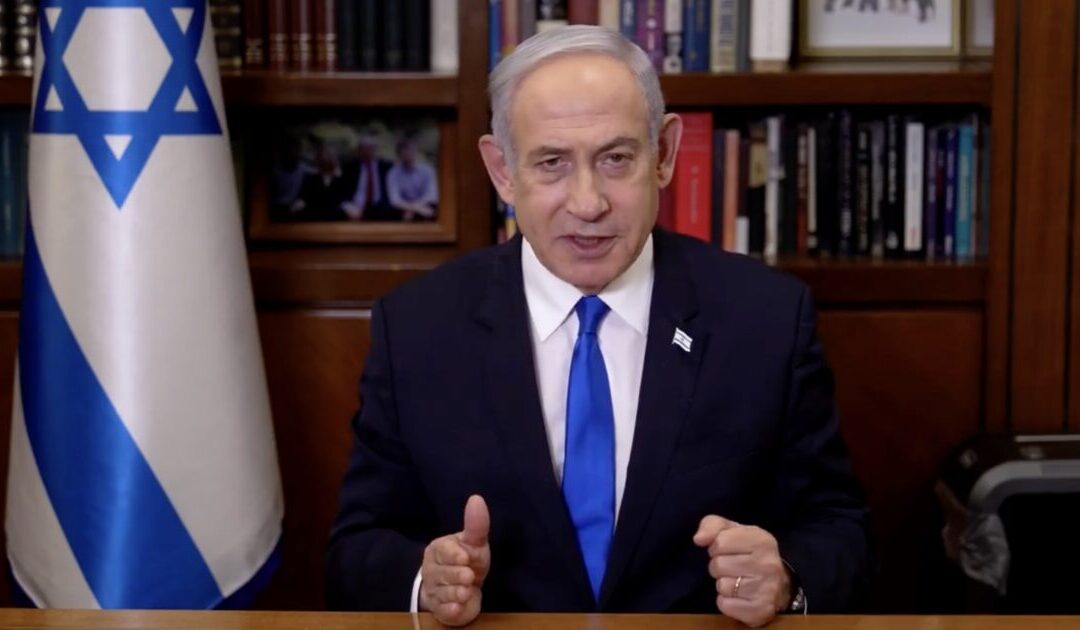
Screenshot: Netanyahu/X

A fragile ceasefire in the Middle East is once again under strain after Benjamin Netanyahu ordered intensified military action against Hezbollah in Lebanon, raising fears of a broader escalation that could derail ongoing diplomatic efforts.

The move comes at a particularly sensitive moment. Indirect talks between the United States and Iran are ongoing, with both sides cautiously exploring a possible framework to reduce tensions.
Netanyahu made his position clear in a video statement. “We are at war with Hezbollah… and we will intensify our strikes,” he said.

He added that Israel would not ease its military posture. “We are not taking our foot off the gas—on the contrary, I have instructed them to press the pedal even harder.”

The directive marks a significant escalation in what has already been a volatile situation. Despite a mid-April ceasefire, hostilities between Israel and Hezbollah have continued at a lower but persistent level.

The truce, brokered in part through U.S. mediation, reduced the intensity of fighting but never fully halted it. Both sides have continued to exchange strikes.
Hezbollah has increasingly relied on drone warfare. These low-cost, highly adaptable systems have proven difficult to counter.

In recent weeks, so-called FPV kamikaze drones have been used to target Israeli forces. Some of these systems are guided by fiber-optic cables, allowing them to evade electronic jamming.

The effectiveness of these attacks has raised concerns within Israeli leadership. A recent drone strike killed an Israeli soldier and seriously wounded another.

The incident has fueled calls for a stronger response. Several Israeli ministers have demanded a more aggressive strategy.

Israeli Finance Minister Bezalel Smotrich argued that deterrence must be restored. “For every explosive drone, 10 buildings should fall in Beirut,” he said.

Another senior figure, Minister of National Security Itamar Ben-Gvir, took a similarly hard line. He urged a return to full-scale war if attacks continue.

“It is time for the prime minister to bang on Trump’s table and inform him that we are returning to war,” Ben-Gvir said.

These statements reflect growing internal pressure within Israel. However, they do not necessarily represent official policy.

Reports suggest Netanyahu has so far stopped short of approving a full-scale assault on Beirut. Instead, the focus remains on targeted strikes.

Still, the rhetoric alone has had an impact. Residents in parts of Beirut reportedly began fleeing after Netanyahu’s latest remarks.

The capital’s southern suburbs, long considered a Hezbollah stronghold, are particularly sensitive. They were heavily bombarded earlier in the conflict.

Since the ceasefire, strikes on Beirut itself have been limited. Most operations have focused on southern Lebanon and the Beqaa Valley.

Following Netanyahu’s announcement, Israeli forces launched additional strikes in eastern Lebanon. The move signals a willingness to expand operations geographically.
Hezbollah, for its part, has not backed down. The group has continued drone and rocket attacks on Israeli positions.

Its leadership has also escalated rhetoric. Secretary-General Naim Qassem has suggested that public unrest against the Lebanese government could be justified.

The broader regional picture adds another layer of complexity. The conflict in Lebanon is closely tied to tensions involving Iran.

Tehran has made its position clear. It has demanded that Israeli operations in Lebanon cease as a condition for progress in talks with Washington.

That linkage creates a delicate balance. Escalation on one front could easily disrupt negotiations on another.
A U.S. official acknowledged the risk but defended Israel’s position. Hezbollah, the official said, has “ignored repeated requests to stop firing.”
“Israel will never be expected to passively absorb attacks on its forces and civilians,” the official added.

At the same time, Washington has previously urged restraint. President Donald Trump has called for “surgical” operations rather than broad escalation.

This tension reflects a broader dilemma. The U.S. is attempting to balance support for Israel with a desire to avoid a wider regional war.

The human cost of the conflict continues to mount. Lebanese health authorities report thousands of casualties since fighting intensified earlier this year.
The ongoing exchanges also highlight a shift in modern warfare. Low-cost drone technology is altering the strategic landscape.

Traditional military superiority is being challenged. Non-state actors can now deploy tools that were once the domain of major powers. This dynamic is reshaping conflicts across the region. It also raises questions about future escalation scenarios.

For now, the ceasefire remains in place—at least on paper. But its durability appears to be increasingly uncertain. Each new strike, each new retaliation, chips away at the fragile calm. The situation remains  volatile.

The post Netanyahu Orders Expanded Military Operations Against Hezbollah in Lebanon appeared first on The Gateway Pundit.

Go to Source
Author: Robert Semonsen
REVEALED: Top Biden DOJ Official Warned White House Lawyer That Mar-a-Lago Raid Was Likely Illegal: Memo

REVEALED: Top Biden DOJ Official Warned White House Lawyer That Mar-a-Lago Raid Was Likely Illegal: Memo
May 26, 2026

Merrick Garland’s top advisor fired off a warning to administration lawyers after Biden’s FBI raided Trump’s Mar-a-Lago estate in August 2022.

Patty Stemler, a longtime DOJ official chosen by Merrick Garland to consult on lawfare cases against Trump, fired off an email warning about the legal issues arising from the raid on Mar-a-Lago.

The FBI found no probable cause to raid Mar-a-Lago in August 2022, but Biden’s DOJ sent machine-gun-toting agents to Trump’s Florida home anyway.

Biden’s FBI raided Mar-a-Lago in 2022 and seized boxes of records from Trump’s Florida estate.

More than 3 dozen machine-gun-toting agents descended on Mar-a-Lago in August 2022, and by November, Biden’s DOJ appointed a special counsel to investigate the documents stored at the Florida residence.

The raid came after the National Archives (NARA) visited Mar-a-Lago in early 2022 and demanded documents from Trump.

Court documents revealed that Biden’s FBI authorized the use of deadly force during their raid on Mar-a-Lago, which was authorized by US Attorney General Merrick Garland.

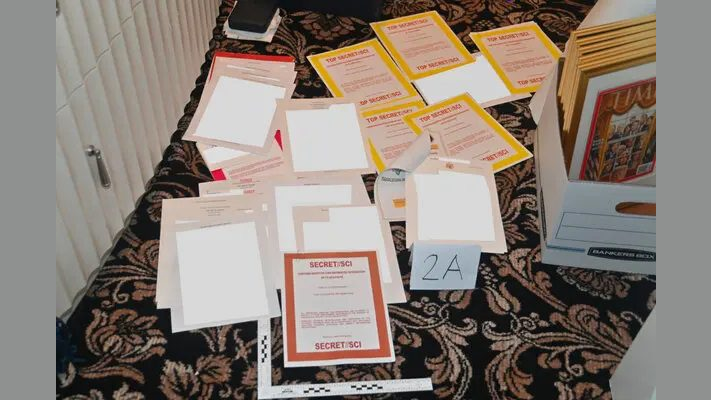
Corrupt FBI agents released staged photos of the ‘classified’ documents laid out on the floor of Mar-a-Lago.

Patty Stemler warned Biden Administration lawyers that the Mar-a-Lago raid was likely illegal.

“I didn’t know about this search in advance, but I have been worrying about it ever since and worrying more now,” Patty Stemler wrote to Biden White House lawyer Sophia Brill on Aug. 10, 2022, according to a memo obtained by Just The News. “Doesn’t Trump maintain that he had the authority to declassify documents while he was still President?

“Has anyone in NSD or OLC [Office of Legal Counsel] looked at that? I know we have procedures for declassifying, but is the President as Commander in Chief bound by those procedures? We also have procedures for granting pardons, but the President doesn’t have to follow them,” she said.

Just The News reported:

A top Biden Justice Department official and key ally of then-Attorney General Merrick Garland raised legal “concerns” about the FBI’s raid on Mar-Lago, warning that then-former President Donald Trump may have actually declassified the records seized by agents, a newly-unearthed email obtained by Just the News shows.

Patty Stemler, a decades-long DOJ veteran who was reportedly picked by Garland in 2022 to help consult on Trump-related cases, sent an email just two days after the bureau’s Aug. 8, 2022 raid of Trump’s Florida resort home, where Stemler said she had “a few concerns.”

Stemler sent the email to Sophia Brill, a future Biden White House lawyer and then an attorney inside DOJ’s National Security Division, which played a central role in this anti-Trump inquiry.

The post REVEALED: Top Biden DOJ Official Warned White House Lawyer That Mar-a-Lago Raid Was Likely Illegal: Memo appeared first on The Gateway Pundit.

Go to Source
Author: Cristina Laila

Another HUGE Lie on Jan 6 Exposed

Another HUGE Lie on Jan 6 Exposed

Another HUGE Lie on Jan 6 Exposed
May 26, 2026

Another HUGE Lie on Jan 6 Exposed

We knew on Jan 6 that the riots were out of place.  President Trump had 1.1 million peoplea at his ralllllies wiht no violence leading up to the ele ction with no violence.  Then on Jan 6 there were sudden riots?  This made no sense.

We were right.

We recently learned that a pre-run of Jan 6 was held in the fall of 2020, five months before Jan 6.

HUGE: Newly Released Documents Show Deep State Democrats Staged the Jan 6 Riots 5 Months Before They Took Place

We know so much.  For example, why did the Jan. 6 committee not bring in the Capitol Police chief for questioning?

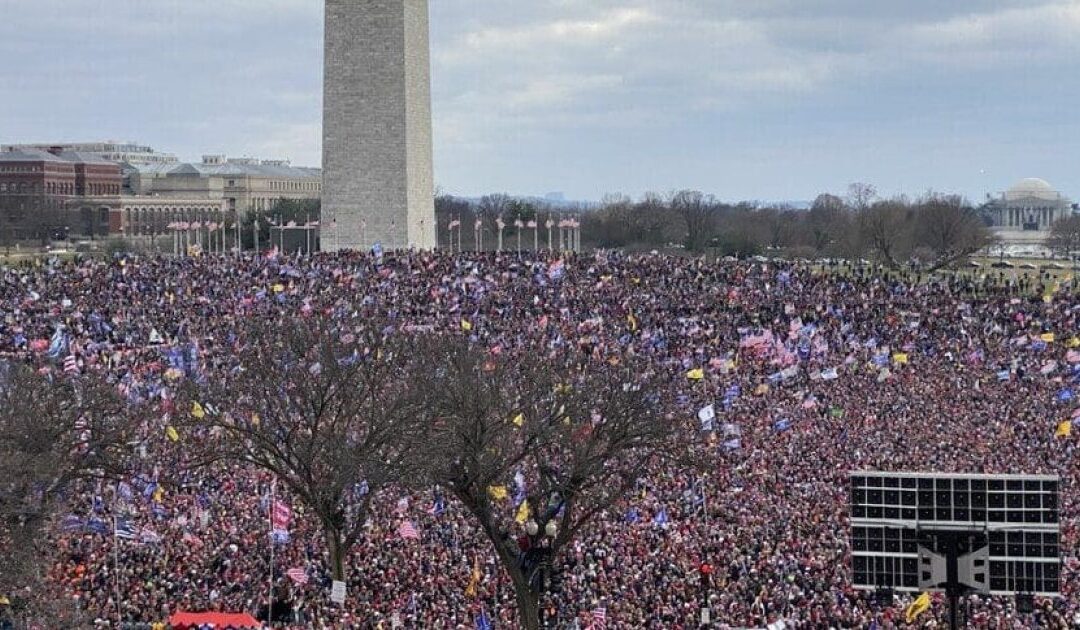
Now we find out that the Democrats drastically minimized the size of the crowd that day.

Those present said it was the biggest crowd they had ever seen.  They even lied about this.

The post Another HUGE Lie on Jan 6 Exposed appeared first on The Gateway Pundit.

Go to Source
Author: Joe Hoft

How Much Smaller Is the Chinese Economy Than the U.S.?

How Much Smaller Is the Chinese Economy Than the U.S.?

How Much Smaller Is the Chinese Economy Than the U.S.?
May 26, 2026

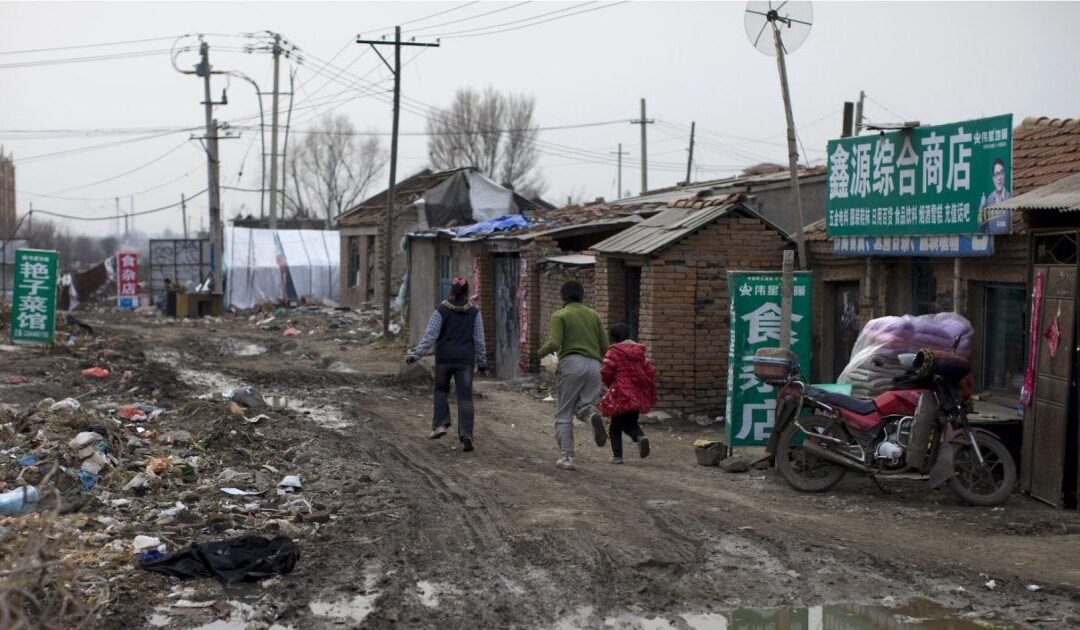
Children and adults walking through a muddy, debris-strewn street lined with makeshift homes and signs in an impoverished area.
The Chinese economy is 61% smaller than the U.S. economy, and the average Chinese citizen earns about 15% of the annual income of the average American, while roughly 40% of the population earns less than $10 USD per day. Photo courtesy of the China Power Project.

The U.S. economy is $11.2 trillion larger than China’s. The average American is roughly six times richer than the average PRC citizen. At China’s claimed 5% annual growth rate, which is likely inflated, it would take approximately 30 years of uninterrupted expansion for China to reach parity with the United States.

However, Donald Trump’s tariffs may permanently foreclose China’s access to the U.S. market as a low-cost export platform. China’s population is shrinking, with births in 2025 falling to 7.92 million, less than half the number recorded a decade ago, and the working-age population declining by 6.62 million in that year alone.

Beijing has already acknowledged the demographic reality by downgrading its own long-term GDP growth target from 4.8% to 4.2% annually through 2035. At 4.2%, the convergence timeline stretches to roughly 40 years. The IMF, however, projects China’s growth rate dropping to 3.4% by 2030. At that rate, China may never reach parity with the U.S., which has grown at an average rate of just over 2% for roughly a century.

Those projections also assume no shocks. Manufacturing is already shifting away from China at a measurable rate: China’s share of U.S. imports fell from 21.6% in 2017 to 7.1% by May 2025, the lowest since 2001. Every percentage point of manufacturing that relocates to Vietnam, India, or Mexico is output, employment, and tax revenue that China does not generate. The 30-year scenario is Beijing’s best case. The evidence points toward China never reaching parity with the US.

The IMF’s April 2026 World Economic Outlook puts the nominal gap between the U.S. and Chinese economies at $11.2 trillion. Using 2024 full-year actuals, U.S. GDP stood at $29.18 trillion against China’s $18.74 trillion, a difference of $10.4 trillion.

The Chinese Communist Party’s (CCP) claim to legitimacy rests on its ability to grow the economy.  After the Tiananmen Square massacre, Deng Xiaoping forged an informal social contract: the state would open the economy and deliver prosperity; the people would not challenge party authority. This is why the CCP is so concerned that GDP growth has declined steadily over the past 30 years, and that the decline has accelerated since President Trump began the trade war during his first term.

For decades, companies from around the world have manufactured in China to take advantage of low labor costs and then exported to the U.S. market. During the years of high economic growth, salaries in China increased, and profit margins narrowed. With tariffs now significantly higher, manufacturing in China has become less competitive, and investment has been redirected.

The U.S. was the world’s largest FDI destination in 2025, holding 31% of global inward FDI stock totaling $5.7 trillion. The U.S. Department of Commerce’s SelectUSA program announced $139 billion in FDI deals in the first year of the Trump administration across 175 transactions supporting more than 32,000 American jobs.

In the PRC, by contrast, Net FDI inflows fell from a peak of $344 billion in 2021 to just $18.6 billion in 2024, a three-decade low. Manufacturing FDI is down roughly 70% versus the 2015–19 baseline, driven by the withdrawal of U.S. and advanced Asian capital. Manufacturing margins averaged just 5.76% in 2023, per China’s own National Bureau of Statistics, and were compressed further throughout 2023 and 2024 before second-term tariffs added additional pressure.

China’s loss of access to discounted Iranian and Venezuelan crude following U.S. military operations in both theaters will compress those margins further, though the precise manufacturing cost impact has not yet been quantified in primary sources.

To make the economy appear larger than it is, Beijing prefers to measure it using purchasing power parity (PPP). PPP adjusts GDP to reflect domestic price levels rather than converting output at market exchange rates. In other words, PPP attempts to explain why someone can live better in China on $10 a day than they could in the U.S.

However, PPP is essentially voodoo economics. There is no universally agreed-upon methodology for calculating it, and it ignores the fact that goods and services around the world are ultimately valued in nominal U.S. dollars. The U.S. simply has far more dollars than China.

The average nominal income in China, meaning actual countable money in hand, is about $13,000 per year, compared to roughly $89,000 in the United States. PPP attempts to make those two amounts appear more equal than they really are. In reality, however, the person earning $89,000 can buy more of almost everything, nearly everywhere on earth, including in China.

To make matters worse, China’s GDP figures are widely believed to be inflated, a problem identified by China’s own former premier. Li Keqiang served as premier from 2013 to 2023, nominally the country’s second-ranked official, before dying of a sudden heart attack in Shanghai on October 27, 2023, at age 68.

In 2007, while serving as party secretary of Liaoning Province, Li told the visiting U.S. ambassador in a private meeting that GDP figures were “man-made” and unreliable, and that he instead tracked railway cargo volume, electricity consumption, and bank loans as harder-to-falsify proxies. The Economist formalized these metrics into the Li Keqiang Index in 2010, weighted as 40% electricity consumption, 20% rail freight, and 40% bank loans.

The structural reason for the distortion is documented by the National Bureau of Economic Research: local officials are rewarded for meeting growth targets, and the sum of provincial GDP figures has exceeded the national figure by 5 to 6 percentage points every year since 2003.

A 2019 Brookings Institution and NBER paper by economists at the University of Chicago and the Chinese University of Hong Kong, using tax data, satellite nighttime light intensity, electricity generation, railway cargo, and export figures, concluded that China’s GDP growth from 2008 to 2016 was overstated by 1.7 to 1.8 percentage points per year. Applying those findings to the 2018 baseline produces a true GDP estimate of roughly $11.1 trillion against the official $13.4 trillion.

The Federal Reserve Bank of St. Louis found that nighttime lights data suggest cumulative growth may be overstated by as much as 65% over the long run. Applying a conservative 20% correction to China’s current official GDP of $18.7 trillion implies a true economy closer to $15 trillion, widening the gap with the United States from $10.4 trillion to approximately $14 trillion.

In short, the Chinese economy is likely about 61% smaller than the U.S. economy, while the average American is roughly six times richer than the average Chinese citizen. China’s growth rate is declining and is expected to decline further.

The post How Much Smaller Is the Chinese Economy Than the U.S.? appeared first on The Gateway Pundit.

Go to Source
Author: Antonio Graceffo

YOU CAN’T MAKE THIS UP: Dog Shoots Woman with a Shotgun During Gas Station Stop

YOU CAN’T MAKE THIS UP: Dog Shoots Woman with a Shotgun During Gas Station Stop

YOU CAN’T MAKE THIS UP: Dog Shoots Woman with a Shotgun During Gas Station Stop
May 26, 2026

Credit: Wikimedia Commons

In an incident that belongs in Ripley’s Believe It or Not!, a dog managed to fire a gun and hit a woman while it was inside a vehicle last week in Nebraska.

As KNOP reported, Scottsbluff police officers were called to Short Stop at 2002 Avenue I in the city after receiving a report that a person had been shot by a BB gun at 12:07 p.m.

They were later informed while driving to the gas station and convenience store that the incident involved a shotgun.

When the police arrived, they were confronted with a shocking truth: the culprit responsible for the shooting incident was not human. Rather, it was man’s best friend.

Yes, a dog accidentally pulled the trigger of a gun and somehow shot a woman from several feet away!

KNOP reported:

According to Scottsbluff police, the owner of the truck had pulled into the convenience store. While the passenger was standing near the front passenger-side door, a dog in the back seat moved from one side of the vehicle to the other.

The dog triggered a shotgun that had a live shell in the chamber, causing the firearm to discharge.

At the time of the gunfire, a woman was stopped at the traffic light on Avenue I with her arm resting out of the window. One pellet from the shotgun blast struck her in the upper right arm.

Her injury was not believed to be life-threatening, and a family member transported her to Regional West Medical Center for treatment.

Investigators also noted there was damage to the vehicle’s passenger-side door consistent with a shotgun blast.

No other injuries were reported in the incident.

Per KNOP, an investigation into the incident remains ongoing.

There is no word on the canine’s fate at this point. Hopefully, nothing happens to it.

The post YOU CAN’T MAKE THIS UP: Dog Shoots Woman with a Shotgun During Gas Station Stop appeared first on The Gateway Pundit.

Go to Source
Author: Cullen Linebarger