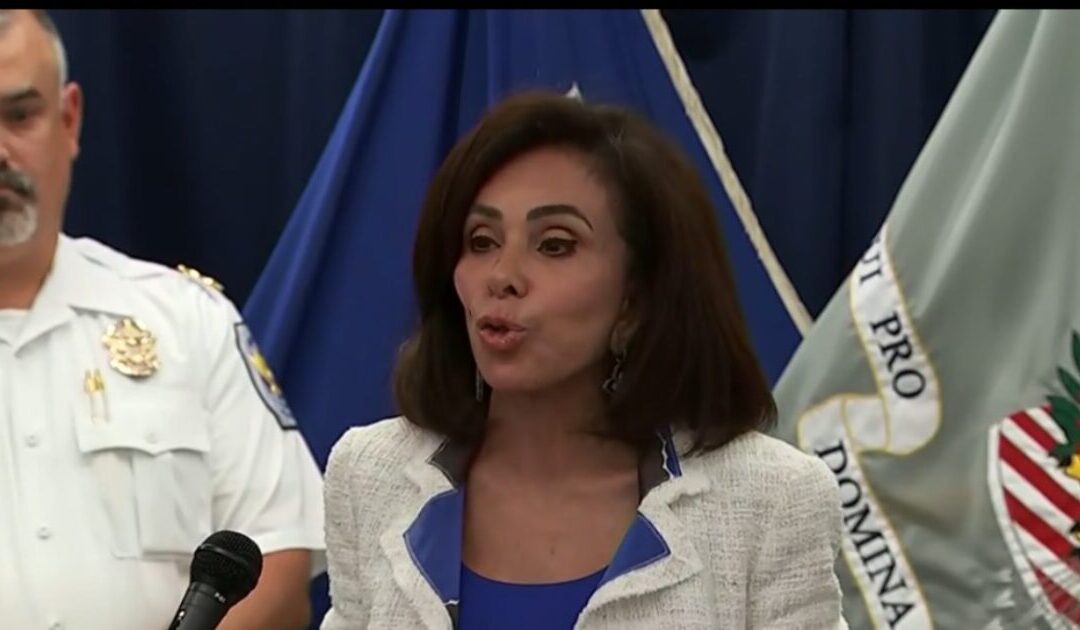

ICYMI: Chief Justice Roberts Is Good Pals with Trump-Hating Deep State Leader Norm Eisen and Vacationed at His Palace in Czech Republic for a Week
July 1, 2026
Supreme Court Chief Justice John Roberts and Trump-hating hack Norm Eisen – Credit: Wikimedia Commons
Is the Supreme Court Compromised by Deep State Cronyism?
In a bombshell revelation that’s sending shockwaves through conservative circles, it turns out Chief Justice John Roberts has been rubbing elbows with none other than Norm Eisen—the radical leftist operative who’s spent years orchestrating lawfare campaigns against President Donald Trump, his close advisers, and his allies.
According to a previous report from Revolver News, Roberts didn’t just bump into Eisen at a D.C. cocktail party.
No, these two are apparently such “good pals” that Roberts jetted off to the Czech Republic for a week-long sleepover at Eisen’s lavish 150-room palace.
It’s straight from the mouth of Norm Eisen himself—the very same man who practically wrote the Deep State’s instruction manual on how to destabilize political opponents via color revolutions, lawfare, and weaponized legal warfare against President Trump.
According to Eisen, during an interview with Pantsuit Politics LLC, Chief Justice Roberts is a longtime friend who joined him overseas to work “on American and European rule-of-law issues.”
Eisen: I think part of the solution is to acknowledge John Roberts is not corrupt. I know the Chief Justice well. He stayed when I was ambassador, stayed under my roof, came and spent a week with us. We worked on American and European rule of law issues together.
And most of the justices are trying to do their best. And they don’t see the world exactly the way that I do, but not Clarence Thomas and Alito to a lesser but still troubling extent.
Norm Eisen said his good friend Supreme Court Justice John Roberts was not corrupt and that John went to the Czech Republic for a week so that they could spend time working on American rule of law issues together.
It’s a blatant, in-your-face conflict of interest that reeks of elite collusion.
How can the American people expect impartiality from a Chief Justice who shares wine and policy agendas with the puppet masters orchestrating anti-Trump legal assaults?
Norm Eisen is the hatchet man in the current shadow government tasked with taking down US President Trump.
Eisen is also the acclaimed expert on ‘color revolutions, ‘ a system used by US intel to overthrow undesirable regimes or unwanted political movements.
Eisen and top Democrats and intel experts used this model to steal the US election from President Trump in 2020.
Following the 2020 election, Eisen and others famously bragged about using color revolution tactics to rid President Trump of the White House.
Norm Eisen also posted a tweet on X bragging about how he was taking Elon Musk and Doge to court to “impose consequences” for their efforts to cut fraud and spending in the US government.
Eisen accuses Elon Musk of having an office in the White House, no supervising official — as if President Trump is AWOL?
It can be recalled that Chief Justice John Roberts has been linked to an exclusive circle of elite judges and lawyers that includes James Boasberg, Beryl Howell, Amit Mehta, and Ketanji Brown Jackson.
Chief Justice Roberts released a statement attacking President Donald Trump for calling on these same crooked District judges to be impeached!
It also appears that Chief Justice John Roberts thought quite well of James Boasberg. Roberts appointed Judge Boasberg to serve on the US Foreign Intelligence Court (FISA Court) in 2014.
Boasberg sat on the court when this group of vagabonds allowed the deep state to spy on President Trump, his family, his business, and his administration. Boasberg was part of the group that approved that.
WATCH: “I Am Concerned” – RINO Thom Tillis Says Push for SAVE America Act Is “Undermining Confidence in Elections”
July 1, 2026
RINO Thom Tillis showed his true colors in an appearance on CNN’s State of the Union on Sunday, teaming up with Jake Tapper to push the narrative that Trump is rigging the upcoming elections.
Tapper delivered a lengthy question, arguing that Acting Director of National Intelligence Bill Pulte and his Chief of Staff, Christina Norton, are pieces of a broader scheme to steal the elections involving Kurt Olsen, the former lead adviser to President Trump on election security, and former DNI Tulsi Gabbard.
“There are a lot of concerns about what the president and his team might be planning for the elections,” Tapper said, referencing the Trump administration officials and investigations involving Smartmatic and Dominion in Puerto Rico and Venezuela.
Tillis responded by blasting Bill Pulte, declaring that the DNI’s office should be eliminated entirely and Pulte should be nowhere in the Trump Administration.
Like a true Democrat, he then claimed that Trump’s push for the SAVE America Act is casting “doubt on elections” and seeks to “erode what has been a 250-year tradition of a peaceful transition of power.”
“I have people telling me I need to implement the Save Act immediately in North Carolina,” he said, suggesting it’s unnecessary to implement the federal voter ID statute because North Carolina already has a voter ID law. “Why do I, over the next four months, have to try to pursue the impossible task of implementing a bill that simply can’t be implemented in that time frame?”
He went on to accuse Republicans of “undermining the confidence in the elections.” He added, “This is a bedrock of our 250-year history of success as the democracy that changed the world. Let’s not mess with that between now and November.“
WATCH:
Transcript:
Tapper: The New York Times is reporting that Acting Director of National Intelligence Bill Pulte, who has no qualifications for that job, as you know, has installed a Republican political operative, Christina Norton, as his chief of staff at the spy agency. Norton’s work in the past focused on election issues for the Republican Party, and there’s this broader context that you know about. There are a lot of concerns about what the president and his team might be planning for the elections, whether it’s Pulte and Norton, or as we read in regime change, Nicolas Maduro offering to back up Trump’s lie about Venezuela altering the election. We have election denier Kurt Olsen given a position in the administration, ordering the seizure of Atlanta voting machines, Tulsi Gabbard, you know, seizing voting machines from Puerto Rico. How do you see all this fitting together?
Tillis: Well, first, I think you know my position on Pulte. I don’t think he should be in the administration, let alone in charge of DNI. He is singularly responsible for 702 beginning to go dark because of a lack of confidence in him in that role, so he needs to get out. We need to get a credible person in the role, and frankly, I think ultimately we should end DNI and go back to the Intelligence Community, the posture that we had before 9/11.
We just have to address the lapses that were addressed through DNI. I think we’re past that now after 25 years. My goodness, we should be able to have interagency integration. We should eliminate the DNI, and we should eliminate Pulte from the DNI until that happens.
I am concerned that we’re going to continue to cast doubt on elections in November and erode what has been a 250-year tradition of a peaceful transition of power. You know, I have people telling me I need to implement the Save Act immediately in North Carolina, in a state that has voter ID. It was passed when I was speaker. We’ve enhanced it even since then, and the president’s won three times. Why do I, over the next four months, have to try to pursue the impossible task of implementing a bill that simply can’t be implemented in that time frame?
Why are we doing more things to undermine our confidence in elections rather than getting the strong message out that will win for Republicans this year? Talk about the emergence and the rise of the Democrat Socialists of America, accept that the voting laws are going to be fundamentally what they are today, win by them, win by the good results that Republicans have produced, and stop undermining the confidence in the elections. This is a bedrock of our 250 year history of success as the democracy that changed the world. Let’s not mess with that between now and November.
Spain’s Mass Illegal Migrant Amnesty Draws 1.3 Million Applications as VOX Warns of Demographic and Electoral Transformation
July 1, 2026
Commander, U.S. Naval Forces Europe-Africa/U.S. 6th Fleet, Public domain, via Wikimedia Commons
Spain’s left-globalist government is facing a political storm after its extraordinary migrant regularization programme attracted nearly 1.3 million applications, far beyond the roughly 500,000 cases initially projected by Prime Minister Pedro Sánchez’s administration, El País reported.
The scale of the process has turned what the government presented as a limited administrative measure into one of the largest migrant legalization drives in recent European history. For Spain’s nationalist right, it is no longer simply an immigration policy, it is a profound transformation of the country’s social, labor and, eventually, electoral landscape.
The application window closed on June 30 after weeks of frantic registration. Reports citing Spain’s Mercurio platform put the total close to 1.3 million, while Reuters reported 1.27 million applications by the final days of the process.
That number is more than double the government’s original estimate. It also closely matches earlier warnings from police and immigration officials who said the real figure could climb far above the official projection.
The programme was launched to grant legal residence and work permits to illegal migrants and asylum seekers already in Spain. Eligible applicants generally had to show they were adults, had lived in Spain for at least five months before January 1, 2026, or had applied for international protection, and had no criminal record.
The anti-Spanish, socialist government in Madrid has defended the measure as a way to bring migrants into the formal economy. Sánchez, who’s under investigation for corruption, has argued that immigration is necessary for economic growth, public services and Spain’s demographic future.
The prime minister has presented the policy as both humanitarian and practical. On Tuesday, he reportedly warned that Spain would lose 19 percent of its GDP by 2050 without immigration and announced a €500 million integration plan alongside the regularization effort.
VOX and other right-wing critics argue Spain’s ruling class is treating mass immigration as the solution to every economic and demographic challenge while refusing to ask whether the Spanish people consented to the transformation of their own country.
The numbers have intensified that alarm. AP reported that Colombians made up the largest group of applicants at around 30 percent, followed by Moroccans, Venezuelans and Peruvians.
The government says the measure will reduce exploitation and increase tax contributions. But critics argue that legalizing huge numbers of illegal migrants rewards illegal entry, incentivizes future arrivals and places enormous pressure on housing, schools, healthcare and local services.
By mid-June, roughly 360,000 applications had already been admitted for processing. Authorities have three months after the application period closes to resolve cases, though it remains unclear how many will ultimately be accepted or rejected.
That uncertainty has added to concerns about administrative discretion. María Miyar, director of Social Studies at Funcas, said the police had already estimated the undocumented population would exceed 1.3 million.
“These are the applicants; the criteria applied to accept or reject them will be another matter entirely,” Miyar told El País. She also warned that there would be “a margin of discretion” for officials depending on the instructions they receive.
Miyar added that some applications could be based on forged documents. For opponents of the amnesty, that warning raises an obvious question: how can the state safely process more than a million cases in a short window when documentation problems are already expected?
The programme has been promoted by a network of NGOs, unions, migrant associations and progressive political actors. To VOX supporters, it is another example of Spain’s NGO-political complex operating as a parallel migration bureaucracy.
The legal fight is now moving to the courts. Spain’s Supreme Court is considering whether the decree underpinning the regularizsation could conflict with EU law, including the Migration and Asylum Pact and the Returns Directive.
If the court refers the case to the Court of Justice of the European Union, the process could face a serious legal challenge. Such a move would be a major blow to Sánchez, who has made mass regularisation a central pillar of his government strategy.
The controversy does not stand alone. Spain is also dealing with the fallout from the Democratic Memory Law, known as the Grandchildren Law, which has allowed descendants of Spanish exiles to seek nationality from abroad.
Under that law, more than half a million people have already been granted Spanish nationality, while millions sought appointments or began the process through consulates. Argentina accounted for nearly 40 percent of the applications, followed by countries such as Cuba.
Taken together, the migrant regularizsation drive and the nationality process have raised warnings about a dramatic expansion of Spain’s future social and electoral census. Civil groups and political organizations have already called for scrutiny of voter rolls and absentee resident registrations.
For VOX and its growing number of supporters, the issue is sovereignty. A government without a clear democratic mandate to reshape the population, labour market and future electorate should not be able to push through mass legalization by decree.
Sánchez’s defenders say Spain needs migrants to support agriculture, tourism, care work and the welfare state. But the right-wing response is blunt: a nation that can survive only by importing a new population has already admitted the failure of its ruling model.
The deeper fear is demographic replacement—not as an abstract theory, but as a lived political reality in which native Spaniards are asked to accept permanent transformation while being smeared as xenophobic for objecting.
Spain now faces a choice between national and cultural continuity on one side and and progressive social engineering on the other. The regularization of more than a million illegal migrants is a civilizational decision made by a government determined to bind the country to mass immigration and replace a population that increasingly votes for the ‘wrong side’.
Court Documents Link Nigerian State Funds to Fulani Militant Networks
July 1, 2026
Photo courtesy of the Africa Center for Strategic Studies.
For years, Christian communities across Nigeria’s Middle Belt have viewed the Fulani militant attacks on their villages as more than criminal violence. They see them as a religiously motivated campaign to drive Christians from their land, destroy their churches, and erase their presence from the region.
Alongside that conviction has been another persistent belief: that the scale, coordination, and sophistication of the attacks require substantial financing, and that someone powerful, whether a government official, political network, or well-connected patron, is providing it. Court documents, senior military testimony, and a recent federal prosecution are now giving that belief an evidentiary foundation.
On June 22, 2026, the Economic and Financial Crimes Commission (EFCC) filed a 12-count charge before the Federal High Court in Abuja against Bello Abdullahi Bodejo, National President of Miyetti Allah Kautal Hore, the umbrella organization representing Fulani herder interests in Nigeria. The charges allege terrorism financing and money laundering totaling $2.53 million, confirmed by EFCC Head of Media and Publicity Dele Oyewale.
According to the charge sheet, the funds were received in cash from Sa’idu Abubakar, a former Accountant-General of Bauchi State, now in the custody of the Nigerian Police Force, in multiple installments between 2022 and 2024. Bauchi State government records confirm $2.33 million was disbursed to Bodejo in four tranches in 2023 and 2024 alone. None of the transactions passed through a financial institution as required by Nigerian law.
Bodejo is linked in multiple reports to Bauchi State Governor Bala Mohammed, who oversaw the administration under which the disbursements were made. Mohammed defected from the Peoples Democratic Party to the Allied Peoples Movement (APM) in May 2026 and remains in office.
The EFCC is separately prosecuting Bauchi State Commissioner for Finance Yakubu Adamu and three civil servants on ten counts of terrorism financing and money laundering in connection with the same disbursements, arraigned before the Federal High Court on December 31, 2025. The current case is not Bodejo’s first encounter with federal authorities. In 2024, he spent approximately six months in detention and briefly faced terrorism charges before the Attorney-General of the Federation withdrew the case without explanation. The prosecution now before the Federal High Court is the second and more formally documented legal action against him.
Miyetti Allah Kautal Hore and its affiliated body, the Miyetti Allah Cattle Breeders Association of Nigeria (MACBAN), have long functioned as the public face of Fulani herder interests in Nigeria. Both organizations have consistently denied involvement in violence while simultaneously issuing statements that Christian communities, Nigerian civil society, and U.S. lawmakers have characterized as threatening. A 2025 U.S. House resolution named both organizations and called for them to be designated as Entities of Particular Concern.
Nina Shea of the Hudson Institute, testifying before the House Foreign Affairs Subcommittee on Africa in March 2025, documented that both organizations began supplying Fulani herders with AK-47s and other weapons as far back as the 1980s. Christian communities across the Middle Belt and southern Kaduna have long maintained that the militants attacking their villages operate with a level of organization, armament, and coordination that no self-financing criminal network could sustain.
The Bodejo case is not the only active prosecution linking Miyetti Allah’s network to organized violence. In February 2026, nine Fulani herdsmen went on trial at the Federal High Court in Abuja on 57 counts of terrorism, including financing, recruiting, and direct participation in the June 2025 Benue massacre that killed more than 270 Christians. Each of the accused was reportedly linked to MACBAN. The leader of the group, Ardo Lawal Mohammed Dono, held a MACBAN leadership position in Nasarawa State. Frank Utoo, a U.S.-based Nigerian lawyer who met Dono twice as part of official Benue State peace delegations in 2020 and 2021, identified him as the mastermind of killings in Benue State.
A Nigerian Police Force Intelligence Response Team officer testified that several of the accused organized meetings at Dono’s house in Nasarawa State to raise funds and recruit armed fighters. One defendant, Haruna Abdullahi, confirmed in court that he attended those meetings.
The weapons in use reinforce that belief. Community leaders in Riyom Local Government Area, Plateau State, report that militants have deployed drones during attacks on villages. On June 10, 2026, gunmen killed two volunteer security watchmen in the Tahoss community, Riyom LGA, while they were on routine night patrol. Security sources recovered 25 empty 7.62mm special shell casings at the scene. This ammunition is specifically associated with the AK-47 assault rifle, the weapon survivors most frequently identify as being used by Fulani extremists during raids on Christian villages.
The victims, Davou Dalyop Patu, 48, and Dalyop Zaram, 38, were active members of a local vigilante group that had organized to protect the village after government security forces had failed to do so. Their deaths deepened the fear already widespread in the region: that communities which organize to defend themselves become targets.
That fear has been articulated publicly by some of Nigeria’s most credible voices. On March 24, 2018, retired Lieutenant General Theophilus Yakubu Danjuma, former Chief of Army Staff (1975–1979) and former Minister of Defence (1999–2003), addressed the convocation ceremony of Taraba State University in Jalingo. His remarks were unambiguous. “The armed forces are not neutral,” he said. “They collude with the armed bandits that kill people, kill Nigerians. They facilitate their movement, they cover them. If you are depending on the armed forces to stop the killings, you will all die one by one.” The Nigerian Army convened a panel to investigate the statements. No findings were published.
Two years later, on August 11, 2020, Dr. Obadiah Mailafia, former Deputy Governor of the Central Bank of Nigeria, Oxford-educated development economist, and 2019 presidential candidate from southern Kaduna, appeared on Nigeria Info’s Morning Crossfire program in Abuja. He stated that two repentant terrorists had informed him that a serving northern governor was the commander of Boko Haram in Nigeria, and that during the COVID-19 lockdown, insurgents had moved arms and ammunition across the country.
He characterized the attacks on Christian farming communities as a continuation of jihad and described those framing the violence as farmer-herder resource conflict as “accessories to genocide.” The Department of State Services interrogated Mailafia three times at its Jos office following the broadcast, in a campaign Nobel Laureate Wole Soyinka described as ongoing national security persecution. Mailafia died of COVID-19 on September 19, 2021.
The statements of Danjuma and Mailafia were made before the EFCC had produced a single court document linking Fulani militant networks to state government funds. The Bodejo prosecution now provides the first judicial framework for what both men described. The charge sheet names a sitting state government’s accountant general as the source of millions of dollars in cash, paid outside the banking system, to the head of an organization the U.S. Congress has linked to the financing of armed attacks on Christian communities.
The prosecutions of Bodejo and Dono are unfolding alongside a separate but simultaneous crackdown on a distinct terror-financing network. On June 18, 2026, Nigeria’s Sanctions Committee published an updated sanctions list naming six individuals and three bureaux de change for financing ISWAP. Days later, the U.S. Treasury’s Office of Foreign Assets Control (OFAC) independently designated Lagos-based forex operator Muktar Muhammad Adamu and three companies he controlled for moving funds on behalf of ISWAP. The Central Bank of Nigeria followed on June 24 with a directive to all financial institutions to freeze the accounts of those listed. Nigeria’s Sanctions Committee described the parallel U.S. and Nigerian actions as the product of extensive intelligence gathering and inter-agency financial investigations. The two tracks, the Miyetti Allah prosecutions and the ISWAP finance network, involve separate defendants and separate allegations. Together, however, they represent the most concentrated application of terrorism-financing laws against Nigerian networks in years.
The EFCC charges are allegations. Bodejo has not entered a plea, and no arraignment date has been set. He is presumed innocent unless and until a competent court finds otherwise. However, the documents before the Federal High Court in Abuja represent the strongest evidence to date supporting what many Christians in the Middle Belt have long believed: that government money, militant networks, and organized violence are connected.
Supreme Court Gives Republicans a Big Win with Campaign Finance Ruling
July 1, 2026
Republicans scored a victory Tuesday at the Supreme Court, and Vice President J.D. Vance can claim some credit.
In a 6-3 ruling, the court got rid of regulations going back to 1974 that limited how much money political parties can spend on campaigns coordinated with their candidates, USA Today reported.
And the case started in Ohio in 2022 when Vance was still best known as an author and candidate for U.S. Senate.
The next opinion is in NRSC v. FEC, on campaign finance. The court holds that the Federal Election Campaign Act’s political-party coordinated-expenditure limits violate the First Amendment.https://t.co/9kMeYzuQZF
The limits were passed as part of post-Watergate campaign reforms, according to The Associated Press, and upheld in 2001.
In 2022, Vance, running for Senate in Ohio, and then-Ohio Republican Rep. Steve Chabot challenged the regulations, arguing the violated the First Amendment right to free speech.
In the case of the National Republican Senatorial Committee v. Federal Election Commission, the Supreme Court agreed.
“Held: FECA’s political-party coordinated-expenditure limits violate the First Amendment,” the ruling declared.
It probably helped the challengers’ case that the Justice Department did not defend the law after President Donald Trump took over in 2025, as USA Today noted. However, the Supreme Court appointed another attorney to argue in defense of the regulations.
Republicans argued that the organizations known as “super PACs,” formally known as “Independent Expenditure-Only Committees” — which were not restricted by the limits — had effectively replaced political parties as the organs through which donor money was flowing into political campaigns.
“That has turned super PACs into ‘shadow parties,’ diminishing the role of the actual political parties, the GOP said,” the newspaper reported.
Democrats claimed that the limits protected the vast majority of Americans who are not wealthy campaign donors.
But writing for the majority, Justice Brett Kavanaugh cited the country’s history prior to the 1974 law.
“For nearly 200 years after the ratification of the First Amendment, parties could spend freely to support their candidates during campaigns and could do so in coordination with the candidates,” he wrote. “Notably, no one suggests ‘that these elections were not functional or that they were marred by corruption.’”
On the social media platform X, liberals attacked the decision.
The first amendment protects the peoples’ freedom of speech. This is personifying a political party.
The Republican Party and Republican candidates are more likely to benefit from the decision than Democrats because the GOP is better funded as a party than Democrats, according to USA Today. With crucial midterm elections approaching — elections that will shape Trump’s final two years in office — the decision could be key.
The ruling comes as major Republican committees head toward the November midterm elections with a significant cash advantage over their Democratic counterparts. Read the full opinion to find out more https://t.co/EwLWfLoa5lpic.twitter.com/PeDWm40Jqp
“The ruling comes as major Republican committees head toward the November midterm elections with a significant cash advantage over their Democratic counterparts,” Reuters reported.
We use technologies like cookies to store and/or access device information. We do this to improve browsing experience and to show (non-) personalized ads. Consenting to these technologies will allow us to process data such as browsing behavior or unique IDs on this site. Not consenting or withdrawing consent, may adversely affect certain features and functions.
Functional
Always active
The technical storage or access is strictly necessary for the legitimate purpose of enabling the use of a specific service explicitly requested by the subscriber or user, or for the sole purpose of carrying out the transmission of a communication over an electronic communications network.
Preferences
The technical storage or access is necessary for the legitimate purpose of storing preferences that are not requested by the subscriber or user.
Statistics
The technical storage or access that is used exclusively for statistical purposes.The technical storage or access that is used exclusively for anonymous statistical purposes. Without a subpoena, voluntary compliance on the part of your Internet Service Provider, or additional records from a third party, information stored or retrieved for this purpose alone cannot usually be used to identify you.
Marketing
The technical storage or access is required to create user profiles to send advertising, or to track the user on a website or across several websites for similar marketing purposes.