
After SDF Dissolution and U.S. Exit, Kurds Face Threats on Both Sides of the Syria-Iraq Border
October 12, 2026
On October 9, in the northeast Syrian city of Hasaka, armed men opened fire on three Kurdish brothers, one of them 16 years old, as they drove home in a car flying the Kurdistan flag. The attack came during two days of pro-government Arab demonstrations, where protesters tore down Kurdish symbols and some carried a portrait of Saddam Hussein.
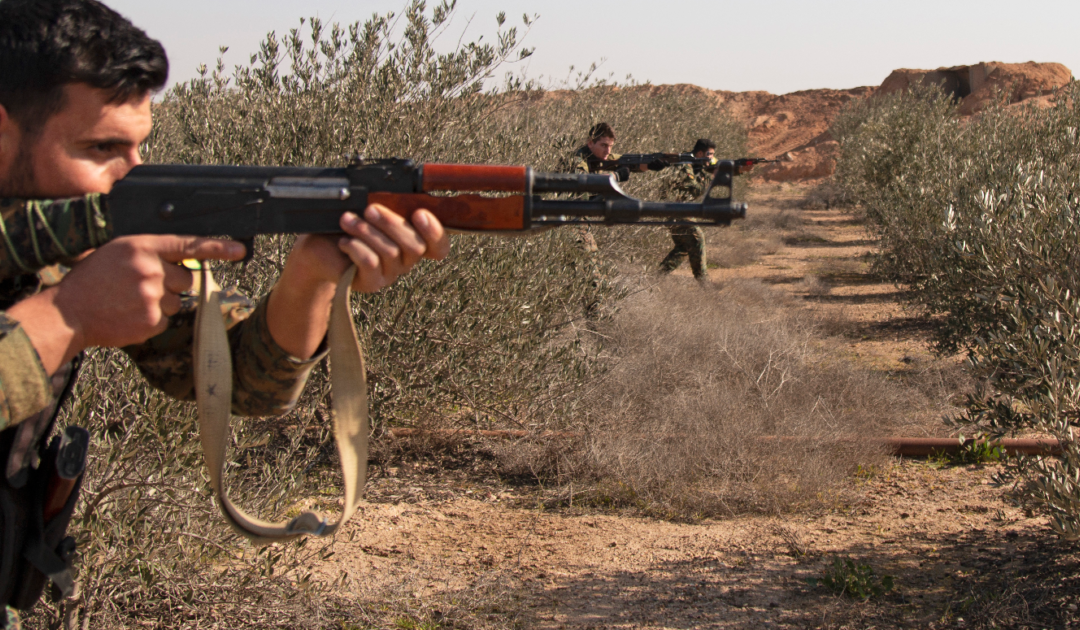
The violence shows how exposed Syria’s Kurds have become. The Syrian Democratic Forces (SDF) have been dissolved as an independent military force, Washington has withdrawn coalition forces from Iraq and reduced its military presence in Syria, ISIS cells are active along the border, and Kurds in Iraq face continuing drone strikes.
The October attacks were not the first. In September, a Kurdish soldier was abducted near Hasaka and later killed by gunmen believed to belong to a prominent Arab clan. He was serving in a Syrian army brigade made up of former SDF fighters. Security forces said they had identified the main suspect but made no arrest.
Unrest had also occurred in Kobane in September. On September 12, inmates rioted at a Kurdish-run prison. The ensuing fire killed at least seven prisoners, according to Syrian state media. Rudaw, a Kurdish media network based in Erbil in Iraq’s Kurdistan Region, put the death toll at nine. The Syrian Observatory for Human Rights said the riot began over plans to transfer inmates to Aleppo.
A Rudaw reporter in Kobane said government security forces sent to restore order chanted Islamic slogans and threatened Kurds. In many cases, Damascus and local officials have avoided prosecuting perpetrators on either side in an effort to keep the peace.
The SDF was formed in 2015 with U.S. support and led the ground campaign that defeated ISIS in Syria, including liberating Hasaka. A Syrian army offensive in January 2026 seized much of Hasaka governorate, pushing the SDF back into Hasaka and Qamishli. A ceasefire and integration agreement followed in late January, and government forces entered Hasaka city on February 2.
On August 24, Washington removed Syria from its list of state sponsors of terrorism. The next day, at the presidential palace in Damascus, commander Mazloum Abdi declared the SDF’s mission over and announced its dissolution as an independent military force. U.S. envoy Tom Barrack credited President Trump with making the integration possible. President Ahmed al-Sharaa named Abdi a presidential adviser on August 27.
On September 3, former SDF units began handing over heavy weapons and equipment to the Defense Ministry in Hasaka. Sipan Hamo, a senior SDF commander, was named deputy defense minister. Syria’s new army also includes Turkish-backed factions that spent years fighting the Kurds.
The Wall Street Journal reported in February that the U.S. was withdrawing roughly 1,000 troops from Syria, beginning with the al-Shaddadi base in Hasaka province and the al-Tanf garrison. In Iraq, the final coalition forces left on September 30, and the headquarters of Combined Joint Task Force–Operation Inherent Resolve relocated to Jordan. Central Command said U.S. forces continue counter-ISIS operations in Syria alongside coalition partners and the Syrian government. President Trump hailed the withdrawal as a victory, saying ISIS had been “completely decimated.”
ISIS remains active on both sides of the border. Iraqi Foreign Minister Fuad Hussein warned that its fighters could cross from Syria into Iraq. Syrian authorities had recently dismantled an ISIS cell operating across four provinces, arresting four leaders and seizing explosives prepared for attacks.
On October 5, militants attacked a Federal Police 9th Brigade position in Kirkuk’s Hawija district. ISIS also targeted security cameras in a Hawija village twice within 24 hours. Iraq’s Security Media Cell reported airstrikes against ISIS on October 11.
Analysts say Iraq’s border defenses cannot fully compensate for the loss of coalition intelligence, aerial surveillance, and long-range reconnaissance. Syria faces similar gaps.
Earlier this year, the U.S. transferred more than 5,700 adult male detainees from northeastern Syria to Iraqi custody. Syrian government forces took control of al-Hol, a camp holding relatives of suspected ISIS members, on January 20. Officials said it was emptied and closed on February 22. Human Rights Watch reported that many residents left in a chaotic, unplanned manner. At the time, the smaller Roj camp remained under Kurdish control and was also slated for closure.
In Iraqi Kurdistan, Kurds also face drone attacks. On July 31, three drones struck bases belonging to the Organization of Iranian Kurdistan Struggle (Khabat) near Erbil and in Nineveh province. In August, Prime Minister Masrour Barzani said Iranian drones had struck his personal office and the home of the head of the Parastin security agency.
On October 8, two explosive drones struck a Khabat camp in Erbil province, starting a fire. No one was injured, and no group claimed responsibility. A security officer suggested a possible Iranian link based on the pattern of previous targets.
The October attack ended more than a month of relative quiet and was the first since the coalition removed its air defense systems at the end of September. The New Region reported that Iran and affiliated groups had launched more than 1,000 drone and missile attacks on the Kurdistan Region since the U.S.–Iran war began on February 28, 2026. The Kurdistan Regional Government has repeatedly called on Baghdad to stop attacks launched from or through Iraqi territory.
Syria’s Kurds now depend on a central government army that includes their former enemies. They no longer have the independent armed forces they built over a decade or the backing of U.S. troops that once supported them.
The post After SDF Dissolution and U.S. Exit, Kurds Face Threats on Both Sides of the Syria-Iraq Border appeared first on The Gateway Pundit.
Go to Source
Author: Antonio Graceffo