Washington Outspends the World on Healthcare: $2.5 Trillion in Taxpayer Money

Washington Outspends the World on Healthcare: $2.5 Trillion in Taxpayer Money

Washington Outspends the World on Healthcare: $2.5 Trillion in Taxpayer Money
October 18, 2026

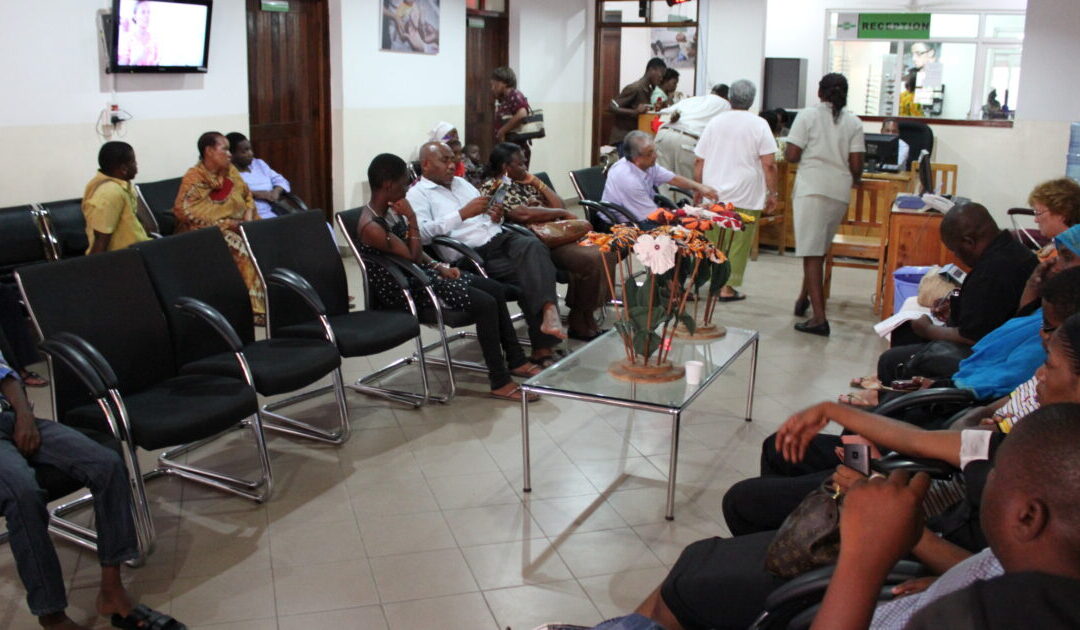
The U.S. spends more on healthcare than any other nation, and despite not having socialized medicine, the vast majority of Americans are covered by either employer-sponsored plans or government programs. Photo: Department of Foreign Affairs and Trade, CC BY 2.0, via Wikimedia Commons.

With the Nov. 3 midterm elections less than three weeks away, healthcare has become a central Democratic campaign issue. An Associated Press analysis of AdImpact data found that healthcare was the most common issue in Democratic House and Senate ads since Sept. 1.

Democrats have made four claims: that Washington spends more on war than on healthcare, that most Americans lack health insurance, that Trump’s Medicaid changes take coverage away from poor Americans, and that socialized medicine provides better care. All four claims are false, as the spending figures, insurance coverage data, Medicaid provisions and international comparisons below demonstrate.

U.S. national health spending reached $5.3 trillion in 2024, or $15,474 per person, according to CMS data. That spending was equal to 18.0 percent of GDP. The federal government paid for 31 percent of total health spending, and state and local governments paid for 16 percent. Combined, government at all levels paid roughly $2.5 trillion.

That figure is nearly double the entire health budget of China, the world’s second-largest economy. According to China’s National Health Commission, China’s total health spending in 2024 was an estimated 9.09 trillion yuan, about $1.27 trillion in public and private spending combined, with the government paying 24.9 percent. Per person, the OECD’s health division head told the Senate Special Committee on Aging that U.S. government health spending per capita was greater than in all other OECD countries.

That spending funds coverage for more than a third of Americans. The Census Bureau found that 92.0 percent of Americans, 310 million people, had health insurance in 2024. Employer coverage was the most common type at 53.8 percent, followed by Medicare at 19.1 percent and Medicaid at 17.6 percent. Overall, 66.1 percent of Americans had private coverage and 35.5 percent had public coverage. Government coverage is concentrated among low-income Americans. Public coverage rates fall as income rises: Census figures show 77.0 percent of children and 50.7 percent of adults in poverty had public coverage, compared with 6.7 percent and 5.7 percent of those at or above 400 percent of the poverty line.

Trump signed the One Big Beautiful Bill Act into law on July 4, 2025, and Democrats have since described its Medicaid provisions as taking healthcare away from vulnerable Americans. In a May 2025 press release, House Democratic Leader Hakeem Jeffries called the bill “the largest healthcare cut in our country’s history” and said millions would lose Medicaid coverage. A statement from Jeffries and House Democratic leaders said the law takes healthcare and food assistance from millions of people to fund tax cuts for the wealthy. Rep. Bobby Scott, ranking member of the House Education and Workforce Committee, said Republicans would strip healthcare from the Americans most in need.

The law does not kick poor people off Medicaid, and it does not raise the income eligibility threshold, which remains 138 percent of the federal poverty line. It simply requires able-bodied adults to work, study or volunteer 80 hours a month.

The 138 percent limit equals about $21,597 a year for an individual in 2025, and adults who qualified on income before the law still qualify on income. What changes is how often eligibility is checked: beginning Jan. 1, 2027, states must verify the income test every six months instead of once a year.

A frequently repeated claim holds that the United States is the only industrialized nation without socialized medicine. Under socialized medicine, the government owns the hospitals and employs the doctors, as in Britain’s National Health Service. Many industrialized countries do not use that model. Switzerland and the Netherlands achieve universal coverage through a mandate that every individual buy a basic plan from regulated private insurers.

Germany, France and Japan use statutory insurance systems with largely private providers. The United States, meanwhile, operates its own government-run system: the Veterans Health Administration runs 170 medical centers and 1,193 outpatient sites serving more than 9.1 million enrolled veterans. Nor is the United States the only OECD country without universal coverage: the OECD reports that coverage for core services remained below 95 percent in four member countries in 2024.

In many countries with government-run systems, a private medical sector operates alongside the public one because patients cannot get timely public care. Among 29 OECD countries with comparable data, nine had private insurance covering more than half the population in 2024. In Britain, NHS waiting lists grew from 4.24 million in March 2020 to 7.37 million in June 2025, and concern about NHS waiting times was the leading reason consumers gave for buying private insurance.

In Ireland, 2.55 million people, about 46 percent of the population, held private health insurance at the end of 2025. The main reasons Irish policyholders gave in the state regulator’s survey were lack of access to public services and longer waiting lists. In Spain, private coverage rose from 23 percent of the population in 2020 to 26 percent in 2025, nearly 13 million people, driven largely by waiting times in the public system.

In Canada, patients leave the country and pay for treatment themselves, overwhelmingly choosing the United States. Long waits and unavailable treatment were leading reasons for seeking care outside Canada. More recently, the Fraser Institute estimated that 105,529 Canadians received non-emergency medical treatment abroad in 2025.

That is ironic given the Canadian criticism that America lacks socialized medicine: Canadians cross the border to pay for American healthcare because they can obtain treatment sooner or access care unavailable at home.

While liberals believe that pointing out America’s lack of socialized medicine is a dig at Republicans, it actually underscores a strength of the U.S. system, where the average salary is higher and the average tax rate is lower than in Canada, Germany, and all but a few countries in the world.

The post Washington Outspends the World on Healthcare: $2.5 Trillion in Taxpayer Money appeared first on The Gateway Pundit.

Go to Source
Author: Antonio Graceffo

French Journalist Paul Amar Claims Some Businesses Were Left Alone During Attacks in France For One Specific Reason (Video)

French Journalist Paul Amar Claims Some Businesses Were Left Alone During Attacks in France For One Specific Reason (Video)

French Journalist Paul Amar Claims Some Businesses Were Left Alone During Attacks in France For One Specific Reason (Video)
October 18, 2026

French journalist Paul Amar/Image via @paul_amar2/X

French journalist Paul Amar appeared on CNews, a 24-hour French news and opinion channel, to discuss the ongoing violent and destructive Islamo-Marxist riots in France.

Some of the common targets of looting and destruction are local shops and businesses.

One woman tearfully pleaded with a mob not to destroy the business she works at, but the thugs ignored her and pushed through the doors anyway.

Amar suggests that, at least in Marseille, there is a very specific reason some shops were left untouched while others were looted and burned.

Amar asserts, “The degree of preparation for that day was very significant. They had the prefect’s address; her residence was set on fire.”

“You can find the town hall’s address; it is always in the city centre.”

“But the prefectures’ address …they had the addresses of quite a few Jewish shop owners.”

“On one street in Marseille, I learned this this morning, all Jewish-owned businesses were set on fire.”

“Businesses run by Muslims were not.”

“That level of preparation raises questions.”

“And the intelligence services knew.

Watch:

And where is French President Emanuel Macron during the destruction of his country?

He spent his Friday night at the Celine Dion concert.

Let Them Eat Cake! Macron Goes to Celine Dion Concert as Paris Burns

The post French Journalist Paul Amar Claims Some Businesses Were Left Alone During Attacks in France For One Specific Reason (Video) appeared first on The Gateway Pundit.

Go to Source
Author: Margaret Flavin

School Shootings, Gangs, Accidents, and Suicide: The Truth About Kids and Shootings

School Shootings, Gangs, Accidents, and Suicide: The Truth About Kids and Shootings

School Shootings, Gangs, Accidents, and Suicide: The Truth About Kids and Shootings
October 18, 2026

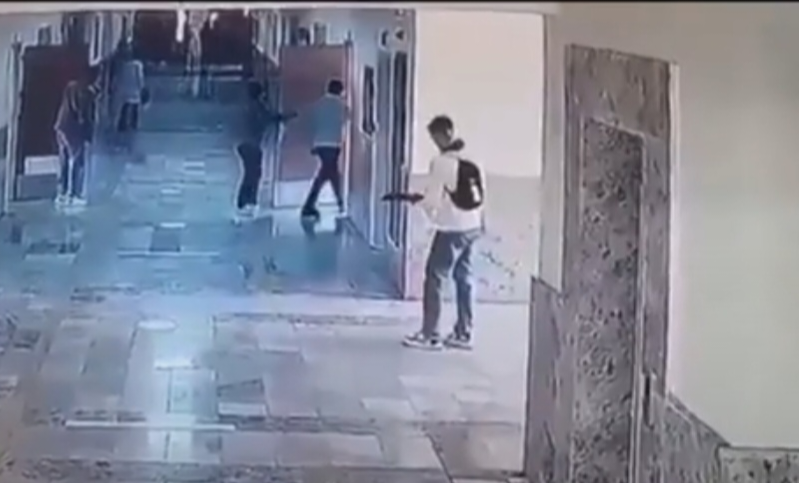
School shootings represent a very small percentage of gun deaths and an even smaller percentage of child deaths, but Democrats try to use them as leverage to take guns away from everyone. Photo: Unknown author, via Radio 93, public domain, via Wikimedia Commons.

On October 15, a 16-year-old former student shot out the glass panes of a side door at Silver Rail Elementary School in Bend, Oregon. He then opened fire in a special needs classroom where he had once been taught. He killed three children, ages 5, 8, and 11, and a 25-year-old teacher, and wounded a 7-year-old girl and a 54-year-old teacher. A father of two Silver Rail students followed him inside with a legally owned .40-caliber pistol and shot him dead.

Education Week’s tracker has recorded 26 K–12 school shootings with injuries or deaths so far this year, resulting in 17 deaths. The Bend attack was the deadliest.

After a school shooting, a familiar claim circulates online: school shootings are the leading cause of death among American children. The claim is categorically false and can be rejected on basic logical grounds: school shootings cannot be the leading cause when other causes account for far more than 17 child deaths each year. The data also support this argument. The claim confuses a narrow category of violence with a much broader mortality statistic.

The statistic cited to claim that school shootings are the leading cause of death among American children actually covers all firearm deaths among young people ages 1 to 17, wherever they occur, including homicides, suicides, and unintentional shootings.

The Johns Hopkins Center for Gun Violence Solutions analyzed CDC death-certificate data and counted 2,214 firearm deaths in that age group in 2024. On that basis, it ranked guns as the leading cause of death for the fifth consecutive year. However, that ranking depends on how the comparison is built.

The report ranks guns against other individual causes of death, and its own chart shows that firearm deaths exceeded the 2,119 motor vehicle deaths by 95. Cancer followed with 1,511 deaths, drowning with 891, and suffocation with 866.

The chart excluded 1,587 deaths classified as “all other diseases” and 973 from congenital abnormalities. Combined with cancer, those categories accounted for 4,071 deaths among young people ages 1 to 17, nearly twice the firearm total. The firearm category combines homicides, suicides, and accidents, while disease is divided into separate categories. Under that grouping, guns rank first.

Nearly 60% of the firearm deaths were homicides, and 31% were suicides. The same report notes that firearms were not always the leading cause of death within individual youth age groups.

School shootings account for a small fraction of the total. Education Week’s 2024 tracker counts only shootings on K–12 property or school buses and excludes suicides. It recorded 18 deaths in school shootings in 2024, including 10 school employees or other adults.

The word “children” also obscures large differences between young children and older teenagers. Of the 2,214 firearm deaths among those ages 1 to 17 in 2024, 1,547 were teenagers ages 15 to 17, about 70% of the total. Another 450 were ages 10 to 14, 98 were ages 5 to 9, and 119 were ages 1 to 4, according to the Johns Hopkins data. Children ages 1 to 9 accounted for about 10% of the total. A single combined figure treats a 6-year-old and a 16-year-old as if they faced the same risk.

Gang violence accounts for a large share of shootings in some communities. In November 2024, Manhattan District Attorney Alvin Bragg announced the indictment of 30 members of three gangs and crews. His office said they were responsible for about 50% of shootings that year in Washington Heights and Inwood. The rivalry began with a killing in 2018 and led to 18 shootings that killed seven people, including innocent bystanders.

In Boston, the police department’s 2024 surveillance report states that, over the preceding five years, an average of 35% of shooting victims were listed in its Associative Violence Information System, formerly the Gang Assessment Database. The database contains about 0.25% of the city’s population.

National data also show a concentration of gang activity among young teenagers. The FBI’s Gang Activity, 2021–2024 report, released in September 2025, counted 69,273 incidents involving gang activity. Those ages 13 to 16 were the most frequently reported age group among both offenders and victims, and weapons were used in 80.4% of gang-related incidents.

For young children, disease kills far more than guns do. CDC’s 2024 mortality tables show that among children ages 1 to 4, congenital abnormalities caused 402 deaths and cancer caused 278, compared with 119 firearm deaths in the Johns Hopkins count. Among children ages 5 to 9, cancer caused 400 deaths and congenital abnormalities caused 225, compared with 98 firearm deaths. Cancer alone killed 678 children ages 1 to 9, more than three times the 217 firearm deaths in that age range.

Among those ages 10 to 14, the figures converge: CDC recorded 446 cancer deaths and 487 suicides, while Johns Hopkins counted 450 firearm deaths.

Rankings depend on how causes are grouped. CDC’s standard rankings classify injury deaths by intent, with unintentional injuries ranking first in each age group from 1 to 14. Cancer and congenital abnormalities follow among children ages 1 to 9; suicide and cancer follow among those ages 10 to 14. The Johns Hopkins comparison groups firearm deaths by method, combining homicides, suicides, and accidents into one category. Both rankings are accurate under their respective classifications.

Among unintentional injuries, drowning is the leading cause of death for children ages 1 to 4, while motor vehicle crashes lead among those ages 5 to 14, according to CDC data compiled by the Children’s Safety Network.

The firearm comparison also excludes infants under one year old. According to CDC’s 2024 data, the leading causes of infant death were congenital abnormalities (4,061 deaths), short gestation (2,941), and sudden infant death syndrome (1,351).

Accurate reporting identifies the year, age range, location, and circumstances behind a death count. School shootings, gang violence, accidental discharges, and suicides are separate problems requiring different responses. These include school security, intervention in retaliatory gang violence, and treatment for a suicidal teenager. Folding all these deaths into a claim about school shootings gives readers a false picture of what the statistics measure.

As tragic as school shootings are, they result in a very small number of deaths each year. After a school shooting, the solution liberals always propose is to pass more laws. However, school shootings are already illegal. Next comes the false claim that Republicans are doing nothing about them. Yet nearly 100% of school shooters in U.S. history have either been killed or arrested.

The other solution liberals recommend is taking guns away from everyone. However, crime in other countries demonstrates that when guns are illegal, criminals still have them while citizens are left defenseless. Cellphone videos and citizen reporting now support the “good man with a gun” theory, showing how armed citizens can defend themselves and others.

The same liberals who regard 17 children killed annually in school shootings as a holocaust support abortion, which kills 1.5 million children each year. Those who want the Second Amendment abolished also claim that women were robbed of a constitutional right when Roe v. Wade was overturned, even though the Constitution says nothing about women or anyone else having the right to kill babies.

The post School Shootings, Gangs, Accidents, and Suicide: The Truth About Kids and Shootings appeared first on The Gateway Pundit.

Go to Source
Author: Antonio Graceffo

Barack Obama Gets Nailed With a Devastating Reminder After He Gives His ‘Thoughts’ on the Ilhan Omar Raid

Barack Obama Gets Nailed With a Devastating Reminder After He Gives His ‘Thoughts’ on the Ilhan Omar Raid

Barack Obama Gets Nailed With a Devastating Reminder After He Gives His ‘Thoughts’ on the Ilhan Omar Raid
October 18, 2026

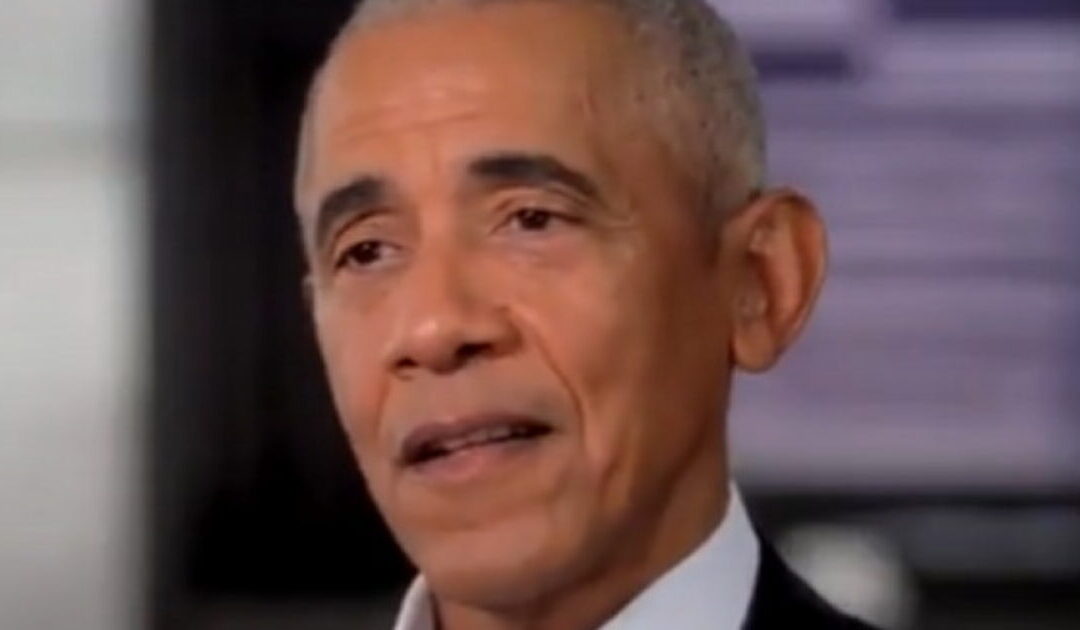
Screencap of Twitter/X video.

Former President Barack Obama has broken his silence regarding the raid on Rep. Ilhan Omar’s (D-MN) DC home earlier last week and is currently getting lit up on X with a brutal reminder.

As The Gateway Pundit reported, federal agents raided the Washington, DC-area residence of Omar early Monday morning as part of an ongoing criminal investigation into her immigration paperwork.

The pre-dawn raid was part of an ongoing criminal fraud investigation into the Somali-born congresswoman’s immigration paperwork, documents filled out by her late father when she was a child.

The New York Times exclusively reported on Saturday that federal officials seized the phone of Omar’s Sister, Sahra Noor, earlier this year. When they did so, they noticed that the phone contained damning family text messages.

Investigators then later used these messages to get a federal judge to authorize the raid on Omar’s home.

But Obama was not bothered by any of these facts. Instead, he posted a long screed on X, whining that Trump was targeting Omar because of her political beliefs.

LOOK:

X users were quick to note a very interesting irony in Obama’s post. They reminded Obama that he not only spied on Trump’s first presidential campaign, but he also ordered the Russian Hoax to undermine his presidency.

Obama clearly has no shame or leg to stand on when it comes to scolding Trump.

The post Barack Obama Gets Nailed With a Devastating Reminder After He Gives His ‘Thoughts’ on the Ilhan Omar Raid appeared first on The Gateway Pundit.

Go to Source
Author: Cullen Linebarger

Cuba Opens Oil Refineries and Fuel Depots to Private Investment as Energy Crisis Deepens

Cuba Opens Oil Refineries and Fuel Depots to Private Investment as Energy Crisis Deepens

Cuba Opens Oil Refineries and Fuel Depots to Private Investment as Energy Crisis Deepens
October 18, 2026

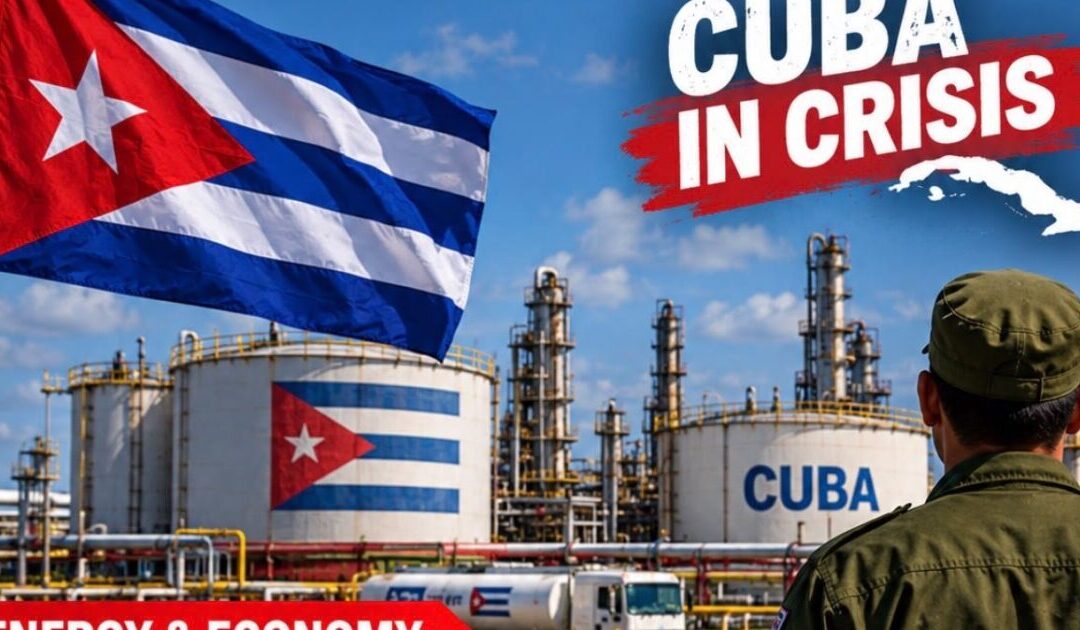
Cuba is opening the door to private investment in its oil industry as the communist-run island struggles with a deepening energy crisis, fuel shortages and persistent economic instability. The new measures could create opportunities for domestic businesses and foreign investors in a sector that has long remained under tight government control.

Last week, the Cuban government published Decree-Law 135/2026, known as the Oil and Gas Law, alongside Decree 184/2026, which establishes implementing regulations. The new legal framework expands the possibilities for private and foreign participation in oil exploration, production, refining, transportation, storage and commercialization. The regulations are scheduled to take effect tomorrow.

Under the new rules, authorized private businesses and foreign investors may participate in activities involving refineries, fuel storage facilities and other parts of the petroleum supply chain. Refineries will also be able to sell fuel wholesale and, with the required authorization, directly to the public.

This represents a potentially important change in a country where the state has historically dominated the energy industry. However, it does not amount to a wholesale privatization of Cuba’s oil infrastructure. The government retains control over the sector, and participation by investors remains subject to official authorization and regulatory restrictions.

A desperate search for capital and energy

Cuba’s energy crisis has placed enormous pressure on transportation, commerce, manufacturing and public services. Fuel shortages and electricity blackouts have disrupted daily life, while businesses have struggled to maintain operations in an economy already weakened by shortages, inflation and limited access to foreign currency.

The island needs substantial investment to modernize its energy infrastructure, improve the reliability of fuel supplies and increase domestic production. Yet the government has limited resources to finance these needs on its own.

Allowing private capital into parts of the petroleum industry could help bridge that gap. Investors may bring financing, technical expertise, equipment and operational capabilities that state-owned enterprises lack or cannot readily obtain.

The reality people can now see is that Cuba cannot easily address its infrastructure crisis without attracting additional capital and improving the conditions under which businesses operate.

On July, the government was outlining broader plans to open selected sectors of the state-run economy to private enterprise, even as dictator Miguel Díaz-Canel insisted that key national assets would not undergo mass privatization. The new petroleum legislation represents a further step in that cautious approach to economic reform.

What opportunities could the new rules create?

The legislation potentially opens several areas of activity to qualified investors.

Authorized companies could participate in refining projects or arrangements designed to improve the processing and distribution of petroleum products.

Investment in storage infrastructure could also help strengthen supply capacity and improve the movement of fuel throughout the country.

Businesses may find opportunities in authorized activities involving the transportation, wholesale marketing and commercialization of oil, gas and their derivatives.

The expanded legal framework also provides mechanisms for participation in the exploration and exploitation of oil and gas resources, subject to the required approvals and contractual arrangements.

Overseas investors could explore partnerships with Cuban entities, although any proposed investment must comply with Cuban law and applicable authorization requirements.

For international companies, the potential attraction is access to a market with substantial energy needs and an aging infrastructure requiring modernization.

The Cuban government is not surrendering control of its energy sector

The new framework permits participation by authorized private actors, including Cuban micro, small and medium-sized enterprises, other qualifying private companies and foreign investors. Nevertheless, participation depends on the nature of the activity and the applicable permits and approvals.

Investors may be permitted to contribute capital to particular projects or participate in contractual arrangements without acquiring ownership of the underlying strategic assets or gaining unrestricted control over their operations.

The reform therefore represents a controlled opening of the market rather than a transition to a fully liberalized energy industry.

There is a fundamental question about whether private participation will improve competition and efficiency or whether the existing state-controlled system will continue to limit the benefits reaching consumers.

International investors must also evaluate contractual protections, payment arrangements, currency risks, infrastructure limitations and the practical enforceability of their agreements.

In other words, the opening creates potential opportunities, but investors will need to conduct careful due diligence before committing capital.

Economic pragmatism or a deeper transformation?

Cuba’s decision to permit greater private participation in its petroleum industry illustrates the tension between the government’s commitment to maintaining state control and the practical need for outside resources.

For decades, the island’s economic model has restricted private participation in strategic industries. Now, amid an escalating energy crisis, the government is creating additional mechanisms to attract capital into one of the sectors most essential to economic survival.

Whether this approach produces lasting change remains uncertain. The government could use private investment to modernize infrastructure while preserving its existing economic model. Alternatively, the experience could demonstrate that a more substantial expansion of private enterprise is necessary to improve productivity and attract sustained investment.

The post Cuba Opens Oil Refineries and Fuel Depots to Private Investment as Energy Crisis Deepens appeared first on The Gateway Pundit.

Go to Source
Author: Gateway Hispanic

JUST IN: Trump Endorses Prime Minister Benjamin Netanyahu in Upcoming Israeli Election

JUST IN: Trump Endorses Prime Minister Benjamin Netanyahu in Upcoming Israeli Election

JUST IN: Trump Endorses Prime Minister Benjamin Netanyahu in Upcoming Israeli Election
October 18, 2026

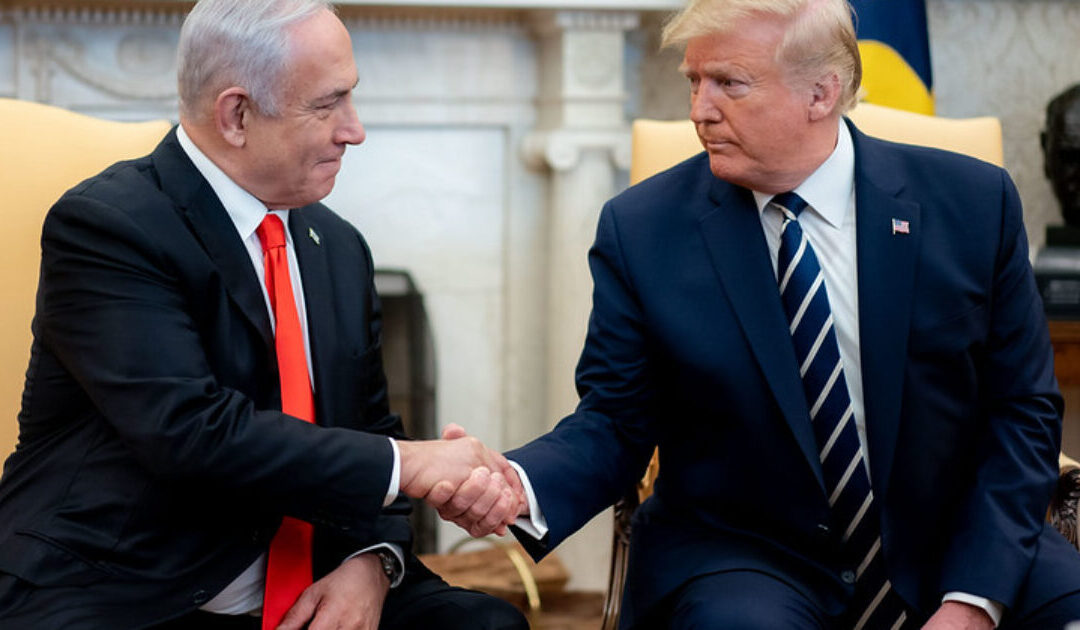
“President Trump Meets with Israeli Prime Minister Benjamin Netanyahu” by Trump White House Archived, Public Domain Mark

President Trump endorsed Benjamin Netanyahu for reelection in the upcoming Israeli elections less than two weeks before the October 27 vote.

CNN reports:

Trump has so far declined to endorse Netanyahu and has sidestepped questions on whether he should be reelected.

“I’m not involved in [Israeli] politics anymore,” he told Time earlier this month. On Thursday, Trump told Newsmax Netanyahu would like him to be involved in the election. “I’ve had a very good relationship with him,” he said, but avoided endorsing him again. When asked directly whether he trusts Netanyahu, he said bluntly, “I don’t trust anybody in the world of politics.”

For a campaign that has traditionally treated Netanyahu’s intimacy with the White House as a major electoral asset, the restraint is notable.

Trump last week also sidestepped a question on why he hadn’t endorsed any candidates, telling reporters, “We haven’t even thought about it.” He added, I may be doing something.”

WATCH:

Previously, Trump reportedly lashed out at Netanyahu during a heated phone call, with reports suggesting that Trump called him “f*cking crazy” for continuing the war amid US-Iran negotiations, accused Netanyahu of ingratitude, and referenced helping keep him out of jail during his corruption trial. The two have not met face-to-face since a closed-door meeting in August, and they did not meet in September during the UN General Assembly in New York.

Still, Trump released a statement on Sunday morning, calling Netanyahu a “Great Warrior” and a “greater Partner for Peace.”

“If Israel has the wrong Leader, which would be anyone other than Bibi, America will have to do this work ourselves, and I am not inclined to do so,” he said.

Full statement below:

To the Great People of Israel:

Bibi Netanyahu has been a Great Warrior Prime Minister, and an even greater Partner for Peace in combatting the Islamic Republic of Iran, with its 51 year old chant, “Death to Israel, Death to America! We will destroy the Little Satan and the Big Satan.” What Country can survive when things such as this are allowed to be said, because eventually, they always end up being true? It would have been only a question of time until Iran would have put that ominous phrase into effect, but they have been systematically destroyed, both Militarily and Financially, and unless they change their ways, rapidly, we will soon finish the job. If Israel has the wrong Leader, which would be anyone other than Bibi, America will have to do this work ourselves, and I am not inclined to do so.

Bibi Netanyahu has been Strong, Brave, and Brilliant in the face of tremendous opposition, including that coming from even Israel, itself. Despite all of that, he has endured and, in fact, he has thrived! I have watched Bibi under the most trying of times. Normal men or women in such situations would have wilted under the pressure — But Bibi did not wilt, he actually got stronger, and maintains that same Strength today. This is the kind of Partner that the United States of America is demanding of Israel, a Country for which it has done so much. Please let this Letter serve to represent my Complete and Total Endorsement of Bibi Netanyahu in his upcoming Race for Re-Election as Prime Minister of Israel. BIBI NETANYAHU WILL NEVER LET YOU DOWN! Thank you for your attention to this matter.

DONALD J. TRUMP
PRESIDENT OF THE UNITED STATES OF AMERICA

The post JUST IN: Trump Endorses Prime Minister Benjamin Netanyahu in Upcoming Israeli Election appeared first on The Gateway Pundit.

Go to Source
Author: Jordan Conradson