JUST IN: Katie Zacharia Puts Out Statement Confirming Departure as Press Sec
October 16, 2026
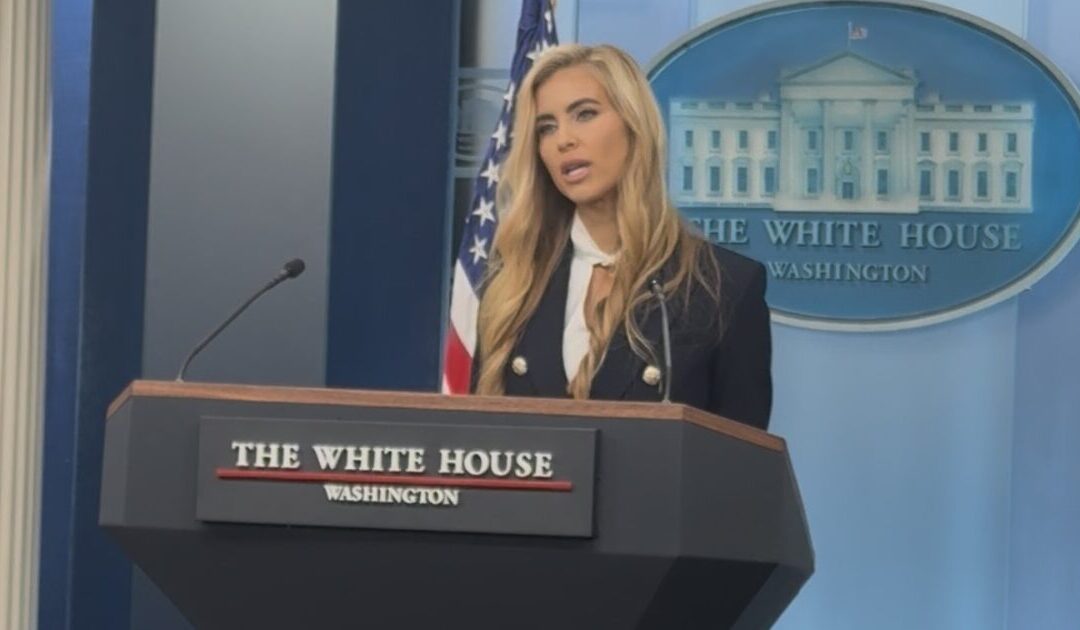
Katie Zacharia delivers her first White House press briefing – October 13, 2026 (photo by Jordan Conradson/TGP)
Katie Zacharia released a statement on Friday evening saying it was an “honor to work for” President Trump after her departure as White House Press Secretary earlier.
This comes after Trump told reporters that he had asked her to reconsider accepting the job after the relentless abuse from the mainstream media following her first press briefing on Tuesday.
The attacks were even coming from within the administration, with officials trashing her to the press and reported controversy over her appointment to the role.
Zacharia told The Gateway Pundit that she had not been fired.
As The Gateway Pundit reported earlier, Trump weighed in on the media’s attacks on Zacharia over the week, telling reporters that she did not deserve to be treated so “nastily” by the hostile press, including Fox News.
Trump said Fox’s Sean Hannity and the Fox and Friends panel this morning were “tough” on her after Fox News grilled Zacharia in interviews.
“Katie’s been treated very badly by the media, very, very badly, very unfairly, I think, and I just spoke to her about it,” Trump said.
WATCH:
Almost immediately after, Fox News reported that Zacharia had told Peter Doocy that she was “transitioning out” of her role in the press office.
“President Trump is a kind, wonderful, gracious, thoughtful, enthusiastic, and hardworking man. I wish more Americans appreciated him. No one will ever make America great the way he has and continues to,” Zacharia wrote on X.
“It was an honor to work for him.”
President Trump is a kind, wonderful, gracious, thoughtful, enthusiastic, and hardworking man. I wish more Americans appreciated him. No one will ever make America great the way he has and continues to.
It was an honor to work for him. https://t.co/Tp4NizrhE2
AOC Says Discussing Abdul El-Sayed’s Reported Ties to the Muslim Brotherhood is… RACIST! (VIDEO)
October 16, 2026
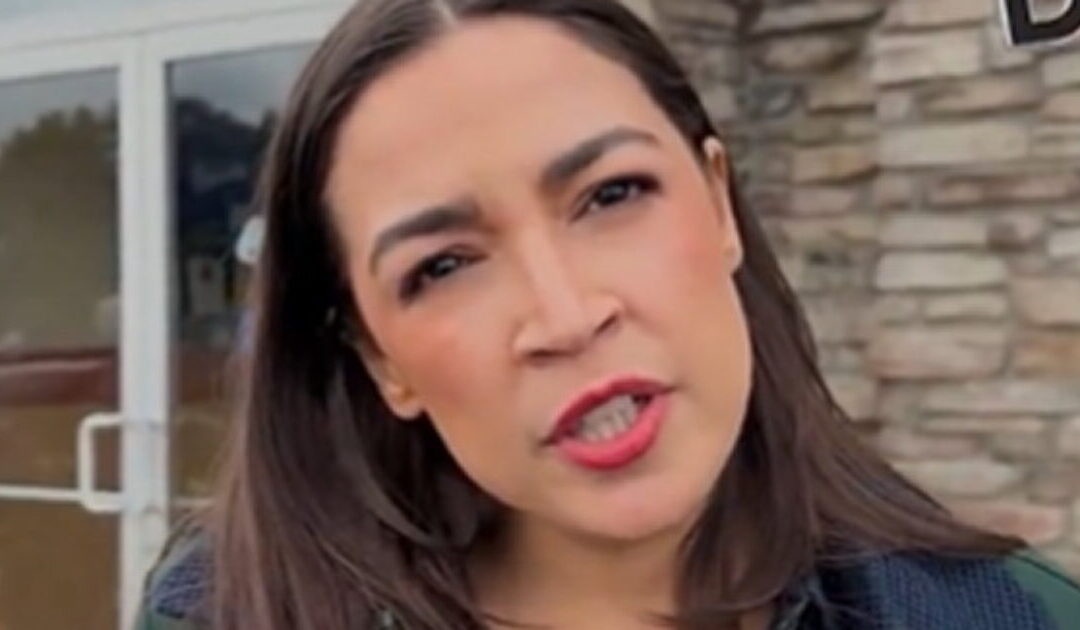
Screencap of Twitter/X video.
Rep Alexandria Ocasio-Cortez of New York recently spoke to a reporter for TMZ in DC – an outlet that is obviously becoming one of her favorites – and explained that talking about Abdul El-Sayed’s alleged family ties to the Muslim Brotherhood is (drumroll please) racist.
To hear AOC explain it, Abdul El-Sayed is a victim here, because his family had some struggles when he was a little boy. Oh and also, if you examine anyone’s life hard enough, won’t you find some questionable connections? She actually tries to make this point.
For the Democratic Socialists of America (DSA), this is probably the mot important race in this election cycle. They think that if they can drag El-Sayed over the finish line in Michigan, they can do it anywhere in the country. For them, this is an important test case.
AOC on Abdul El-Sayed – Racist Muslim Brotherhood Claims Are Dirty Politics!!!
Rep. Alexandria Ocasio-Cortez is coming out swinging for Abdul El-Sayed … calling claims linking the Michigan senatorial candidate to the Muslim Brotherhood flat-out racist.
Charlie got AOC on Friday at a Culver’s in Michigan, where she’s been campaigning for El-Sayed … and he asked whether the Muslim Brotherhood controversy was rooted in reality or racism.
AOC didn’t mince words … saying the allegations fall “into racist very clearly” and blasting critics for dragging El-Sayed’s painful family history into politics…
AOC points out El-Sayed’s parents split shortly after he was born, and he grew up without his mother … arguing just about everyone has relatives who’ve made questionable choices, but that doesn’t mean those choices define them.
And AOC isn’t budging on her support … calling El-Sayed “one of the most patriotic people” she’s ever met.
AOC isn’t fooling anyone with this:
AOC dismisses concerns about Abdul El-Sayed’s ties to the Muslim Brotherhood: “It’s very clearly racist. He’s one of the most patriotic people I’ve ever met.” pic.twitter.com/wiMLnB3P8R
If a Republican was running in this cycle and had family ties to a questionable organization and it was being reported in the news, do you think AOC would be out here defending him or her? Not a chance.
OUTRAGEOUS: City Allegedly Barred Man From Becoming a Firefighter – Because He Was Homeschooled (VIDEO)
October 16, 2026
Screencap of Twitter/X video.
A city in the state of Nebraska is under legal fire right now for allegedly barring a man from becoming a firefighter because he was homeschooled.
It’s so ridiculous, like, who cares how the man was educated? He is fit for the job or he isn’t.
At some point in recent years, the job of firefighter became politicized. People on the left decided that the profession had too many men in it, despite the fact that body strength is one of the most important aspects of the job.
In this particular case, the American Center for Law and Justice (ACLJ) has gotten involved and they are fighting for this man’s rights.
Jordan Sekulow, who is a lawyer and part of the ACLJ, writes at Townhall:
City Banned a Homeschooled Firefighter. Now It’s Displaying Disdain for Homeschooling.
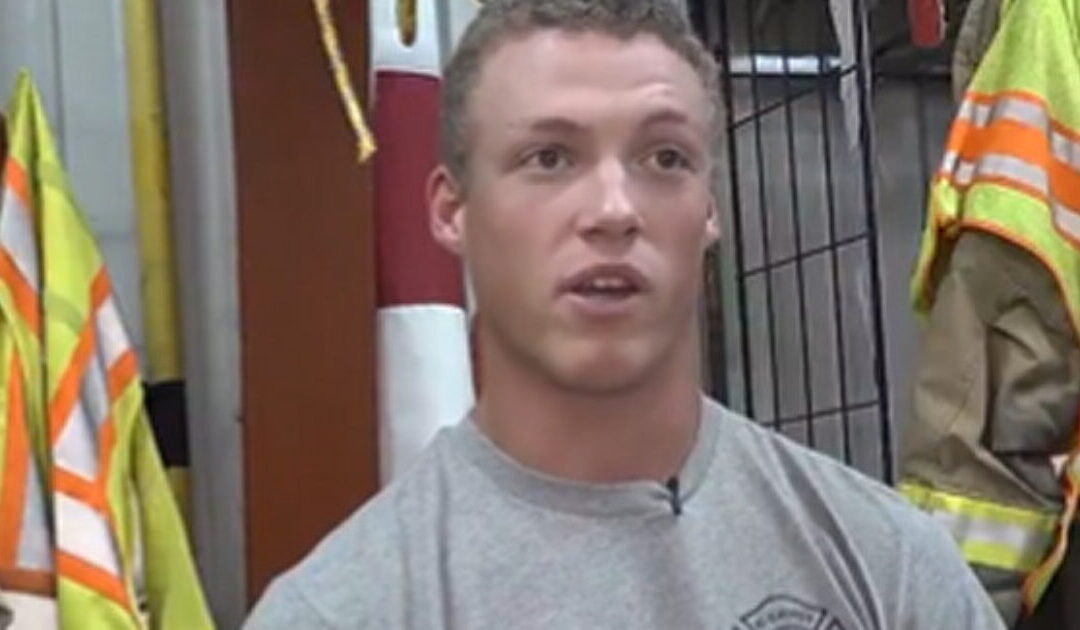
Andrew Coates wants to be a firefighter. He’s a licensed EMT, has earned recognition as “Rookie Firefighter of the Year,” and has dedicated himself to pursuing a career serving and protecting his community.
But when Andrew applied to become a firefighter in Fremont, Nebraska, the city refused to let him compete for the position.
Why? Because Andrew was homeschooled.
Despite Nebraska law expressly protecting the right of families to homeschool their children, Fremont maintained a discriminatory hiring policy that excluded Andrew from consideration simply because of how he received his education.
It didn’t matter that Andrew was qualified. It didn’t matter that he had already demonstrated his dedication to emergency services. The city shut him out of the hiring process because he was homeschooled.
When the American Center for Law and Justice (ACLJ) learned what had happened, we stepped in to represent and defend Andrew’s rights.
We challenged Fremont’s unconstitutional restriction and demanded that the city stop discriminating against homeschool graduates. And our efforts forced the issue before the Fremont City Council.
See a video report below:
Let’s help Andrew Coates, and all homeschooled have equal opportunities for employment nationwide. Nebraska should be ashamed of these pos small town politicians.
‘Help this kid by making noise’: Town denies state-certified EMT firefighter job because he was homeschooled!… pic.twitter.com/waxzBUV1AB
WATCH: Black Democrat Woman From Michigan Explains Why She is Voting for Republican Mike Rogers (VIDEO)
October 16, 2026
Screencap of Twitter/X video.
Melanie Rutherford is a black woman from Michigan who is also a Democrat. This fall, she will be voting Republican for the first time to support Mike Rogers in the Michigan Senate race.
Rutherford knows politics well. She served as a member of the Pontiac city council and has always been a Democrat but as she explains below, she believes Mike Rogers will do a better job of representing everyone in the state, rather than a select few.
This is what Abdul El-Sayed is up against in this race. The black community is not on board with the radical new vision of the Democrat Party introduced by the DSA wing.
Black Democrat woman just went on national TV saying SHE’S VOTING MIKE ROGERS in Michigan
First time in her life voting Republican
NOT voting Abdul El Sayed.
“I started doing my research on Mike Rogers. I’m a staunch Democrat…my policies align with Rogers. He’s about the conglomerate of people, not just a select few.”
“I couldn’t in my right mind vote for this guy…his ideas don’t align with what I think is best.”
“You can be ostracized…everybody knows me as a staunch Democrat.” — Melanie Rutherford
Watch the whole thing below:
WOW! Black Democrat woman just went on national TV saying SHE’S VOTING MIKE ROGERS in Michigan
First time in her life voting Republican
NOT voting Abdul El Sayed.
“I started doing my research on Mike Rogers. I’m a staunch Democrat…my policies align with Rogers. He’s… pic.twitter.com/fA3Z8eGpZK
CBS Tried to Trash Trump Again, Now They’re Facing Another Multimillion Suit, This Time from a 15-Year-Old They Trashed
October 16, 2026
In what appears to have been an attempt made over the summer to impugn President Donald Trump, CBS News published bad information that’s now poised to potentially cost it $20 million in damages.
While covering the vandalism occurring at the Lincoln Memorial Reflecting Pool over the summer, CBS News identified a detained 15-year-old Maryland teenager known as simply “JV” as one of the culprits.
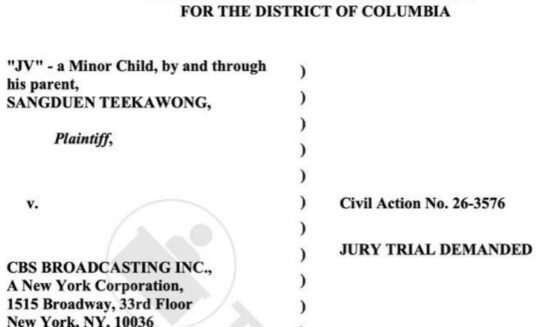
But according to a lawsuit filed on Wednesday in the U.S. District Court in the District of Columbia, “JV” was not, in fact, responsible for any vandalism.
“He was not arrested for vandalizing it,” the lawsuit states, as reported by Fox News. “He was not accused by law enforcement of vandalizing it.”
(Source: The Desk)
According to The Desk, the media-focused news site that first reported the lawsuit story, “JV” was riding an electric dirt bike near the pool on June 20 when he was briefly detained and handcuffed but soon after released without charges.
Despite “JV” being released without charges, CBS News ran a report the following day showing “JV” alongside the actual vandals, according to the lawsuit.
“CBS News broadcast and published a story to a national audience that placed JV’s image alongside the assertion that five people had been arrested for vandalizing and ‘sabotaging’ the Reflecting Pool, thereby falsely portraying JV as one of the perpetrators of a highly publicized federal crime,” the suit states,
The lawsuit continues by referring to the accusation as “particularly damaging” in part because of President Donald Trump’s fury over the pool being vandalized.
“The accusation was particularly damaging because at all times material to the allegations, the Reflecting Pool renovation and subsequent alleged vandalism of the Reflecting Pool is or has been the subject of intense national attention and political controversy,” the suit reads.
“President Donald Trump frequently discusses the Reflecting Pool renovation and publicly condemned those accused of vandalism in extraordinarily harsh terms, stating that they should be ‘prosecuted to the max,’” it continues.
A few days before the incident occurred, the angry president took to Truth Social with that exact message:
NOW: President Trump says he now has to find a “VANDAL PROOF MATERIAL” for the Lincoln Reflecting Pool because so many leftists tried damaging it
Former Olympian David Hearn now faces possible PRISON TIME for doing this
“JV is not an animal, deranged vandal or scum,” the suit continues, referring to words used by the president (in other Truth Social posts) to describe the vandals. “He is a normal 15-year-old high school student who was dragged into this horrific spotlight by the reckless reporting of CBS.”
As a result of these combined factors, “JV” allegedly suffered “extreme embarrassment, humiliation, and … public condemnation.”
A number of critics contend that CBS News only went after “JV” in an attempt to portray President Trump as an authoritarian who arrests children.
The network and Trump certainly have a history. In the immediate aftermath of the July 2024 attempted assassination on then-candidate Trump, a CBS report highlighted the fury of Trump supporters, and CBS personality Margaret Brennan suggesting that Republican outrage would be to blame for “further political violence.”
In effect, Trump and his supporters were somehow being painted as the villains in the story.
In October of that year, Trump filed a $20 billion lawsuit against CBS after the network’s notorious editing of an interview with then-Vice President Kamala Harris that Trump declared was intended to make benefit the Democratic presidential nominee’s campaign. (The lawsuit was eventually settled with CBS agreeing to pay $16 million that will benefit the Trump library fund.)
The lawsuit filed Wednesday notes that while the original CBS News broadcast showed “JV” from behind, other versions of its report that made it onto the network’s website and its social media accounts showed his full face.
“The visual and verbal presentation published by Defendants unmistakably conveyed the false message that JV was among the persons arrested for vandalizing the Reflecting Pool and further confused JV with [David] Hearn, an adult who was subsequently indicted on a felony charge arising from the vandalism,” the suit reads.
(Hearn is an alleged Reflecting Pool vandal who was eventually indicted by the Trump administration. However, Hearn’s case was eventually dismissed after Jeanine Pirro, the former Fox News host who now serves as U.S. Attorney for the District of Columbia, blamed the Department of the Interior for failing to reveal information regarding “flawed installation by the contractor.”)
The suit also alleges that CBS News went after “JV” either knowing that its reporting was false or “with reckless disregard” for the truth.
CBS News did eventually remove its social media reports by Aug. 6, according to The Desk. But the network didn’t issue an official retraction until Aug. 16.
We use technologies like cookies to store and/or access device information. We do this to improve browsing experience and to show (non-) personalized ads. Consenting to these technologies will allow us to process data such as browsing behavior or unique IDs on this site. Not consenting or withdrawing consent, may adversely affect certain features and functions.
Functional
Always active
The technical storage or access is strictly necessary for the legitimate purpose of enabling the use of a specific service explicitly requested by the subscriber or user, or for the sole purpose of carrying out the transmission of a communication over an electronic communications network.
Preferences
The technical storage or access is necessary for the legitimate purpose of storing preferences that are not requested by the subscriber or user.
Statistics
The technical storage or access that is used exclusively for statistical purposes.The technical storage or access that is used exclusively for anonymous statistical purposes. Without a subpoena, voluntary compliance on the part of your Internet Service Provider, or additional records from a third party, information stored or retrieved for this purpose alone cannot usually be used to identify you.
Marketing
The technical storage or access is required to create user profiles to send advertising, or to track the user on a website or across several websites for similar marketing purposes.



 29
29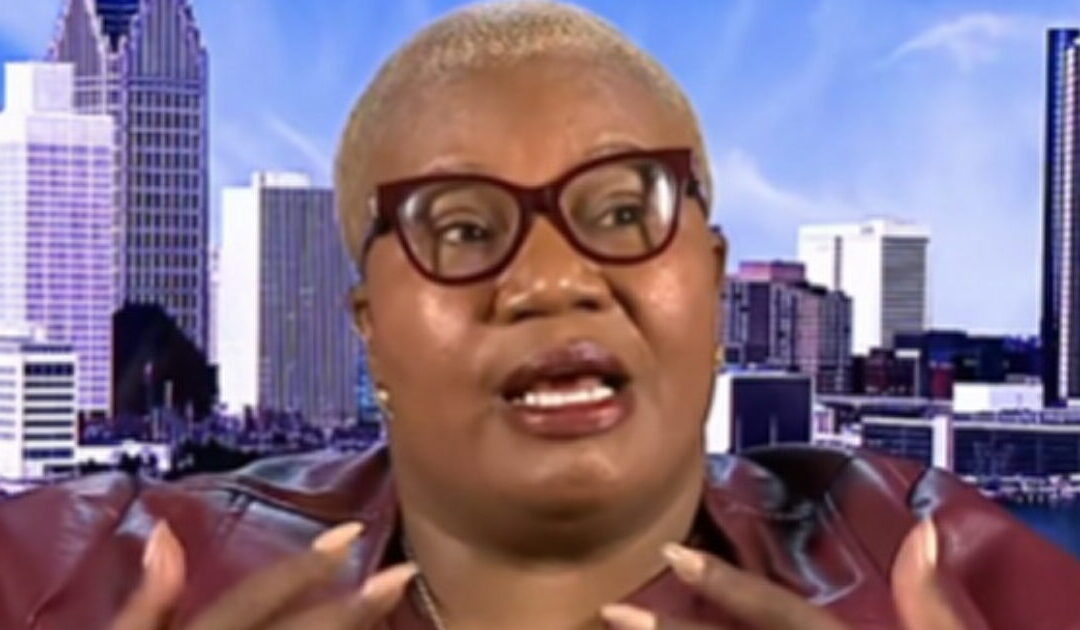
 WOW! Black Democrat woman just went on national TV saying SHE’S VOTING MIKE ROGERS in Michigan