Court Documents Link Nigerian State Funds to Fulani Militant Networks
July 1, 2026

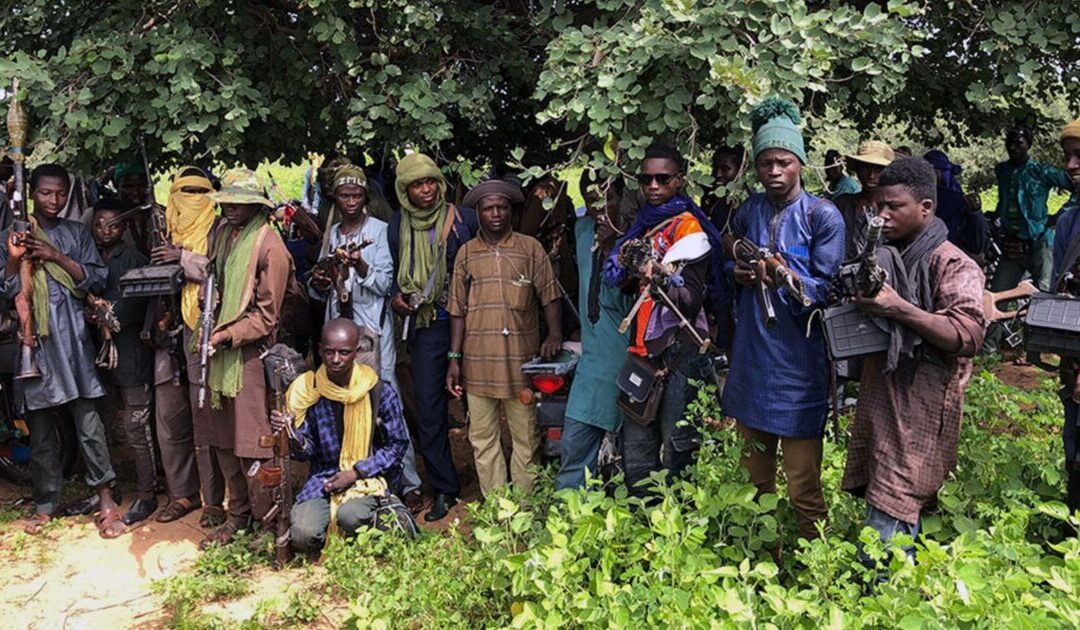
For years, Christian communities across Nigeria’s Middle Belt have viewed the Fulani militant attacks on their villages as more than criminal violence. They see them as a religiously motivated campaign to drive Christians from their land, destroy their churches, and erase their presence from the region.
Alongside that conviction has been another persistent belief: that the scale, coordination, and sophistication of the attacks require substantial financing, and that someone powerful, whether a government official, political network, or well-connected patron, is providing it. Court documents, senior military testimony, and a recent federal prosecution are now giving that belief an evidentiary foundation.
On June 22, 2026, the Economic and Financial Crimes Commission (EFCC) filed a 12-count charge before the Federal High Court in Abuja against Bello Abdullahi Bodejo, National President of Miyetti Allah Kautal Hore, the umbrella organization representing Fulani herder interests in Nigeria. The charges allege terrorism financing and money laundering totaling $2.53 million, confirmed by EFCC Head of Media and Publicity Dele Oyewale.
According to the charge sheet, the funds were received in cash from Sa’idu Abubakar, a former Accountant-General of Bauchi State, now in the custody of the Nigerian Police Force, in multiple installments between 2022 and 2024. Bauchi State government records confirm $2.33 million was disbursed to Bodejo in four tranches in 2023 and 2024 alone. None of the transactions passed through a financial institution as required by Nigerian law.
Bodejo is linked in multiple reports to Bauchi State Governor Bala Mohammed, who oversaw the administration under which the disbursements were made. Mohammed defected from the Peoples Democratic Party to the Allied Peoples Movement (APM) in May 2026 and remains in office.
The EFCC is separately prosecuting Bauchi State Commissioner for Finance Yakubu Adamu and three civil servants on ten counts of terrorism financing and money laundering in connection with the same disbursements, arraigned before the Federal High Court on December 31, 2025. The current case is not Bodejo’s first encounter with federal authorities. In 2024, he spent approximately six months in detention and briefly faced terrorism charges before the Attorney-General of the Federation withdrew the case without explanation. The prosecution now before the Federal High Court is the second and more formally documented legal action against him.
Miyetti Allah Kautal Hore and its affiliated body, the Miyetti Allah Cattle Breeders Association of Nigeria (MACBAN), have long functioned as the public face of Fulani herder interests in Nigeria. Both organizations have consistently denied involvement in violence while simultaneously issuing statements that Christian communities, Nigerian civil society, and U.S. lawmakers have characterized as threatening. A 2025 U.S. House resolution named both organizations and called for them to be designated as Entities of Particular Concern.
Nina Shea of the Hudson Institute, testifying before the House Foreign Affairs Subcommittee on Africa in March 2025, documented that both organizations began supplying Fulani herders with AK-47s and other weapons as far back as the 1980s. Christian communities across the Middle Belt and southern Kaduna have long maintained that the militants attacking their villages operate with a level of organization, armament, and coordination that no self-financing criminal network could sustain.
The Bodejo case is not the only active prosecution linking Miyetti Allah’s network to organized violence. In February 2026, nine Fulani herdsmen went on trial at the Federal High Court in Abuja on 57 counts of terrorism, including financing, recruiting, and direct participation in the June 2025 Benue massacre that killed more than 270 Christians. Each of the accused was reportedly linked to MACBAN. The leader of the group, Ardo Lawal Mohammed Dono, held a MACBAN leadership position in Nasarawa State. Frank Utoo, a U.S.-based Nigerian lawyer who met Dono twice as part of official Benue State peace delegations in 2020 and 2021, identified him as the mastermind of killings in Benue State.
A Nigerian Police Force Intelligence Response Team officer testified that several of the accused organized meetings at Dono’s house in Nasarawa State to raise funds and recruit armed fighters. One defendant, Haruna Abdullahi, confirmed in court that he attended those meetings.
The weapons in use reinforce that belief. Community leaders in Riyom Local Government Area, Plateau State, report that militants have deployed drones during attacks on villages. On June 10, 2026, gunmen killed two volunteer security watchmen in the Tahoss community, Riyom LGA, while they were on routine night patrol. Security sources recovered 25 empty 7.62mm special shell casings at the scene. This ammunition is specifically associated with the AK-47 assault rifle, the weapon survivors most frequently identify as being used by Fulani extremists during raids on Christian villages.
The victims, Davou Dalyop Patu, 48, and Dalyop Zaram, 38, were active members of a local vigilante group that had organized to protect the village after government security forces had failed to do so. Their deaths deepened the fear already widespread in the region: that communities which organize to defend themselves become targets.
That fear has been articulated publicly by some of Nigeria’s most credible voices. On March 24, 2018, retired Lieutenant General Theophilus Yakubu Danjuma, former Chief of Army Staff (1975–1979) and former Minister of Defence (1999–2003), addressed the convocation ceremony of Taraba State University in Jalingo. His remarks were unambiguous. “The armed forces are not neutral,” he said. “They collude with the armed bandits that kill people, kill Nigerians. They facilitate their movement, they cover them. If you are depending on the armed forces to stop the killings, you will all die one by one.” The Nigerian Army convened a panel to investigate the statements. No findings were published.
Two years later, on August 11, 2020, Dr. Obadiah Mailafia, former Deputy Governor of the Central Bank of Nigeria, Oxford-educated development economist, and 2019 presidential candidate from southern Kaduna, appeared on Nigeria Info’s Morning Crossfire program in Abuja. He stated that two repentant terrorists had informed him that a serving northern governor was the commander of Boko Haram in Nigeria, and that during the COVID-19 lockdown, insurgents had moved arms and ammunition across the country.
He characterized the attacks on Christian farming communities as a continuation of jihad and described those framing the violence as farmer-herder resource conflict as “accessories to genocide.” The Department of State Services interrogated Mailafia three times at its Jos office following the broadcast, in a campaign Nobel Laureate Wole Soyinka described as ongoing national security persecution. Mailafia died of COVID-19 on September 19, 2021.
The statements of Danjuma and Mailafia were made before the EFCC had produced a single court document linking Fulani militant networks to state government funds. The Bodejo prosecution now provides the first judicial framework for what both men described. The charge sheet names a sitting state government’s accountant general as the source of millions of dollars in cash, paid outside the banking system, to the head of an organization the U.S. Congress has linked to the financing of armed attacks on Christian communities.
The prosecutions of Bodejo and Dono are unfolding alongside a separate but simultaneous crackdown on a distinct terror-financing network. On June 18, 2026, Nigeria’s Sanctions Committee published an updated sanctions list naming six individuals and three bureaux de change for financing ISWAP. Days later, the U.S. Treasury’s Office of Foreign Assets Control (OFAC) independently designated Lagos-based forex operator Muktar Muhammad Adamu and three companies he controlled for moving funds on behalf of ISWAP. The Central Bank of Nigeria followed on June 24 with a directive to all financial institutions to freeze the accounts of those listed. Nigeria’s Sanctions Committee described the parallel U.S. and Nigerian actions as the product of extensive intelligence gathering and inter-agency financial investigations. The two tracks, the Miyetti Allah prosecutions and the ISWAP finance network, involve separate defendants and separate allegations. Together, however, they represent the most concentrated application of terrorism-financing laws against Nigerian networks in years.
The EFCC charges are allegations. Bodejo has not entered a plea, and no arraignment date has been set. He is presumed innocent unless and until a competent court finds otherwise. However, the documents before the Federal High Court in Abuja represent the strongest evidence to date supporting what many Christians in the Middle Belt have long believed: that government money, militant networks, and organized violence are connected.
The post Court Documents Link Nigerian State Funds to Fulani Militant Networks appeared first on The Gateway Pundit.
Go to Source
Author: Antonio Graceffo