
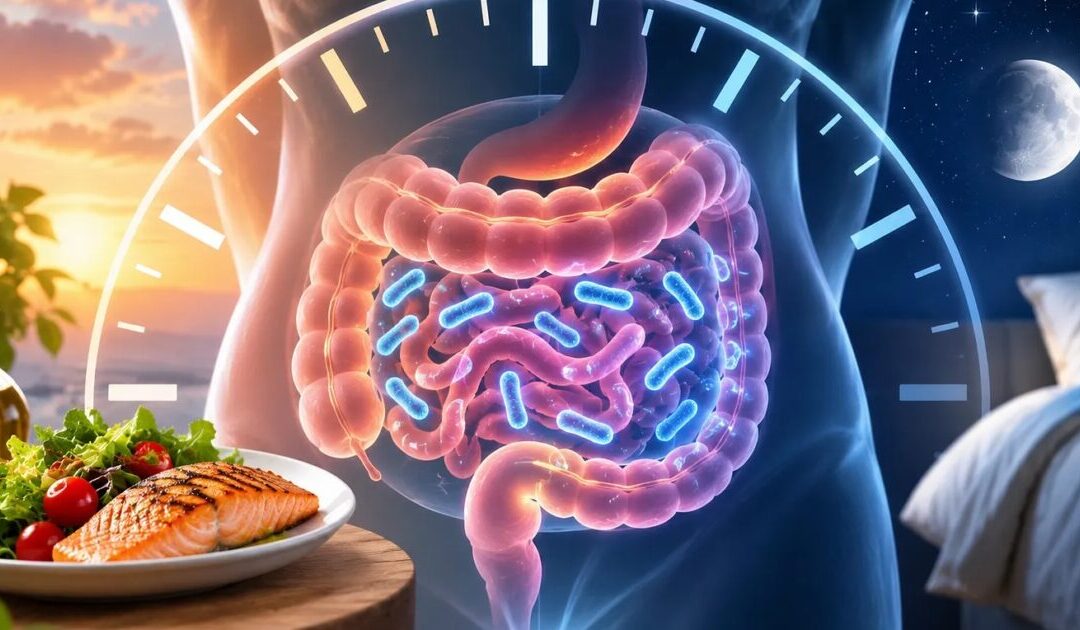
Your Gut Bacteria Know What Time It Is. Do You?
November 24, 2026
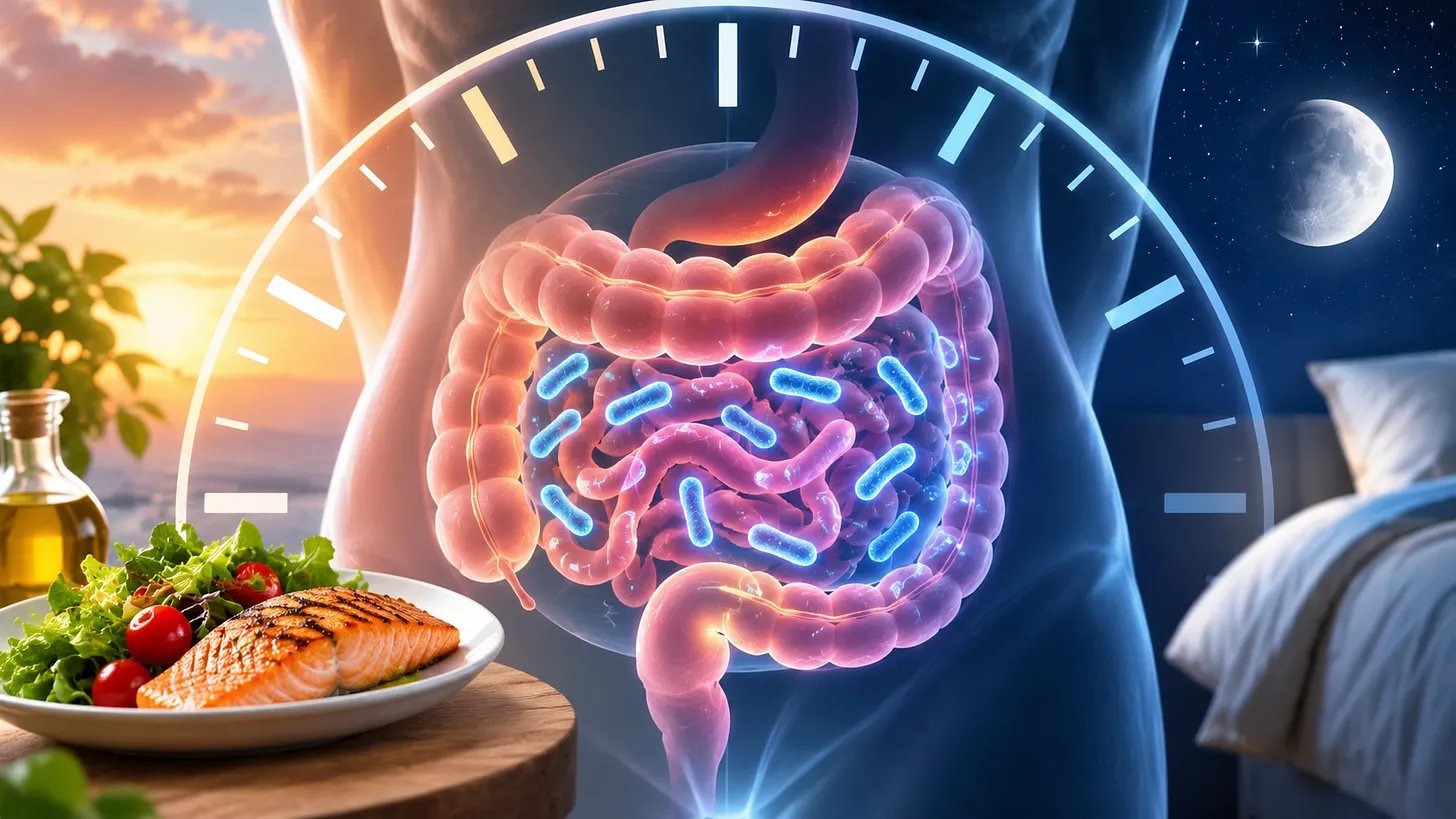
Scientists first discovered the power of meal timing nearly a century ago, thanks to some remarkably punctual rats.
In the 1920s, psychologist Curt Richter noticed something curious. When rats were fed just once a day, at the same time every day, they began getting restless and searching for food hours before their meal arrived. Even when the animals were kept under constant lighting, with no sunrise or sunset to tell them what time it was, they still knew when dinner was coming.
Richter called this phenomenon “food anticipation.” His experiments helped establish that regular mealtimes can synchronize biological rhythms independently of the body’s response to daylight.
We’ve previously explored how the body’s internal clocks influence metabolism, and why eating in sync with our natural day-night cycle can improve metabolic health. But scientists have discovered another fascinating piece of this puzzle: The trillions of bacteria living in your gut also follow a daily schedule, and disrupting it may affect everything from blood sugar to inflammation and weight regulation.
That’s because your gut bacteria aren’t simply passive passengers digesting your leftovers. They’re constantly producing chemicals that communicate with your organs and influence how your body processes food. And just as your body performs certain functions more efficiently at particular times of day, the activities of your gut bacteria also change with the clock.
Your gut bacteria work in shifts
Think of your intestines as a factory that operates around the clock, but with different workers taking different shifts.
When you eat, certain bacteria become more active, breaking down nutrients and producing chemicals that influence digestion and metabolism. During fasting, other bacteria and metabolic processes become more prominent.
In 2014, researchers demonstrated that the gut microbiome undergoes daily changes in both mice and humans. The relative abundance of certain bacteria fluctuates over approximately 24 hours, as do some of the chemical activities they perform.
One of the major signals organizing these rhythms is the regular cycle of eating and fasting. When meals arrive at predictable times, many bacterial activities follow a predictable pattern. But when eating schedules become irregular, or meals shift into hours normally reserved for sleep, those patterns can shift or become less pronounced.
Another research team made an equally interesting discovery that same year. In mice eating a normal diet, major groups of intestinal bacteria followed distinct daily rhythms. But when mice consumed a high-fat diet with unrestricted access to food, many of those rhythms weakened.
Then, when researchers limited food access to a consistent daily window, much of the bacterial rhythmicity returned. The mice also showed protection against excessive weight gain, fatty liver, and impaired blood-sugar regulation, even though the researchers had restricted when they could eat rather than how many calories they could consume.
It’s a stretch to extrapolate mice data to humans. But these experiments showed that the timing of food can influence how the gut microbiome behaves, even when the type of food stays the same.
How an irregular eating schedule can affect tomorrow’s blood sugar
Among these are the short-chain fatty acids acetate, propionate, and butyrate, produced when bacteria ferment dietary fiber. These help regulate inflammation, intestinal health, and aspects of glucose metabolism. Their production and availability can also vary throughout the day.
When the microbial community loses its normal daily rhythm, the timing and amounts of some of these chemical signals can change. And that may have consequences for how efficiently your body handles blood sugar.
In the 2014 Thaiss experiments, researchers disrupted the normal light-dark schedules of mice to simulate jet lag. The rodents developed changes in their gut bacteria along with impaired glucose tolerance, meaning their bodies had more difficulty clearing sugar from the bloodstream.
Then came the particularly revealing experiment. The scientists transferred gut bacteria from the jet-lagged mice into germ-free mice, animals raised without their own intestinal microbes. Those mice also developed impaired glucose tolerance. Again, this was a study on mice, not humans. But it suggested the disrupted microbiome wasn’t merely accompanying the metabolic problem; it could actually help cause it.
Other studies have found that repeatedly eating at biologically inappropriate times, including after a period of disrupted sleep or feeding, can interfere with normal glucose regulation.
Of course, the microbiome is only part of the explanation. Your liver, pancreas, muscles, and other organs have their own biological clocks, and misaligned schedules can affect them directly.
But the emerging picture is fascinating: Your body doesn’t simply react to food after you swallow it. Its internal systems also anticipate regular periods of eating and fasting. Your gut bacteria appear to participate in that daily coordination.
How to keep your gut bacteria on schedule
You don’t need an elaborate diet to put this research into practice. Simply try to eat at roughly the same times each day, preferably during daylight hours, and avoid late-night snacking.
Regular mealtimes help keep your gut bacteria’s daily activities in sync with your body’s internal clocks, so the chemicals they produce arrive when your body is better prepared to use them. And leaving a longer break between dinner and breakfast gives your insulin levels time to fall and allows your body to shift from storing energy as fat or glycogen toward mobilizing stored energy, i.e. burning fat. Together, these rhythms help improve metabolic health.
For example, finishing dinner at 7 p.m. and eating breakfast at 7 a.m. creates a natural 12-hour overnight fast without skipping a single meal. Delaying breakfast until 12 noon extends the fast another five hours, giving the body more time to lower insulin and burn fat stores.
What you eat is important. But when you eat helps determine how your body, and the trillions of microbes living inside it, respond.
And just as your gut bacteria benefit from a regular rhythm of eating and fasting, your nervous system may benefit from a regular rhythm of activity and rest. Next week, we’ll explore how setting aside one day each week to truly disconnect can do more than restore your peace of mind. It can also change how your body responds to stress, recovers, and sleeps.
Have a question for the GoldCare HealthDesk? Let us know here.
The post Your Gut Bacteria Know What Time It Is. Do You? appeared first on The Gateway Pundit.
Go to Source
Author: Dr. Simone Gold