Florida Legislature Approves Plan to Rename Palm Beach Airport After President Trump

Florida Legislature Approves Plan to Rename Palm Beach Airport After President Trump

Florida Legislature Approves Plan to Rename Palm Beach Airport After President Trump
February 21, 2026

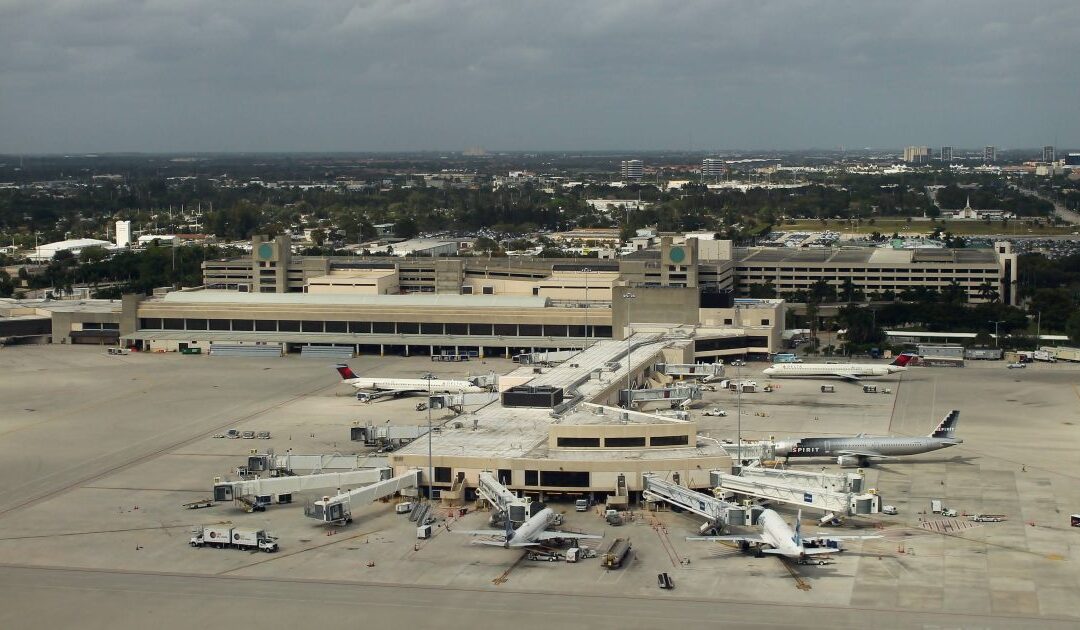
Palm Beach International Airport / Credit Wikimedia Commons

Florida lawmakers have given final approval to legislation that would rename Palm Beach International Airport after President Donald Trump.

The measure now heads to Gov. Ron DeSantis for consideration as state officials continue to determine how much funding will be required for the rebranding effort.

Estimates suggest the cost could reach $5.5 million.

Republicans say the change appropriately recognizes Trump’s ties to Florida.

“Regardless of your personal view on the president, his record speaks for itself — President Trump has delivered meaningful results for Florida and the United States,” said bill sponsor state Sen. Debbie Mayfield.

The Florida Senate approved the legislation, HB919, by a 25–11 vote on Thursday after the state House passed it 81–30 earlier in the week.

The bill would rename the facility “President Donald J. Trump International Airport” and would shift authority over naming major commercial airports from local governments to the state.

Democrats unsuccessfully tried tabling several amendments, including proposals to retain the airport code “PBI” and to add President John F. Kennedy’s name alongside Trump’s.

“This bill renames Palm Beach County International Airport after one of the most polarizing figures in modern history,” said state Sen. LaVon Bracy Davis (D-Ocoee).

“And when we attach a name to a major airport, we’re not simply labeling a building, we are endorsing a legacy.”

Republican backers pointed to Trump’s presence in Palm Beach and his policy record as justification.

“We’re going to look back and recognize what this president, this sitting president, did to save America,” said state Sen. Danny Burgess (R-Zephyrhills).

The Senate’s initial budget proposal included $2.75 million for signage, branding, and website updates, though lawmakers are still negotiating final funding levels.

The Trump Organization has filed trademark applications related to the proposed airport name. The company has said neither the president nor his family would receive royalties or licensing fees from the renaming.

The change would still require approval from the Federal Aviation Administration before taking effect.

The post Florida Legislature Approves Plan to Rename Palm Beach Airport After President Trump appeared first on The Gateway Pundit.

Go to Source
Author: Ben Kew
Jasmine Crockett MELTS DOWN Over Equal-Time Rule That Could Have Boosted Her Campaign (VIDEO)

Jasmine Crockett MELTS DOWN Over Equal-Time Rule That Could Have Boosted Her Campaign (VIDEO)

Jasmine Crockett MELTS DOWN Over Equal-Time Rule That Could Have Boosted Her Campaign (VIDEO)
February 21, 2026

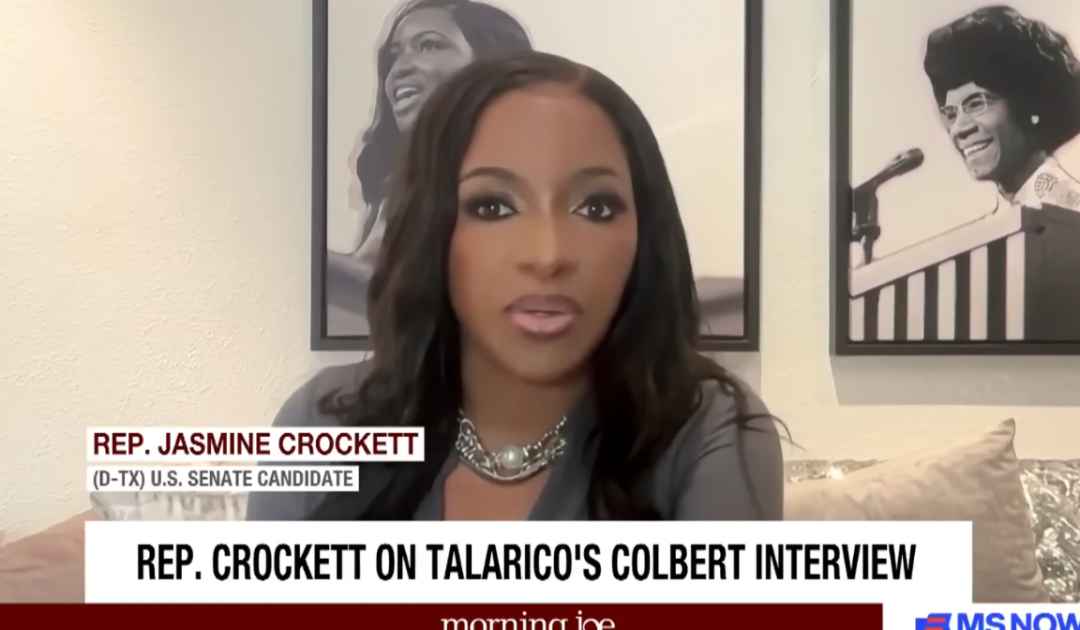
Jasmine Crockett, Democratic U.S. Senate candidate from Texas, discusses her views on Talarico's interview during a segment on Morning Joe.

WATCH: Jasmine Crockett MELTS DOWN Over Equal-Time Rule That Could Have Boosted Her Campaign

Rep. Jasmine Crockett went on MSNOW Friday and attempted to transform a routine Federal Communications Commission (FCC) compliance issue into a Trump-centered conspiracy narrative.

The performance was neither persuasive nor structurally coherent.

The dispute centers on an unaired late-night interview involving Crockett’s Democrat primary opponent, James Talarico. As previously reported by The Gateway Pundit, the segment was pulled from broadcast due to equal-time considerations under longstanding FCC rules.

After the clip was posted online, it generated millions of views and reportedly helped produce a $2.5 million fundraising surge in 24 hours—the largest single-day haul of Talarico’s campaign.

Crockett’s conclusion mirrored the argument Democrats have advanced for days: that the Trump administration and the FCC were somehow targeting Democrats.

That claim collapses under basic institutional analysis.

The race James Talarico is in is a Democrat primary. Republicans are not on the ballot. Equal-time provisions apply to legally qualified candidates competing in the same contest. If one candidate receives broadcast exposure, similarly situated candidates are entitled to a comparable opportunity.

In this instance, the relevant candidates are Democrats.

If a network determines that airing a segment would trigger equal-time obligations it prefers not to accommodate, that is a legal and programming decision. It is not partisan suppression.

Crockett suggested that the FCC was “weaponizing” rules and injecting confusion into elections.

While the allegation was sweeping, the explanation was thin. The equal-time doctrine has existed for decades. Campaign professionals, media lawyers, and political consultants understand how it operates. It is neither novel nor ideologically selective.

The FCC is considering expanding the rule’s applicability to late-night programs, many of which have increasingly featured overtly political content rather than purely comedic material. That debate concerns regulatory scope, not partisan targeting.

More importantly, Crockett’s own admission undermines her narrative. She stated that she had not been offered comparable airtime.

If equal-time obligations were implicated, she would have been the beneficiary of that provision. The rule she portrays as anti-Democrat would have required accommodation for her candidacy.

The structural logic is straightforward. In a Democrat-only primary, equal-time rules govern Democrats.

The FCC does not select political winners. It enforces neutral standards tied to broadcast licensing requirements. No evidence was presented that Republicans were advantaged. No explanation was provided for how President Trump could influence a compliance decision in a race in which Republicans are absent from the ballot.

Instead of engaging that institutional reality, Crockett pivoted to familiar Democrat framing: confusion, suppression, and media intimidation.

In reality, a network weighed potential legal exposure and opted not to air a segment. That decision, while controversial, does not constitute federal interference.

The broader political pattern is revealing. When federal agencies regulate speech platforms in ways Democrats support, the action is framed as responsible governance. 

When an existing communications rule produces an inconvenient outcome in a Democrat primary, the same regulatory structure is described as authoritarian.

Voters are capable of distinguishing between the enforcement of neutral broadcast provisions and targeted partisan intervention. Treating every procedural development as a Trump-directed operation diminishes credibility. 

Texas remains competitive in certain metropolitan counties experiencing population growth. Demographic change alone, however, does not override structural political alignment. Substantive policy debates on taxation, border enforcement, public safety, and economic growth will determine statewide outcomes. Regulatory conspiracy claims will not.

Crockett’s appearance was intended to frame Democrats as victims of manipulation.

Instead, it highlighted a reflexive instinct to attribute any unfavorable development to President Trump. That reflex may resonate with a cable audience. It does not withstand institutional scrutiny.

Blaming Trump for the enforcement of a decades-old broadcast rule during a Democrat primary will not make Democrats any more popular with the American people.

The post Jasmine Crockett MELTS DOWN Over Equal-Time Rule That Could Have Boosted Her Campaign (VIDEO) appeared first on The Gateway Pundit.

Go to Source
Author: Gregory Lyakhov

I Read the Supreme Court’s Tariff Ruling So You Don’t Have To

I Read the Supreme Court’s Tariff Ruling So You Don’t Have To

I Read the Supreme Court’s Tariff Ruling So You Don’t Have To
February 21, 2026

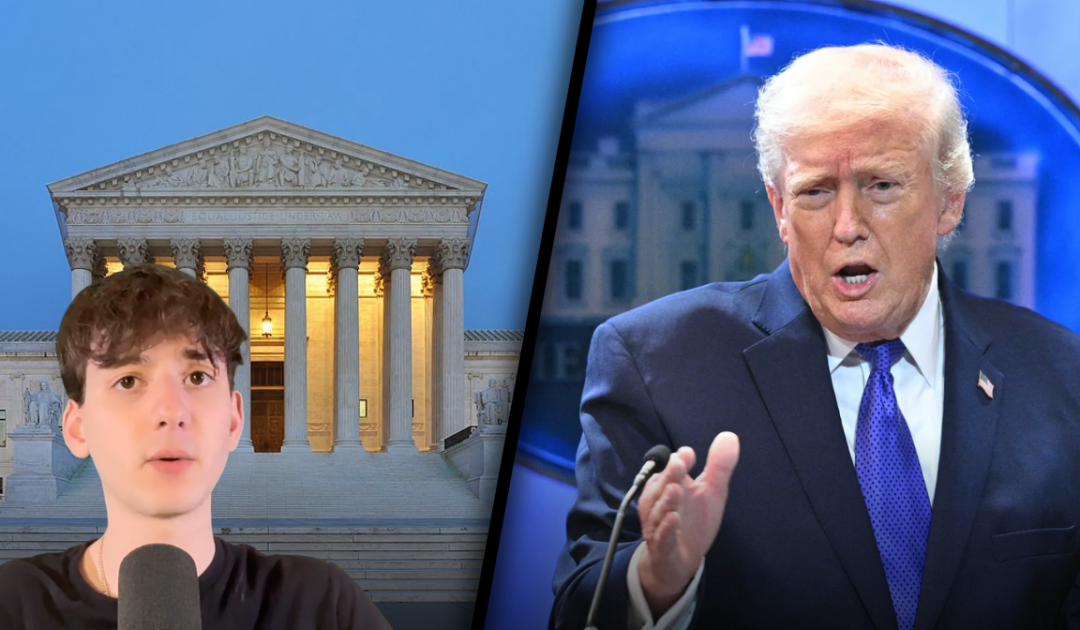
Young speaker in front of the Supreme Court and Donald Trump discussing legal issues and politics.

WATCH: I Read the Supreme Court’s Tariff Ruling So You Don’t Have To

In a 6–3 ruling, the Supreme Court held that the president may not rely on the International Emergency Economic Powers Act of 1977 to impose broad, long-term tariffs without clear congressional authorization. 

The decision imposes structural limits on the use of emergency powers in trade policy, even as it leaves intact the broader debate over tariffs.

As previously reported by The Gateway Pundit, three conservative justices joined the Court’s three liberal justices to form the majority, underscoring that the outcome did not divide neatly along ideological lines. 

The alignment reflected a constitutional question rather than a partisan one: whether Congress, through the International Emergency Economic Powers Act, clearly delegated tariff-imposing authority to the executive branch.

The administration argued that the fentanyl crisis and persistent trade imbalances constituted national emergencies within the meaning of the statute. 

Under the law, a president may “regulate” economic transactions after declaring an emergency tied to an unusual and extraordinary threat. The White House maintained that this language encompassed the authority to adjust import duties as part of a broader strategy to confront China and disrupt supply chains linked to fentanyl trafficking.

The Court disagreed, concluding that while the statute permits significant economic restrictions, it does not explicitly authorize sweeping tariff programs of the magnitude at issue. Because Article I of the Constitution assigns to Congress the authority to lay and collect taxes, including duties and imposts, the majority required a clear statement from lawmakers before recognizing such expansive executive power.

The ruling narrows the statutory pathway used in this instance, but it does not invalidate tariffs as a policy instrument. 

Congress has previously delegated targeted trade authority through other statutes, including Section 232 of the Trade Expansion Act and Section 301 of the Trade Act, both of which remain available tools for addressing unfair trade practices and national security concerns.

From a policy perspective, the broader strategic case for tariffs remains intact. 

President Donald Trump has long argued that the United States cannot sustain a structural goods trade deficit that has hovered around or above $1.2 trillion in recent years. His approach treated tariffs not as an end in themselves, but as leverage to compel renegotiation of trade relationships and to pressure adversarial governments, particularly China.

The fentanyl crisis further complicates the landscape. Tens of thousands of Americans die annually from synthetic opioid overdoses, and administration officials have characterized cross-border trafficking networks and precursor supply chains as a national security threat. Whether tariffs represent the most effective instrument to combat that crisis is a matter of strategy, not constitutional design. 

The Court’s position is that such sweeping economic measures require unmistakable legislative backing.

The political implications are equally notable. A cross-ideological majority signals that separation-of-powers concerns can override partisan loyalties. 

For conservatives who favor a strong executive branch, the decision serves as a reminder that constitutional boundaries apply regardless of which party occupies the Oval Office. For Trump supporters, the path forward lies not in abandoning the tariff agenda, but in urging Congress to codify it with precision.

The ruling therefore reshapes the procedural terrain without extinguishing the substantive debate. 

If lawmakers conclude that broader emergency tariff authority is necessary to address trade imbalances or foreign supply chain threats, they can explicitly grant it. Until then, the executive branch must operate within the confines of existing statutory language.

President Trump’s larger economic argument—that America should not tolerate chronic trade imbalances or strategic dependence on adversaries—remains central to ongoing policy discussions. 

The Supreme Court’s decision does not repudiate that vision. Rather, it clarifies that enduring trade measures of this scale must be enacted by Congress or justified under a statute other than the IEEPA.

In the months ahead, the focus will likely shift from the judiciary to Capitol Hill. President Trump can still impose tariffs under other statutory authorities, but doing so will be more limited and procedurally complex than relying on the IEEPA.


The post I Read the Supreme Court’s Tariff Ruling So You Don’t Have To appeared first on The Gateway Pundit.

Go to Source
Author: Gregory Lyakhov

Mike Pence Just Reminded the MAGA Movement What a Dirty Traitor He Really Is

Mike Pence Just Reminded the MAGA Movement What a Dirty Traitor He Really Is
February 21, 2026

Former Vice President Mike Pence just reminded the MAGA movement what a duplicitous traitor he is — and always has been.

On Friday afternoon, Justices John Roberts, Amy Coney Barrett, and Neil Gorsuch joined the court’s three liberal members to strike down President Trump’s signature tariff policy, a central tenet of his 2024 campaign.

Pence, who is widely despised across the conservative grassroots, took to the X platform to celebrate the decision:

Today’s 6-3 ruling by the Supreme Court is a Victory for the American People and a Win for the Separation of Powers enshrined in the Constitution of the United States.

In Learning Resources, Inc. v. Trump, our Supreme Court has reaffirmed that the Constitution grants Congress – not the President – the power to tax.

American families and American businesses pay American tariffs – not foreign countries. With this decision, American families and businesses can breathe a sigh of relief.

I’m proud of the work our organization @AmericanFreedom has done on this case through our robust amicus brief program to advance economic freedom and defend the Constitution.

With this historic decision, America can now return to the pursuit of Free Trade with Free Nations under the Constitution of the United States!🇺🇸

He later quoted Gorsuch’s opinion, in which the justice said his decision was motivated by the need to preserve the legislative process as the “bulwark of liberty.”

Trump, meanwhile, told a press conference on Friday that the justices were an “embarrassment to their families.”

“It is my opinion that the court has been swayed by foreign interest and a political movement that is far smaller than people would ever think,” he said.

The president has since insisted he will find workarounds to impose tariffs by another means.

The post Mike Pence Just Reminded the MAGA Movement What a Dirty Traitor He Really Is appeared first on The Gateway Pundit.

Go to Source
Author: Ben Kew

Trump Gives Iran Ultimatum, Demands Dismantling of Nuclear Program and End to Funding for Terrorist Proxies

Trump Gives Iran Ultimatum, Demands Dismantling of Nuclear Program and End to Funding for Terrorist Proxies

Trump Gives Iran Ultimatum, Demands Dismantling of Nuclear Program and End to Funding for Terrorist Proxies
February 21, 2026

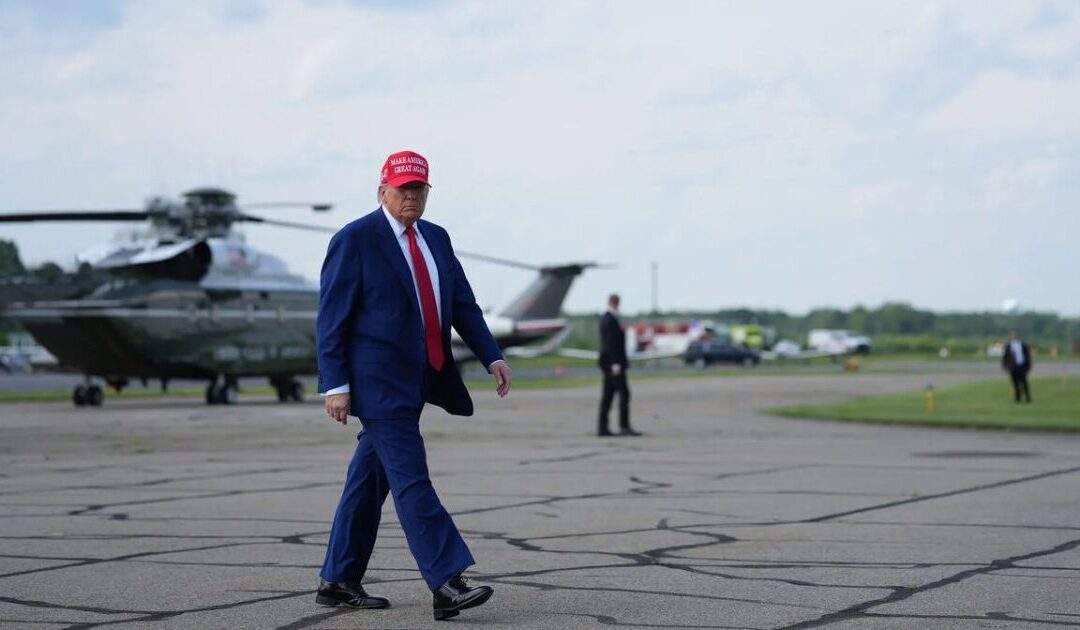
Former President Donald Trump walks across the tarmac near helicopters, wearing a red cap and blue suit, amid a cloudy sky.
U.S., June 2025: President Donald Trump discloses that American B-2 bombers conducted airstrikes on three Iranian nuclear facilities. Image courtesy of the Islamic Republic News Agency.

The Trump administration has given Iran 10 to 15 days to agree to U.S. terms in the ongoing nuclear talks, warning that Tehran would be “very wise” to make a deal. Unlike previous U.S. administrations that put a band-aid on the cancer, President Trump is making demands that would eliminate the Iranian threat almost completely.

He is calling for a full halt to all uranium enrichment, the dismantling of Iran’s proxy network by ending funding and arms transfers to proxy groups such as Hezbollah, the Houthis, and militias in Iraq and Syria, and limits on Iran’s long-range ballistic missile program, which was excluded from Obama’s 2015 nuclear deal.

Following the violent suppression of nationwide protests in late 2025 and early 2026, Trump has also tied negotiations to the regime’s treatment of its own citizens, warning of strikes if executions of protesters continue.

The remarks came during the second round of nuclear talks in Geneva, where U.S. officials say Iran has not met core demands. Vice President JD Vance accused Tehran of avoiding key issues, while Iranian Foreign Minister Abbas Araghchi claimed progress, citing agreement on “guiding principles.”

White House press secretary Karoline Leavitt said there were “many reasons and arguments that one could make for a strike against Iran” but emphasized that diplomacy remains President Trump’s first option. She referenced last June’s Operation Midnight Hammer, when coordinated U.S. and Israeli strikes targeted Iranian nuclear facilities at Fordow, Natanz, and Isfahan using B-2 stealth bombers and bunker-buster munitions.

Although claims that Iran’s nuclear program was “completely obliterated” were overstated, the operation significantly degraded key infrastructure. Iran had moved enriched uranium in advance, and while facilities were damaged rather than destroyed, the program did not return to pre-strike operational levels.

Despite the foreign minister’s claims of progress, the phrase “guiding principles” signals only an agreement to continue negotiating rather than resolution of any core issue. The parties committed to exchanging draft proposals and maintaining dialogue, but no narrowing of disputes was announced on enrichment levels, sanctions relief, verification mechanisms, or the scope of talks.

Iran wants negotiations confined strictly to its nuclear program in exchange for sanctions relief and has declared its missile program non-negotiable, with Supreme Leader Ayatollah Ali Khamenei setting clear red lines on deterrent capabilities. Jason Brodsky of United Against Nuclear Iran told Fox News there is deep skepticism within the administration that talks will produce an acceptable outcome, arguing the diplomatic process may be buying time to position additional U.S. military assets in the region. He said Tehran continues to reject zero enrichment, dismantlement of nuclear infrastructure, missile restrictions, and an end to support for proxy groups.

Behnam Taleblu of the Foundation for Defense of Democracies warned that Iran could propose an agreement that simply formalizes the current reality, securing sanctions relief without major concessions. He said Tehran’s objectives are to deter a strike, stabilize its economy through financial relief, and blunt internal dissent, while showing potential flexibility only on enrichment parameters if sanctions relief is substantial.

Speaking at Fort Bragg, Trump criticized Tehran’s leadership and argued that greater pressure is needed in nuclear negotiations, describing Iran as “difficult” to deal with. He added that regime change would be the “best thing that could happen” in Iran.

The United States has expanded its military presence in the Middle East, deploying two aircraft carriers near Iranian waters, the USS Gerald R. Ford and the USS Abraham Lincoln, supported by dozens of advanced aircraft and more than 50 additional fighter jets at regional bases.

Iran responded with war games in the Strait of Hormuz, joint naval exercises with Russia in the Sea of Oman, temporary maritime restrictions described as security precautions, and renewed emphasis on its anti-ship missile capabilities.

Without naming names, President Trump said, “There are people” who could replace the current regime.

Analysts say the military buildup signals readiness for possible action, even as ambiguity remains over the scope and objective of any strike. Jacob Olidort of the America First Policy Institute said Trump prefers to give diplomacy a chance but would likely turn to military options if talks fail.

Energy markets are watching closely. Iran partially closed the Strait of Hormuz, one of the world’s most critical oil chokepoints between Oman and Iran. In 2025, about 13 million barrels per day of crude oil flowed through the waterway, accounting for roughly 31% of global seaborne crude flows. Oil prices rose amid heightened tensions, with Brent climbing to $71.41 per barrel and West Texas Intermediate reaching $66.27.

The post Trump Gives Iran Ultimatum, Demands Dismantling of Nuclear Program and End to Funding for Terrorist Proxies appeared first on The Gateway Pundit.

Go to Source
Author: Antonio Graceffo