‘Defund the Police’ Advocate Oakland Mayor Barbara Lee’s Official SUV Stolen in Brazen City Hall Break-In

‘Defund the Police’ Advocate Oakland Mayor Barbara Lee’s Official SUV Stolen in Brazen City Hall Break-In

‘Defund the Police’ Advocate Oakland Mayor Barbara Lee’s Official SUV Stolen in Brazen City Hall Break-In
February 21, 2026

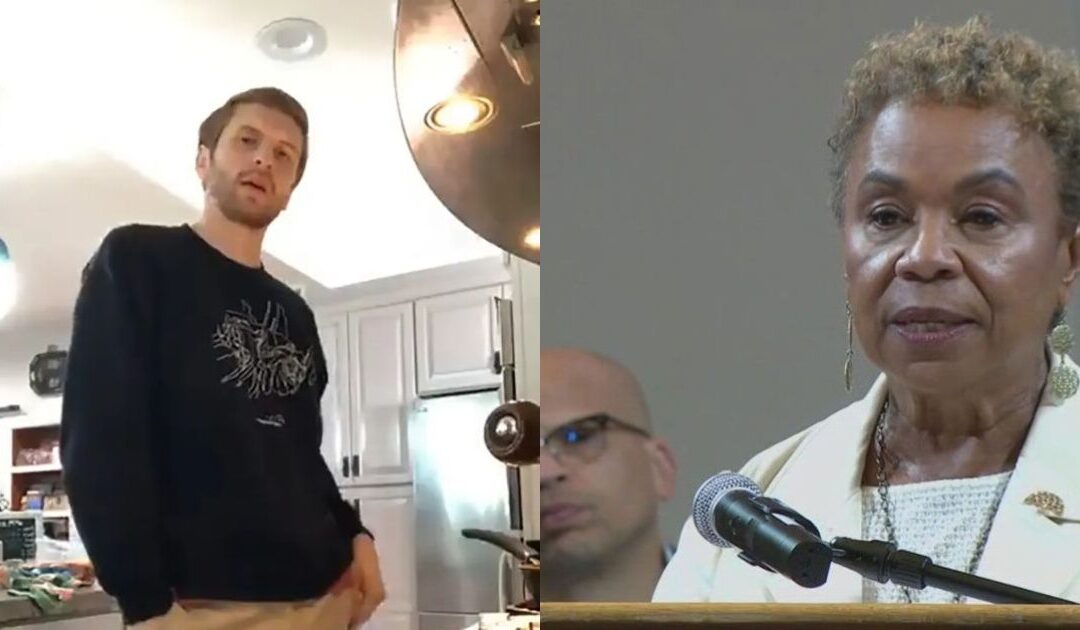
A split image featuring a man in a kitchen and a woman speaking at a podium, highlighting diverse settings and expressions.

In yet another case of rampant crime plaguing Democrat-run cities, Oakland Mayor Barbara Lee’s city-owned SUV was stolen after a squatter thief broke into her office at City Hall and swiped the keys.

The incident occurred on Presidents’ Day when the building was closed.

“We know that someone jimmied open the mayor’s office, they stole the keys to her car, they went to the City Hall parking lot, they stole the car. This occurred on Monday,” Sam Singer, a spokesperson for the Oakland Police Officers’ Association, told Fox News. “She reported it, her staff reported it.”

The vehicle was recovered 24 hours after the theft.

According to reports, the thief, later identified as 29-year-old Logan Tell DeSilva, a former gym teacher, had been “squatting” inside City Hall since February 16.

DeSilva managed to evade detection over the holiday weekend, despite the presence of private security guards on site.

On Monday, DeSilva allegedly jimmied open the door to Mayor Lee’s third-floor office and grabbed the keys to her gray Ford Expedition, a $75,000 vehicle.

The perpetrator proceeded to the secure City Hall parking lot, where he drove off with the SUV undetected.

DeSilva has now been charged with burglary, auto theft, and vandalism.

The New York Post reports:

DeSilva is being held without bail and his arraignment is scheduled for Monday morning at Wiley W. Manuel Courthouse in Oakland.

DeSilva’s LinkedIn profile lists him as a school teacher at North Hills Christian School, but an administrator at the school told The Post that DeSilva hasn’t been employed at the school for at least two years.

“Oh my goodness,” the school official said when informed that DeSilva had been arrested for allegedly stealing the mayor’s vehicle.

DeSilva apparently worked as a PE teacher and his mother continues to work for the school.

Mayor Lee, a longtime progressive Democrat and vocal supporter of police defunding and reforms, issued a statement emphasizing that “No one in Oakland should have to worry about their car being stolen, whether they’re a resident, a city worker, or the Mayor. Public safety is a priority across our entire city.”

Ironically, Lee herself has become a victim in a city where car thefts and burglaries have skyrocketed amid police shortages.

Fox News reports:

The theft comes months after the Oakland Police Officers Association claimed that the city had defunded the police, which Singer reiterated to Fox News Digital on Friday, adding that City hall uses private security and the city spends more than $20 million for private security for all its city properties.

“Crime in Oakland continues to be out of control because there’s not enough police officers and the mayor herself has now become a victim,” Singer told Fox News Digital.

Huy Nguyen, president of the Oakland Police Officer’s Association, told KRON-TV last year, “The operational strength is about 530, so realistically, we’re down 300 police officers plus in our city just to be at a baseline.”

Oakland has seen a surge in crime, including auto thefts, under Democratic leadership that has prioritized “equity and inclusion” over law and order.

If even the city’s top official isn’t safe, what hope do everyday Oaklanders have?

The post ‘Defund the Police’ Advocate Oakland Mayor Barbara Lee’s Official SUV Stolen in Brazen City Hall Break-In appeared first on The Gateway Pundit.

Go to Source
Author: Cassandra MacDonald
WATCH: Creepy Minnesota Transgender Lawmaker Leigh Finke Opposes Age Verification for Porn Sites, Claims Content Can Be ‘Educational’ for Queer Kids

WATCH: Creepy Minnesota Transgender Lawmaker Leigh Finke Opposes Age Verification for Porn Sites, Claims Content Can Be ‘Educational’ for Queer Kids

WATCH: Creepy Minnesota Transgender Lawmaker Leigh Finke Opposes Age Verification for Porn Sites, Claims Content Can Be ‘Educational’ for Queer Kids
February 21, 2026

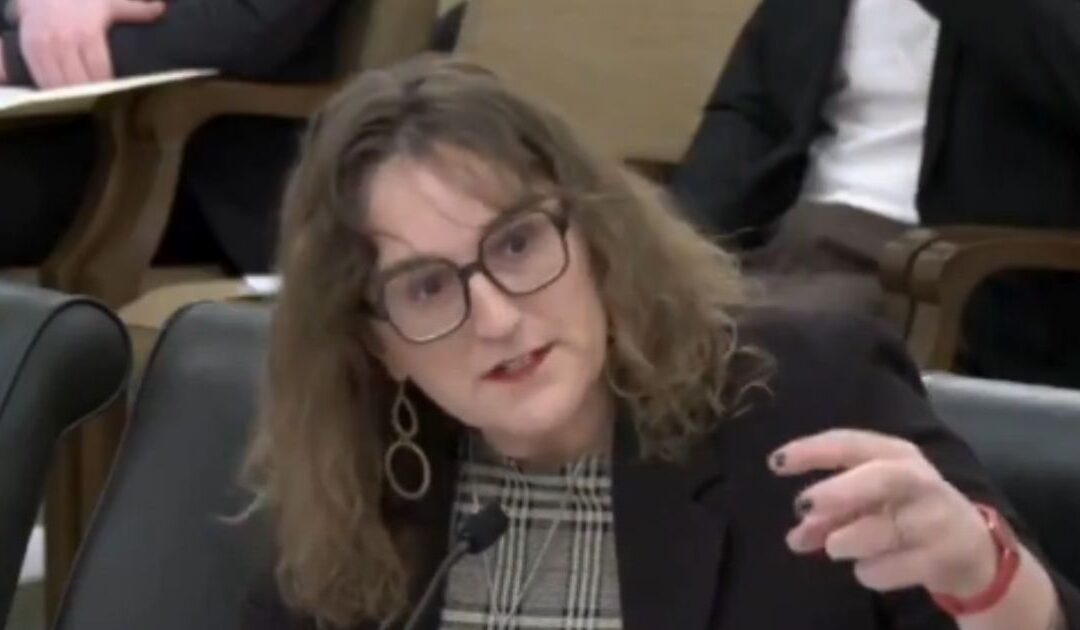
Woman speaking passionately at a legislative hearing, gesturing with her hand while addressing an audience in a formal setting.

In a contentious hearing at the Minnesota State Capitol on Thursday, Democratic State Representative Leigh Finke, the state’s first openly transgender legislator, voiced strong opposition to a bill requiring age verification for websites containing material harmful to minors, claiming porn can be “educational” for queer kids.

Finke argued that such restrictions could block access to “educational” content for queer children.

House File 1434 (HF 1434), introduced by Republican Rep. Ben Bakeberg, aims to protect minors from explicit online content by mandating age verification on websites where at least one-third of the material appeals to a “prurient interest” in nudity, sex, or excretion, or depicts sexual conduct in a patently offensive way.

The bill defines “harmful to minors” based on standards lacking serious literary, artistic, political, or scientific value for youth.

It would allow the state Attorney General to enforce and create a private right of action for parents or guardians to sue noncompliant sites for up to $10,000 per violation, plus actual damages and attorney’s fees.

During the Commerce Finance and Policy Committee hearing, supporters like Renee Carlson, general counsel for True North Legal, emphasized the bill’s focus on shielding children from a “predatory industry.”

Carlson cited the U.S. Supreme Court’s decision in Free Speech Coalition v. Paxton, which upheld similar age verification laws, arguing that the measure is constitutional and prioritizes child safety over First Amendment concerns.

However, Finke, who represents District 66A in St. Paul, fought hard to defend allowing children access to adult content.

Finke claimed that the vague definition of “prurient interest” could be interpreted to include “the very existence of transgender kids.”

The representative also claimed attorneys general in other states with similar laws are “almost jubilant” about using them to ban children from accessing material that “could be educational if they are queer.”

Finke asserted there is a need to ensure the bill does not prohibit content designed for those under 18 to “educate them about themselves, their lives, their community.”

Footage of Finke’s opposition to the bill quickly went viral on X.

WATCH:

This isn’t Finke’s first brush with controversy related to children.

In 2023, Finke authored legislation that removed language excluding pedophilia from protections against discrimination based on sexual orientation, leading to accusations of normalizing predatory behavior.

Finke later defended the change, claiming backlash was rooted in anti-trans sentiment.

More recently, Finke has spoken out against federal rules targeting sex change procedures and hormones for minors, vowing Minnesota will continue to allow access.

The post WATCH: Creepy Minnesota Transgender Lawmaker Leigh Finke Opposes Age Verification for Porn Sites, Claims Content Can Be ‘Educational’ for Queer Kids appeared first on The Gateway Pundit.

Go to Source
Author: Cassandra MacDonald

Top German Soccer Team Cancels Trip to Minneapolis in Protest at Trump’s Immigration Crackdown

Top German Soccer Team Cancels Trip to Minneapolis in Protest at Trump’s Immigration Crackdown

Top German Soccer Team Cancels Trip to Minneapolis in Protest at Trump’s Immigration Crackdown
February 21, 2026

Fans attending a match at the Werder Bremen stadium / Credit: Wikimedia Commons

A top German soccer club has canceled a trip to Minneapolis in protest at the Trump administration’s recent immigration crackdown.

Werder Bremen, which competes in the German Bundesliga, said that traveling to Minnesota after the recent unrest would clash with its left-wing values.

Christoph Pieper, the club’s head of communications, said in a statement:

Playing in a city where there’s unrest and people have been shot, that does not fit with our values here at Werder Bremen.

Furthermore, it was unclear for us which players could be able to enter the United States due to the stricter entry requirements.

We as a club, we have clear values. Our club stands for an open, pluralistic and united society.

We are committed to ensuring that all people — regardless of their origin, skin colour, religion, sexual orientation, gender identity, age or disability — are naturally included and have a firm place in our community.

However, the club admitted that it is also facing financial difficulties.

“We are currently facing a very challenging sporting situation, which also makes planning such a trip difficult. There have also been certain economic risks,” he added.

Werder Bremen has a history of virtue signalling and left-wing activism.

Shortly after President Trump’s victory in November 2024, the club said it would be leaving the X platform because of supposed right-wing extremism and would instead be joining the leftist platform Bluesky.

“Under the guise of freedom of expression, hate speech, hatred towards minorities, right-wing extremist posts and conspiracy theories have been allowed to spread on X at an incredible pace,” the club said at the time.

“With the recent radicalisation of the platform, a line has been crossed for the club.”

“The Green-Whites are therefore leaving X effective immediately and hope that our more than 600,000 followers will follow the club on Bluesky in the future.”

The club is without a win in their last 12 Bundesliga matches and have 19 points going into Sunday’s away game against second-from-bottom St. Pauli.

The post Top German Soccer Team Cancels Trip to Minneapolis in Protest at Trump’s Immigration Crackdown appeared first on The Gateway Pundit.

Go to Source
Author: Ben Kew

WIN: Outraged Maryland Sheriffs Vow to Maintain ICE Cooperation Despite Gov. Wes Moore’s Ban on Formal Agreements (VIDEO)

WIN: Outraged Maryland Sheriffs Vow to Maintain ICE Cooperation Despite Gov. Wes Moore’s Ban on Formal Agreements (VIDEO)

WIN: Outraged Maryland Sheriffs Vow to Maintain ICE Cooperation Despite Gov. Wes Moore’s Ban on Formal Agreements (VIDEO)
February 21, 2026

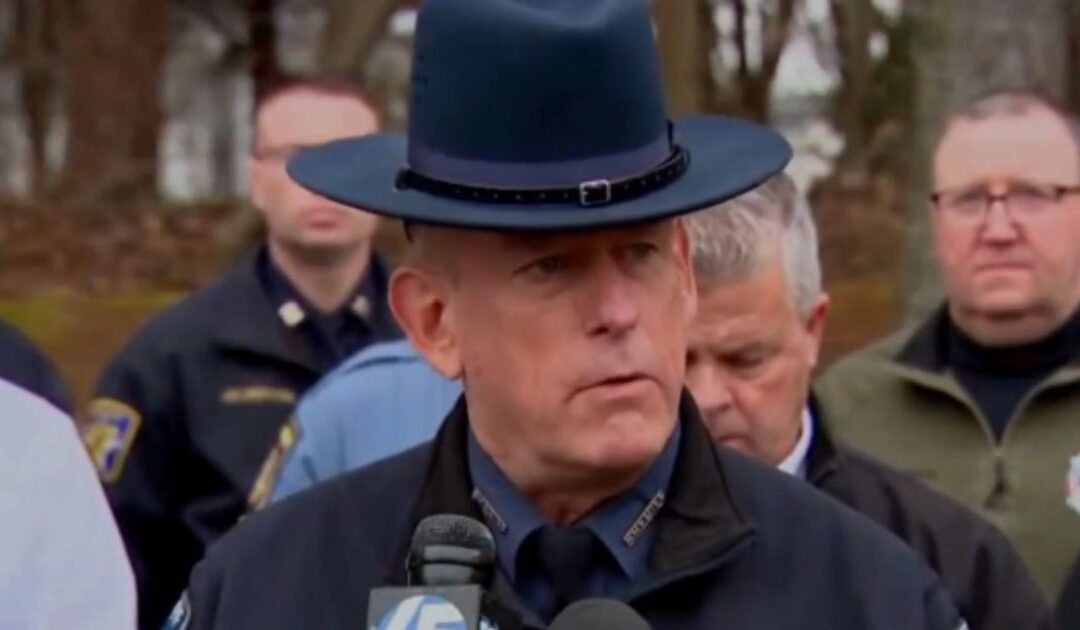
Police chief addressing the media during a press conference, surrounded by law enforcement officials, discussing a recent incident in the community.

Democrat Maryland Governor Wes Moore signed emergency legislation on Tuesday prohibiting local law enforcement from entering into formal 287(g) agreements with U.S. Immigration and Customs Enforcement (ICE), but sheriffs are vowing to continue cooperation anyway, and Democrats behind the bills are admitting there is nothing that they can do to stop them.

The legislation, aimed at severing ties between state authorities and federal immigration enforcers, was touted by Democrats as a defense of “constitutional rights” and a stand against what they call untrained federal agents.

Unfortunately for illegal aliens and their Democrat defenders, just one day after the bills were signed, nine county sheriffs pushed back hard, announcing they will ignore the ban and maintain partnerships with ICE through informal means.

“It is the biggest betrayal to law enforcement and public safety that I have ever seen,” said Wicomico County Sheriff Mike Lewis during a joint press conference with other sheriffs. “This is a sad day for Maryland, it really is. This is a sad day for Maryland.”

Lewis warned that ending 287(g) won’t stop ICE—it will only ramp up their presence.

“The abolishment of the 287(g) program is not the abolishment of ICE. They’re going nowhere. In fact, they’re going to intensify their efforts… Mark my words, you will see a dramatic increase in the presence of ICE in this state.”

The 287(g) program allows local jails to check immigration status and hold illegal immigrants for up to 48 hours for ICE pick up.

Maryland had nine such agreements, all in sheriff-run facilities, which must now terminate immediately under the new law.

Harford County Sheriff Jeff Gahler echoed Lewis’ sentiment, stating his office will continue sharing arrest information with ICE for detainers, even without formal MOUs.

“We’re going to provide ICE with the information of those people we arrest, so that they can file detainers,” Gahler said.

Carroll County Sheriff Jim DeWees has already implemented an internal policy to keep the cooperation going without violating the ban.

WATCH:

Gov. Moore, standing with Democrat leaders including House Speaker Joseline Peña-Melnyk and Senate President, signed the bills while declaring, “In Maryland, we defend Constitutional rights and Constitutional policing—and we will not allow untrained, unqualified, and unaccountable ICE agents to deputize our law enforcement officers.”

The governor emphasized that the state would still collaborate on “the worst of the worst” crimes but drew a line against formal deputization.

Fox Baltimore reports that the Democrats understand their bills won’t really do anything:

Lawmakers behind the 287(g) ban acknowledged that limitation.

“We cannot say you cannot work with ICE there is federal supremacy. So we can say and we can make it state law, that there can’t be any formative agreement,” one lawmaker said.

A letter from Gov. Moore to the sheriffs clarified that the law doesn’t block notifications to ICE about releases of individuals of interest, underscoring the policy’s toothlessness.

The post WIN: Outraged Maryland Sheriffs Vow to Maintain ICE Cooperation Despite Gov. Wes Moore’s Ban on Formal Agreements (VIDEO) appeared first on The Gateway Pundit.

Go to Source
Author: Cassandra MacDonald

All About Venezuelan Oil and the New Opportunities Created by President Trump

All About Venezuelan Oil and the New Opportunities Created by President Trump

All About Venezuelan Oil and the New Opportunities Created by President Trump
February 21, 2026

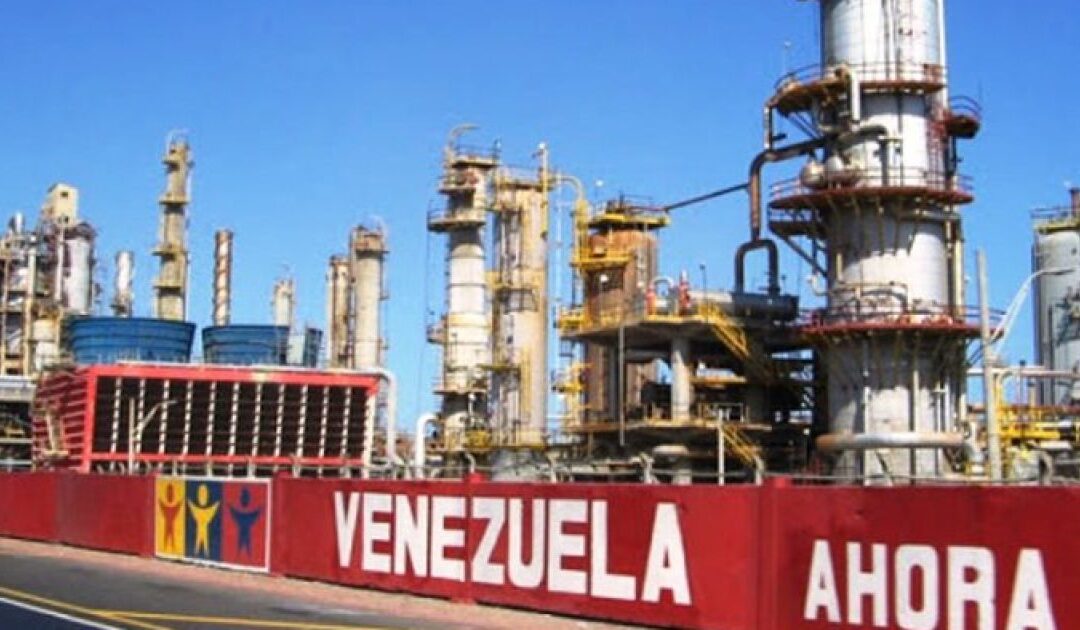
Image courtesy of Qué Pasa.

The Trump administration has launched a series of actions to advance the President’s plan to reopen and modernize Venezuela’s oil industry, positioning U.S. companies to play a central role in its redevelopment. Through new general licenses issued by the Treasury Department’s Office of Foreign Assets Control, Washington is expanding U.S. participation in Venezuela’s oil and gas sector while establishing oversight mechanisms to ensure revenues are managed transparently.

On January 29, OFAC issued General License 46, authorizing U.S.-incorporated firms to market Venezuelan oil globally, including in the United States. Payments must be made on commercially reasonable terms and deposited into U.S.-based accounts overseen by the Departments of State and Treasury to ensure funds benefit the Venezuelan people rather than corrupt actors. General License 48, issued February 10, permits U.S. companies to provide goods, equipment, and services to repair and upgrade Venezuela’s oil and gas infrastructure.

Venezuela holds some of the world’s largest proven oil reserves, but years of political instability, corruption, economic mismanagement, chronic underinvestment, and international sanctions have severely degraded its energy sector. The administration argues that reopening the industry will increase production, modernize infrastructure, strengthen U.S. supply lines within the Western Hemisphere, and support Venezuela’s broader economic recovery.

The strategic timing is significant. As Mexico redirects more of its heavy crude to domestic refining, imports of Mexican Maya crude to the U.S. Gulf Coast are expected to decline. Gulf Coast refineries are specifically designed to process heavy crude, historically sourced from Canada, Mexico, and Venezuela. This creates an opening for increased Venezuelan supply.

Following the capture of Nicolás Maduro and President Trump’s pledge to expand U.S. involvement in Venezuela’s oil sector, refiners began evaluating greater imports. Some, including Valero, have already increased Venezuelan crude purchases as sanctions ease. Venezuelan barrels are currently trading at a discount to Canadian crude in Houston, though long-term demand will ultimately depend on pricing and market economics.

The Treasury Department continues to restrict sales to certain countries, including China, which became Venezuela’s largest buyer during the sanctions period.

Oil companies remain cautious about large-scale investments, seeking legal, financial, and security assurances before committing billions to new development. ExxonMobil and ConocoPhillips are still pursuing arbitration claims after their assets were seized in 2007. Chevron, the only U.S. company currently authorized to operate in Venezuela, produces about 250,000 barrels per day and could potentially increase output by roughly 50 percent over the next two years without major capital spending.

If the revival succeeds, Texas refineries are likely to play a central role. Beyond heavy crude from the Orinoco Belt, Venezuela also holds lighter crude reserves in the Maracaibo Basin, potential shale formations comparable to those developed in Texas’ Permian Basin, and offshore natural gas discoveries. Expanding production across these sectors would be essential to any durable economic recovery.

Yet the scale of decay is substantial. A recent example illustrates the challenge. A large drilling rig transported from China to Lake Maracaibo struck an oil pipeline while entering the lake, causing a leak that went unrepaired for months. The incident underscored that even basic efforts to restore operations are complicated by deteriorated infrastructure. Decades of underinvestment and mismanagement have left pipelines corroded, facilities unreliable, and environmental damage widespread.

Initial projects focus on refurbishing old wells, repairing pipelines and ports, and restarting crude upgraders. In practice, these efforts face missing technical data, insufficient natural gas to maintain well pressure, equipment shortages, and degraded support systems.

In the Orinoco Belt, producing extra-heavy crude requires either specialized upgraders or imported diluents. Only a small portion of joint ventures have access to upgraders, and facilities such as Chevron’s Petropiar require significant overhauls before output can meaningfully increase.

Security concerns, fragile supply chains, legal uncertainty, and the possibility of future policy shifts add further risk. Although recent oil law reforms grant foreign firms greater autonomy, investors remain wary that future political changes could alter contractual terms.

Some analysts believe the opportunity outweighs the risks, arguing that fields long considered depleted may still contain significant recoverable reserves if modern technology and management practices are applied. The coming year will determine whether Venezuela achieves a historic production recovery or continues struggling to convert vast reserves into sustained output.

The post All About Venezuelan Oil and the New Opportunities Created by President Trump appeared first on The Gateway Pundit.

Go to Source
Author: Antonio Graceffo