New Evidence Shows Biden FBI Set Trap to Close on Trump the Moment He Leaves Office

New Evidence Shows Biden FBI Set Trap to Close on Trump the Moment He Leaves Office

New Evidence Shows Biden FBI Set Trap to Close on Trump the Moment He Leaves Office
May 14, 2026

Serious expression of a man in a suit during a formal event, highlighting intense focus and engagement.

A report from Just the News says that Republicans in the House are scrambling to end the potential for prosecuting President Donald Trump after he leaves office.

This comes after the same outlet first broke the story Tuesday that during the lame-duck period of Joe Biden’s presidency, FBI agents with former special counsel Jack Smith’s investigation into the 2020 election “secretly arranged to preserve their evidence until 2030 in memos that raise alarm they could revive their prosecution.”

“The FBI memos and emails closing out the controversial Arctic Frost investigation … show the bureau chose not to relinquish the evidence it gathered after Smith went to court to dismiss charges against Trump, even though that is the normal practice for agents,” Just the News reported.

“Instead, they created a preservation order keeping the evidence in FBI custody for two years after Trump’s second term ends, claiming it was necessary to do so because of ongoing litigation, the memos show.”

Because apparently, in 2029, a cudgel carried by the Democrats since 2020 will still be wielded against a president nine years later, no matter who the president is.

Ironically, this was revealed a little less than five months after Jack Smith said he was afraid he was going to be the guy prosecuted, telling the House Judiciary Committee that Trump administration officials would do “everything in their power” to charge him, but he would “not be intimidated,” according to The Associated Press.

He also told the committee in his testimony that he believed “Donald Trump is the person who caused Jan. 6, it was foreseeable to him, and that he sought to exploit the violence.” Apparently, he didn’t watch the speech or he has evidence he’s not sharing with us.

Whatever the case, Smith, who was a nakedly partisan actor, claimed Trump committed “serious crimes” by contesting the results of the 2020 election. Other Democrat election-deniers remained unmentioned.

However, Smith’s case was dismissed without prejudice by U.S. District Judge Tanya Chutkan, an Obama appointee, after the special counsel conceded that the Office of Legal Counsel had found a sitting president couldn’t be charged with a crime.

You would think this would be the end of the whole thing, but you may have noticed the whole “without prejudice” thing. That means it can be brought again — and, according to the new documents released by the bureau, that’s just what they’re aiming to do if a Democrat takes office again.

One of the key “Case Closing” documents obtained by Just the News – originating from the FBI’s Washington Field Office’s CR-15 team – was dated a couple of weeks into Trump’s second term, on February 5, 2025, when many holdover FBI agents and leaders were still in place.

The newly-released closing document from early 2025 repeated the extensive claims of criminality against Trump, which had been pursued by Smith and the bureau, and it sought to retain all of the evidence for a half decade until at least February 2030, when Trump would be a former president once more and thus when the DOJ guidance prohibiting the prosecution of a sitting president would no longer be in force.

The document was titled “Arctic Frost – Election Law Matters – Sensitive Investigative Matter” and its synopsis was “To Document the Closing of Captioned Investigation.” The listed enclosures buttressing the document were a “Deputy Special Counsel Concurrence” and the “Retention of Evidence Approval.”

“The American people deserve to know how this egregious weaponization of power to target political opponents and President Trump happened inside an institution meant to protect them,” FBI Director Kash Patel told the outlet Tuesday.

“We shut down the weaponized CR-15 squad, and we are going to keep following the facts until there is full accountability. The FBI exists to protect the country, not to preserve political prosecutions for a future administration.”

On Wednesday night, the chair of the House Judiciary Committee concurred.

“It’s probably time that this all just ended,” GOP Rep. Jim Jordan of Ohio told Just the News.

“When you think about — what’s it now been, over 10 years?” Jordan said.

“I mean, remember this all started when we learned here from your good reporting and other good work, that we’ve learned that the whole thing was a hoax from the beginning when they used the [Steele] dossier that was manufactured and paid for by the Clinton campaign and all that. So, yeah, it’s probably time that this is all just ended.”

His solution? Acting Attorney General Todd Blanche should just say, “This thing is done, over with. A-B, see you later.”

And he’s right. It’s not just that this isn’t normal procedure. (It isn’t.) And it’s not just that this was based on an overblown case to begin with. (It was.) This is based on the principle that politics is a Pandora’s box. Once something is opened, it cannot be closed.

It’s rich that Jack Smith, a man who was clearly in on this decision to retain evidence, believes the sword of Damocles is hanging over him when Democrats are effectively doing this by keeping an old wound open. Enough is enough. The weaponization of the FBI was bad, and this is worse.

This article appeared originally on The Western Journal.

The post New Evidence Shows Biden FBI Set Trap to Close on Trump the Moment He Leaves Office appeared first on The Gateway Pundit.

Go to Source
Author: C. Douglas Golden, The Western Journal
Trump to Drop $10 Billion Lawsuit Against IRS Over Leak of His Tax Returns in Exchange for This Creative Deal

Trump to Drop $10 Billion Lawsuit Against IRS Over Leak of His Tax Returns in Exchange for This Creative Deal

Trump to Drop $10 Billion Lawsuit Against IRS Over Leak of His Tax Returns in Exchange for This Creative Deal
May 14, 2026

President Trump is expected to drop his $10 billion lawsuit against the IRS over the leak of his tax returns in exchange for a deal, according to ABC News.

Trump is willing to drop his blockbuster lawsuit against the agency in exchange for a $1.7 billion taxpayer-funded fund to pay people who were unfairly targeted by the Biden Regime.

ABC News reported:

President Donald Trump is expected to drop his $10 billion lawsuit against the Internal Revenue Service in exchange for the creation of a $1.7 billion fund to compensate allies who claim they were wrongfully targeted by the Biden administration, sources familiar with the matter told ABC News.

The commission overseeing the compensation fund would have the total authority to hand out approximately $1.7 billion in taxpayer funds to settle claims brought by anyone who alleges they were harmed by the Biden administration’s “weaponization” of the legal system, including the nearly 1,600 individuals charged in connection with the Jan. 6 Capitol attack as well as potentially entities associated with President Trump himself.

While the settlement is expected to be agreed upon in the coming days, sources caution that the final terms will not be set until they are officially announced.

In addition to a public apology from the IRS, the compensation fund is believed to be the main condition for Trump to drop a series of legal actions he filed against the federal government, including the $10 billion lawsuit related to the 2019 leak of his tax returns as well as $230 million in legal claims related to the 2022 search of his Mar-a-Lago estate and the Russia collusion investigation he faced during his first term in office, sources familiar with the ongoing deliberations said.

The settlement terms are expected to prohibit Trump from directly receiving payments related to those three legal claims; however, entities associated with Trump are not explicitly barred from filing additional claims, sources said.

In January, President Trump, Eric Trump, Don Jr., and the Trump Org filed a lawsuit against the IRS for leaking their tax returns.

They sought $10 billion in damages.

In September 2023, federal prosecutors charged a former IRS contractor who worked for the agency from 2018 to 2020 with unlawfully obtaining and disseminating the tax details of a high-ranking public official and numerous affluent Americans to media outlets.

According to court documents and an official press release from the Department of JusticeCharles Littlejohn, 38, of Washington, D.C., stole tax return information associated with a high-ranking government official, referred to as Public Official A  – now known as Donald Trump. He then disclosed this information to a news organization identified as News Organization 1 – now known as The New York Times.

Littlejohn reportedly stole IRS information on thousands of wealthy people. The stolen information was then disseminated to two news outlets (New York Times and ProPublica).

“In July and August 2020, Littlejohn separately stole tax return information for thousands of the nation’s wealthiest individuals. Littlejohn was again able to evade IRS detection. In November 2020, Littlejohn disclosed this tax return information to News Organization 2, which published over 50 articles using the stolen data. Littlejohn then obstructed the forthcoming investigation into his conduct by deleting and destroying evidence of his disclosures,” the DOJ previously said.

Littlejohn was only sentenced to five years in prison. Political leaders said he should have been sentenced to 60 years.

“The IRS wrongly allowed a rogue, politically-motivated employee to leak private and confidential information about President Trump, his family, and the Trump Organization to the New York Times, ProPublica and other left-wing news outlets, which was then illegally released to millions of people,” a spokesperson for Trump’s legal team told CNBC.

The post Trump to Drop $10 Billion Lawsuit Against IRS Over Leak of His Tax Returns in Exchange for This Creative Deal appeared first on The Gateway Pundit.

Go to Source
Author: Cristina Laila

CNN, Network Which Stoked COVID Fears Constantly, Warns Against ‘Calm-Mongering’ on Hantavirus

CNN, Network Which Stoked COVID Fears Constantly, Warns Against ‘Calm-Mongering’ on Hantavirus

CNN, Network Which Stoked COVID Fears Constantly, Warns Against ‘Calm-Mongering’ on Hantavirus
May 14, 2026

CNN, the network that helped bring you the fear-mongering which prolonged the worst parts of the last pandemic, would like you to know that they’d like a sequel and would you please stop “calm-mongering” about hantavirus?

In a ludicrous story about the Andes strain of the disease — the first (and hopefully only) outbreak of which appeared on a cruise ship called the MV Hondius, which docked in the Canary Islands and transferred patients back to their country of origin — CNN noted that people were being too goshdarn normal about things while noting that “still-fresh memories of the loss and disruptions of the Covid-19 pandemic” might be affecting our response.

Yes, whatever may have given you that idea, CNN?

That call for masking was in 2023, for those of you who didn’t check the date.

Anyhow, CNN bills itself as “The Most Trusted Name in News,” but its tagline really should be Rahm Emanuel’s timeless motto: “Never Let a Good Crisis Go to Waste.” So, even though there are three people dead out of 11 confirmed or suspected cases, according to World Health Organization data as of Wednesday, that didn’t mean it wasn’t time for a piece with a title like “Hantavirus is not Covid-19, but ‘calm-mongering’ risks triggering post-Covid anxiety.”

It’s the “calm-mongering” that poses the biggest risk to these people, with CNN averring that “some health experts say that at points, the messaging has been overly confident and too willing to dismiss the possibility of a threat.”

Ah, yes: The return of “some health experts”! I missed you, fellas. Can you get the Faucinator out of retirement to do his “I am the science!” bit?

One of these CNN-consulted experts said that health officials should be absolutely clear that this isn’t COVID-19 while treating it like it might be kinda a little sorta if you squint like COVID-19, maybe possibly:

Dr. Peter Sandman, who was a professor at Rutgers University for almost two decades and is one of the founding fathers of the field of crisis and risk communication, said that to be effective now, health officials first need to earn the right to explain why this hantavirus outbreak isn’t Covid.

“Every reassuring message should have a verbal asterisk: ‘We don’t know as much about hantaviruses as we wish we did,’” Sandman said in an email to CNN.

Health communicators would be wise to start every news conference by acknowledging that this feels like Covid redux, he said. “Mention a few ways it echoes Covid and agree that people are wise to be a bit skeptical about official ‘nothing to worry about’ messaging,” Sandman wrote.

Then acknowledge the uncertainty and describe the decision-making process. For example, “’We’re thinking about worst case scenarios, checking and double-checking to make sure we still think this is a big deal only if you were on that ship or came into close contact with someone who was,’” Sandman wrote.

Again, perhaps CNN’s viewership might be “skeptical” about “nothing to worry about” messaging coming from Donald Trump’s administration, but the same messaging is coming from the WHO, the people who genuflected to China while encouraging — heck, practically forcing — the entire world to lock down during the COVID pandemic.

Indeed, WHO Director-General Dr. Tedros Adhanom Ghebreyesus — remember him? — said that transmission had been limited to those in “close and prolonged contact.” As in, on a cruise ship in close quarters.

Also, not just any cruise ship. “The Hondius was far from the Love Boat,” The Wall Street Journal noted in an article about the cruise that catered to “nature enthusiasts” and “was set to take passengers to remote islands from the South Atlantic to Cape Verde.”

“Some passengers shared small, quadruple-occupancy cabins with strangers, complete with bunk beds reminiscent of a cut-rate youth hostel,” the Journal reported. A 33-day cruise in a floating hostel with a virus that requires close contact for transmission. You can perhaps see how things went very wrong for these people while still noting that this isn’t COVID-2: N-95 Boogaloo.

However, CNN noted that maybe — maybe! — people were just a little tired of this stuff, especially from them.

But the echoes of Covid will be hard for health officials to escape.

“I think we’re definitely in a post-covid fatigue moment,” said Dr. Traci Hong, a professor of media science at Boston University’s College of Communication. On her social media feeds, she sees headlines referring to the “rat virus” and decrying “calm-mongering.”

“And there is this real sort of tug of war,” Hong said. “You don’t want to frighten people.”

Yes, how could this possibly have happened?

In September of 2020, one CNN journalist, Kyle Feldscher, predicted we’d need 5,836,679 deaths to get to herd immunity from COVID. That was just from the initial strain, of course. The last time the Worldometer Coronavirus Tracker was updated in April of 2024, long after the virus had mutated, the number of U.S. deaths attributed to COVID was 1,219,487. (This is probably still too high.)

Remember, too, that CNN also blamed Republicans for this. Jim Acosta, then the network’s White House correspondent, said that the delta variant should be known as the “DeSantis variant” because he’d stopped masking and lockdown measures. For that measure, here were Brian Stelter’s headlines at CNN on COVID over just a week at the start of the pandemic:

  • March 25, 2020: “How the Fox News presidency has politicized a national health crisis”
  • March 30, 2020: “As coronavirus death toll rises, Trump focuses on a different set of numbers: TV ratings”
  • March 30, 2020: “Trump is self-isolating at his safe space: Fox News”
  • April 1, 2020: “Journalists challenge Trump’s ‘revisionist history’ regarding coronavirus response”

Imagine us wanting to calm-monger against CNN’s carefully calibrated “panic, you fools! Panic!” response to both this and COVID, in different (and likely equally wrong) ways.

This parade of “experts” goes on, but I needn’t. The TL;DR from CNN here is: “This totally isn’t COVID. Except in the way that we’re going to pretend it is. Or maybe worse! Who knows? Tune in to find out.” No, thanks.

This article appeared originally on The Western Journal.

The post CNN, Network Which Stoked COVID Fears Constantly, Warns Against ‘Calm-Mongering’ on Hantavirus appeared first on The Gateway Pundit.

Go to Source
Author: C. Douglas Golden, The Western Journal

President Trump Releases Fiery Statement Claiming China’s Xi Was Right About America’s Decline Under ‘Sleepy Joe Biden’ – But Says US Is Now Back

President Trump Releases Fiery Statement Claiming China’s Xi Was Right About America’s Decline Under ‘Sleepy Joe Biden’ – But Says US Is Now Back

President Trump Releases Fiery Statement Claiming China’s Xi Was Right About America’s Decline Under ‘Sleepy Joe Biden’ – But Says US Is Now Back
May 14, 2026

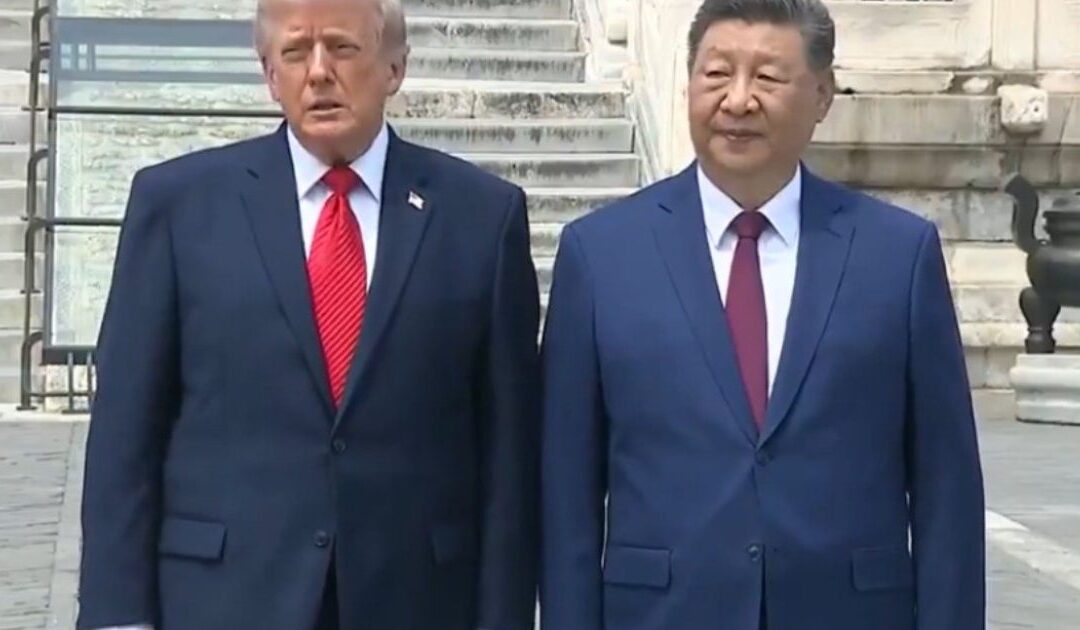
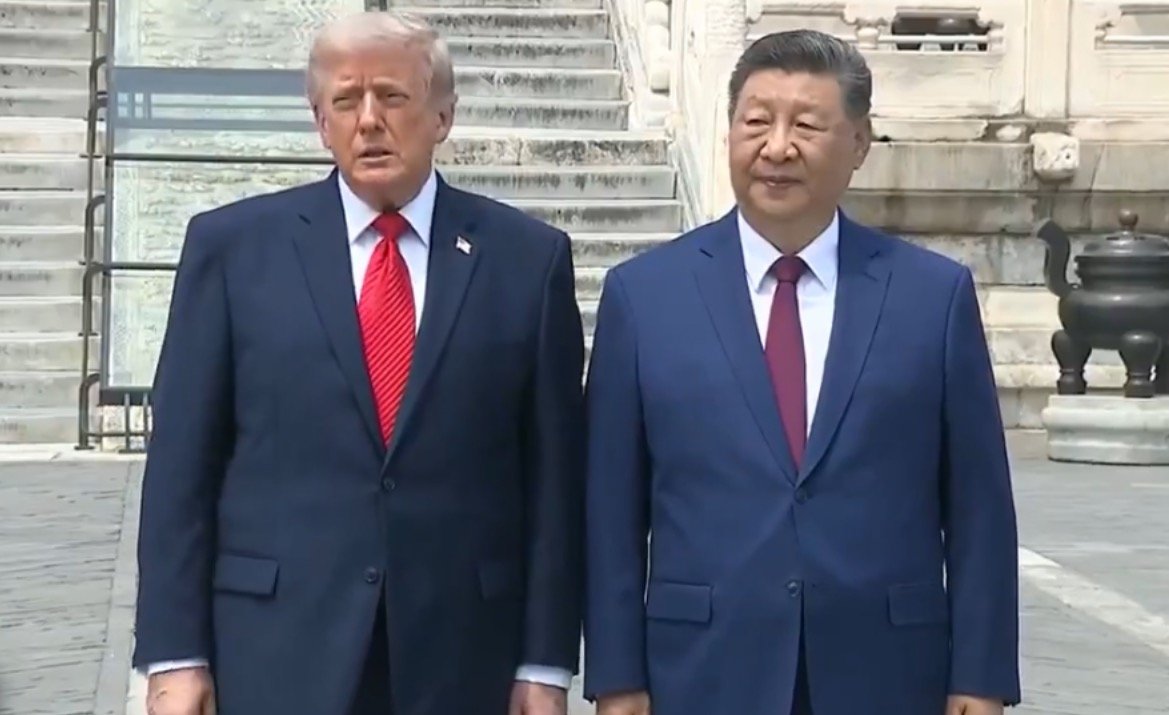
Former U.S. President Donald Trump and Chinese President Xi Jinping stand together during a diplomatic meeting, showcasing international relations and leadership.

President Trump on Thursday evening said China’s Xi Jinping was right about the US’s decline under Joe Biden.

However, the president argued that America is back.

Xi Jinping said America is a declining power and said the “world has arrived at a new crossroads.”

“Can China and the United States transcend the so-called ‘Thucydides trap’ and create a new paradigm for relations between major powers?” President Xi said.

President Trump said Xi Jinping was right about America’s decline under Joe Biden – but argued that America is back.

President Trump’s full statement:

When President Xi very elegantly referred to the United States as perhaps being a declining nation, he was referring to the tremendous damage we suffered during the four years of Sleepy Joe Biden and the Biden Administration, and on that score, he was 100% correct.

Our Country suffered immeasurably with open borders, high taxes, transgender for everybody, men in women’s sports, DEI, horrible trade deals, rampant crime, and so much more!

President Xi was not referring to the incredible rise that the United States has displayed to the world during the 16 spectacular months of the Trump Administration, which includes all-time high stock markets and 401K’s, military victory and thriving relationship in Venezuela, the military decimation of Iran (to be continued!) — Strongest military on earth by far, economic powerhouse again, with a record 18 trillion dollars being invested into the United States by others, best U.S. job market in history, with more people working in the United States right now than ever before, ending country destroying DEI, and so many other things that it would be impossible to readily list.

In fact, President Xi congratulated me on so many tremendous successes in such a short period of time.

Two years ago, we were, in fact, a Nation in decline. On that, I fully agree with President Xi! But now, the United States is the hottest Nation anywhere in the world, and hopefully our relationship with China will be stronger and better than ever before!

The post President Trump Releases Fiery Statement Claiming China’s Xi Was Right About America’s Decline Under ‘Sleepy Joe Biden’ – But Says US Is Now Back appeared first on The Gateway Pundit.

Go to Source
Author: Cristina Laila

Trump vs. Xi: Why the Media Has the Summit Power Dynamic Backwards

Trump vs. Xi: Why the Media Has the Summit Power Dynamic Backwards

Trump vs. Xi: Why the Media Has the Summit Power Dynamic Backwards
May 14, 2026

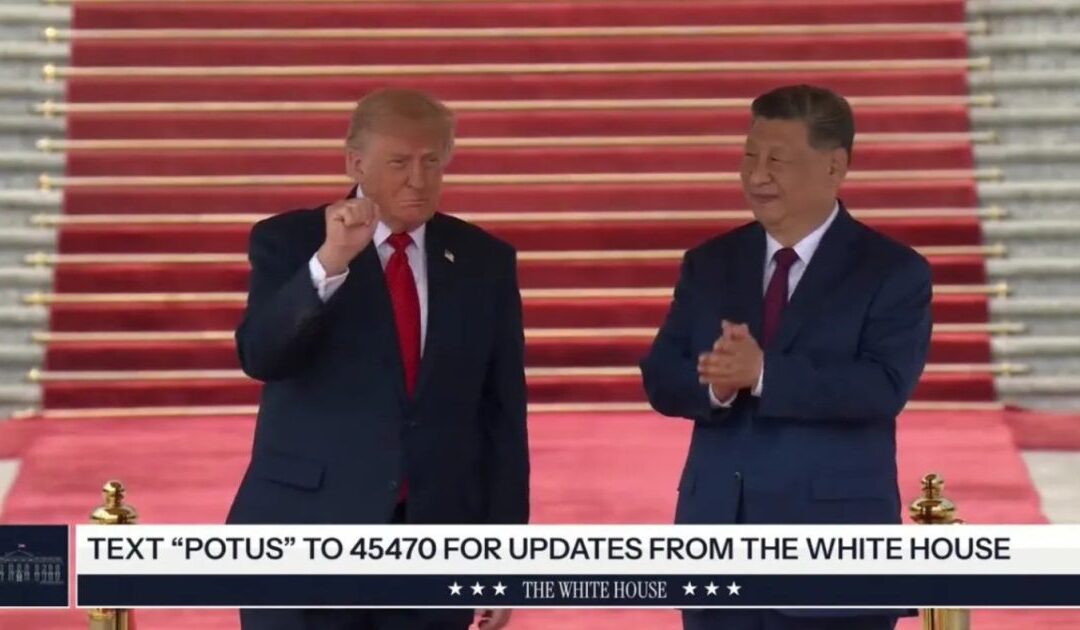
Former US President Donald Trump and Chinese President Xi Jinping stand together on a red carpet during a formal event, showcasing international diplomatic relations.
Mainstream media claim that President Trump is in a weaker position in his meeting with Chinese leader Xi Jinping, but he is actually in a much stronger position. Photo courtesy of the White House.

As U.S. President Donald Trump arrived in Beijing on May 14 for his first state visit to China since 2017, much of the mainstream media framed the moment as Xi Jinping holding the stronger hand. That framing is contrary to the facts.

The U.S. carried out 573 air strikes in Trump’s first year alone, more than Biden’s entire four-year total of 494, according to ACLED. When coalition strikes are included, the 2025 total rises to 658, approaching Biden’s four-year coalition figure of 694. The operations spanned eleven distinct theaters in seventeen months. In Somalia, the administration conducted more operations in 2025 alone than the Bush, Obama, and Biden administrations combined, beginning February 1 with ISIS strikes in the Golis Mountains coordinated with the Somali government.

In Iraq, a March 2025 al-Anbar strike killed Abdallah Makki Muslih al-Rifai, the ISIS second-in-command, coordinated with Iraqi intelligence. In Yemen, Operation Rough Rider launched in mid-March 2025 against Houthi command-and-control hubs using JASSM cruise missiles, JSOWs, and Tomahawks, surpassing $1 billion in costs within its first month, before concluding with an Oman-mediated ceasefire on May 6, 2025.

In Iran, Operation Midnight Hammer deployed seven B-2 stealth bombers from Whiteman Air Force Base to drop 30,000-pound GBU-57 Massive Ordnance Penetrators on Fordow, Natanz, and Isfahan, as part of the 12-day war that ended in a ceasefire.

In Syria, Operation Hawkeye Strike followed the deaths of two U.S. soldiers and a civilian interpreter in an ISIS ambush, killing more than 50 ISIS operatives by mid-February 2026, with 35 ISIS targets struck on January 10 alone. In Nigeria, Christmas Day strikes against ISIS in Sokoto State used more than a dozen Tomahawk cruise missiles from a Navy ship in the Gulf of Guinea, with 100 U.S. troops deployed to train Nigerian forces.

Against drug networks, a sustained maritime campaign in the Caribbean and eastern Pacific produced at least 44 aerial strikes and 150 deaths by early 2026, while a U.S. intelligence task force played a role in the Mexican raid that killed cartel boss El Mencho, the largest cartel takedown in at least a decade. In Ecuador, joint U.S.-Ecuadorian forces launched operations in March 2026 against designated terrorist organizations.

In Venezuela, a CIA drone strike marked the first known U.S. attack inside the country. That was followed by Operation Absolute Resolve on January 3, 2026. During the operation, U.S. special forces breached Maduro’s compound in Caracas. Approximately 75 Cuban and Venezuelan guards were killed, and Maduro and his wife were transported to New York on narcoterrorism charges.

On February 28, 2026, the U.S. and Israel launched Operation Epic Fury against Iran’s ballistic missile capabilities, naval capacity, nuclear program, and proxy network. The operation involved two aircraft carriers, 200 fighter jets and bombers, and more than 50,000 U.S. troops. Close to 2,000 targets were struck during the campaign.

The result, documented by analysts at Time, is that world leaders are now treating the management of Trump’s emotions as a strategic priority. ACLED described the approach as “strike first, ask questions later,” the most extreme tool at a president’s disposal, used not as a last resort but as a first move. That behavioral shift is visible in government decisions across every region.

Bilateral Trade Agreement negotiations between the U.S. and India were launched by Trump and Modi on February 13, 2025, with Modi positioning himself as one of the first global leaders to meet Trump after his inauguration. The Trump administration lifted 25 percent tariffs on India over its Russian oil imports in February 2026, underscoring Washington’s willingness to use coercive economic leverage even against close partners.

Gulf states that spent years cultivating neutrality were pulled directly into the conflict: Iran fired 438 ballistic missiles, 2,012 drones, and 19 cruise missiles at the UAE alone, striking airports, civilian areas, and U.S. military bases. Gulf capitals including Dubai, Manama, and Kuwait City were struck, and Qatar, Oman, Kuwait, and Bahrain, none of which had any role in initiating the conflict, all took Iranian fire.

In Latin America, the Atlantic Council noted that the “Trump Corollary” to the Monroe Doctrine was formally in effect after Maduro’s capture, with the November 2025 NSS explicitly authorizing targeted military deployments and lethal force against cartels. Trump is also the first U.S. president to hold Iran militarily accountable for its decades of state-sponsored terrorism, including the 1979 seizure of the U.S. Embassy, and when the IRGC declared the Strait of Hormuz closed, he was the only world leader willing to confront them with force.

Xi Jinping, by contrast, condemned U.S. interventions in both Venezuela and Iran while doing nothing to stop them. Beijing holds a “Comprehensive Strategic Partnership” with Tehran, buys up to 90 percent of Iran’s oil, and signed a 25-year partnership covering infrastructure, trade, and security cooperation. None of that stopped the U.S. from striking Iran, killing its supreme leader, and blockading its ports. China responded with phone calls: Wang Yi made 26 phone calls between February 28 and the lead-up to the April 8 ceasefire.

When CNN reported that China was preparing to ship MANPADs to Iran, President Trump warned China it would “have big problems.” Chinese leader Xi Jinping then reportedly told Trump in a letter exchange that Beijing was not providing weapons to Iran, and China backed down.

The spectacle extended to the summit itself. Secretary of State Marco Rubio had been sanctioned twice by China for his human rights criticism. Yet when he entered the country, he was not arrested. Instead, Chinese authorities reportedly used a different transliteration of his surname to sidestep their own sanctions without formally lifting them. A government that cannot enforce its own sanctions against the man it has banned is not negotiating from a position of strength.

Trump arrived in Beijing, and the summit’s central question is what Xi will do for Trump on Iran, not the reverse. Treasury Secretary Bessent called on China to join Washington in supporting an international operation to reopen the Strait of Hormuz, which China needs open as badly as anyone. Analysts note China could otherwise use this leverage regarding Taiwan. As of mid-May 2026, the ceasefire remains on “life support,” the Strait remains well below pre-conflict transit levels, and no comprehensive agreement has been reached.

China, presented with its most significant strategic opportunity in a generation, has done none of the things a peer competitor would be expected to do. PLA incursions into Taiwan’s Air Defense Identification Zone dropped to 147 sorties in February 2026, the lowest monthly total since President Lai Ching-te took office, with no incursions on 13 of 28 days, the opposite of opportunistic escalation.

A former PLA colonel quoted in the South China Morning Post said PRC military aid to Iran “makes no sense,” and a leading PRC think tank director stated that PRC-Iran military ties are “far below what the outside world assumes.” China has not meaningfully escalated in the South China Sea, has not surged support to Russia, and has not defended Venezuela, Iran, or any other declared partner.

The structural weakness of China’s position extends beyond military inaction. China’s actual 2025 GDP growth fell short of 3 percent, with late-2025 growth sputtering around 1 percent. Beijing set its lowest target in decades for 2026, aiming for 4.5 to 5 percent expansion while acknowledging “deep-seated structural problems.” China’s GDP deflator has remained negative since 2023 and is expected to fall a further 0.5 percent in 2026, the longest deflationary streak on record. Fixed asset investment fell 2.6 percent year-on-year through 2025, private investment declined 5.3 percent, and real estate development investment fell 15.9 percent. China remains a net importer of both oil and food.

The United States, by contrast, has been a net energy exporter since 2019, with total energy exports reaching a record high of approximately 30.92 quadrillion British thermal units in 2024, and is the world’s second-largest crude oil exporter. The U.S. is the world’s leading agricultural exporter, with $170 billion in crops and commodities shipped in 2025, dominating global corn production and ranking among the top producers of soybeans and wheat.

According to UNCTAD, the United States secured its position as the world’s top destination for FDI flows in 2025, ranked number one in the Kearney FDI Confidence Index for the 13th consecutive year.

The Heritage Foundation concluded that Trump’s demonstrated willingness to use kinetic force across multiple theaters complicates Xi’s Taiwan calculations, making a move on Taiwan a high-stakes gamble Beijing cannot afford. One leader is acting across eleven theaters simultaneously, and the other is calculating whether to act based on what the first one might do.

Xi has shown himself either unable or unwilling to defend his allies, enforce his own sanctions, or protect China’s stated strategic interests when they conflict with U.S. preferences. It is Xi, not Trump, who arrived at this summit from a position of weakness.

The post Trump vs. Xi: Why the Media Has the Summit Power Dynamic Backwards appeared first on The Gateway Pundit.

Go to Source
Author: Antonio Graceffo