USAID Was Funding COVID Research in Wuhan Labs Resulting in 7.1 Million International Deaths – Trump Wins Again
June 23, 2026
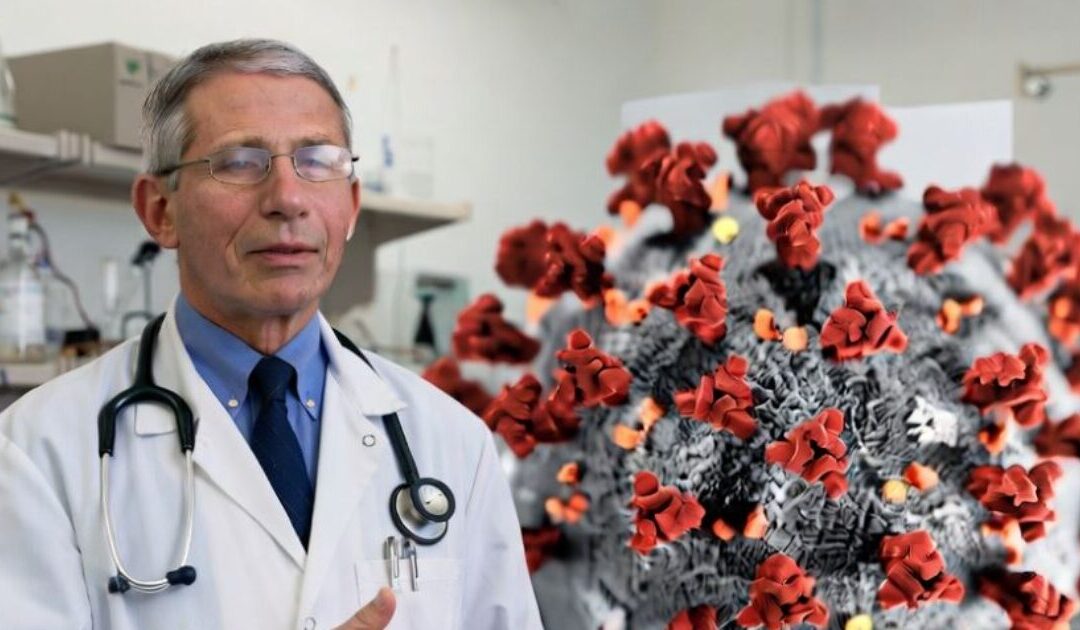
Dr. Fauci approved USAID funding for COVID research in the Wuhan labs prior to its release in 2019-2020.
Crazed Democrats are piling on President Trump and Elon Musk for eliminating the USAID Democrat slush fund that was used to fix elections for socialists around the world and to fund the Wuhan laboratory COVID research.
Democrats have watched as their socialist brethren have lost several elections in South America now that USAID is no longer funding the communists and socialists.
At least seven elections were lost by the international left since USAID was disbanded.
7 Latin American elections since USAID was defunded:
Chile: “far-right” Kast won Bolivia: “far-right” Paz won Peru: “far-right” Fujimori won Ecuador: “far-right” Noboa won Honduras: “far-right” Asfura won Colombia: “far-right” Espriella won Costa Rica:…
Western Lensman published an amazing video of how Democrats are running their mouths and lying about alleged deaths caused by eliminating USAID payments to crooked regimes and Democrat slush funds.
Just two months ago, Democrats lied and said defunding USAID had resulted in 2.5 million dead children.
Now Democrats claim defunding USAID resulted in 4.5 million deaths.
The supposed ‘USAID death toll’ rhetoric keeps getting more extreme:
In April, Chris Van Hollen cited a figure of “2.5 million children.”
Ro Khanna just ratcheted that number up to “4.5 million children.”
Migration and Second-Generation Radicalization Drive Rise in Islamic Terrorism in Europe
June 23, 2026
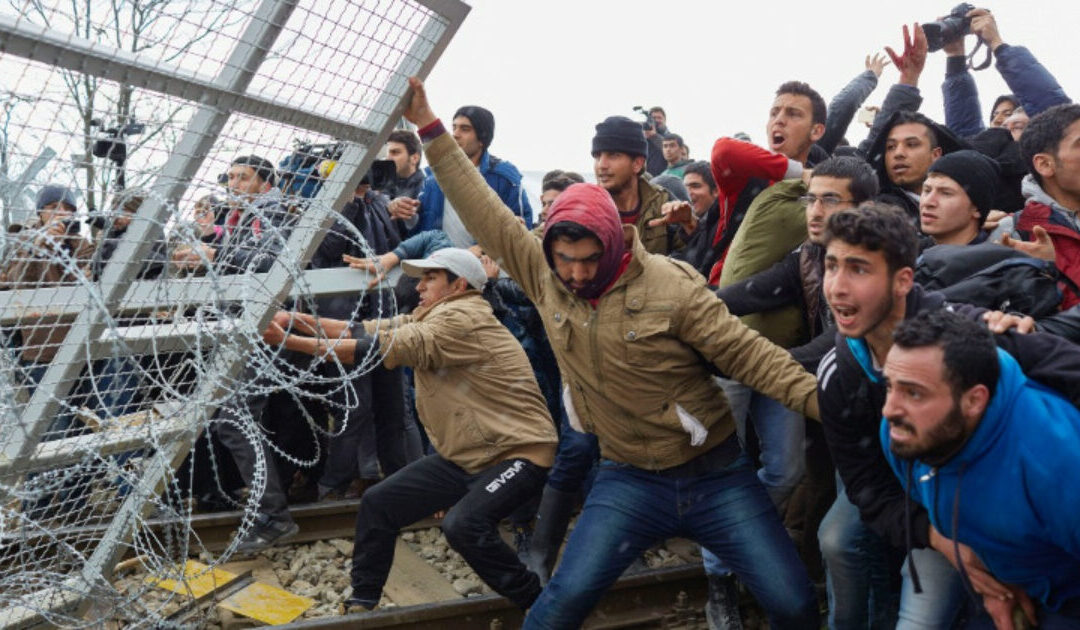
Research has shown that, alongside terrorists entering the EU through migration and open borders, there is an increasing trend of second-generation radicalization among the children of immigrants. Photo courtesy of the organizer.
Research has linked a significant increase in jihadist violence in Europe to large-scale immigration and failed integration policies, accompanied by a documented rise in radicalization among second- and third-generation immigrants.
The influx of migrants has produced settled Muslim communities across Western Europe. Large swaths of these populations have failed to integrate in France, Belgium, Germany, and the United Kingdom, and the children and grandchildren of the original immigrants, born on European soil and holding European passports, have become the primary radicalization pool from which the continent’s jihadist terrorism now draws.
Europol’s EU Terrorism Situation and Trend Report recorded 120 terrorist attacks across the EU in 2023, up from 28 in 2022 and 18 in 2021, with 14 classified as jihadist and 334 jihadist arrests, a rise from 266 the prior year. In 2024, 58 attacks were recorded across 14 member states, 24 of them jihadist, with arrests climbing to 449, the highest figure in recent years. Spain, France, Belgium, and Germany accounted for the majority of both years’ arrests.
The profile of the perpetrators is consistent across multiple independent research bodies. Grey Dynamics, analyzing Europe’s jihadist threat through 2025, concluded that rather than recent immigrants or asylum seekers, the threat is primarily domestic, involving EU citizens or long-term residents who are frequently second-generation.
START InSight found that 89% of terror attacks in Europe were carried out by first-, second-, or third-generation immigrants. Of those attacks, 26% were committed specifically by second- or third-generation immigrants.
Lorenzo Vidino, whose research on European jihadism is widely cited, found that ISIS-mobilized jihadi terrorists in Europe have tended to be second-generation Muslim immigrants. He also noted that countries such as Italy and Spain, which have smaller second-generation Muslim populations, have experienced fewer attacks than France, Belgium, Germany, and the United Kingdom, where those populations are larger.
The mechanism driving radicalization among this cohort is documented in academic literature. A core driver is identity crisis. Second- and third-generation immigrants often do not feel a sense of belonging to their European host societies or to their ethnic countries of origin.
Radical Islam can fill that vacuum by providing a sense of dignity, identity, and purpose to young people who feel marginalized or discriminated against. The Council of Europe identified a typical radicalization profile as young people between the ages of 16 and 24 with histories of school failure, criminal records, and little or no work experience.
The Combating Terrorism Center at West Point, analyzing thwarted jihadi plots in Europe between January 2022 and March 2025, found that minor plotters are more likely to be EU citizens than third-country nationals, and that several were second- or third-generation immigrants.
The radicalization of minors represents the most acute current development. A 2026 study found that youth and minors accounted for 42% of all terror-related investigations in Europe and North America in 2025, a threefold increase since 2021.
In 2024, teenagers were involved in nearly two-thirds of Islamic State-linked arrests in Europe. Belgian intelligence reported that one-third of its terrorist investigations between 2022 and 2024 concerned minors.
The radicalization process has also accelerated dramatically. What historically required months or years can now occur within weeks or even days. This shift has been driven by short-form online propaganda, algorithmic amplification, and the exploitation of developmental vulnerabilities among adolescents.
The ethnic and national origins of the perpetrator pool are also consistent across the data. START InSight found that the ethno-national groups most represented in European jihadist terrorism are Moroccans and Algerians. Moroccans predominate in France, Belgium, Spain, and Italy, while Algerians are most prominent in France. Their representation is broadly proportional to the size of those immigrant communities in their respective host countries.
French Interior Ministry data from 2023 showed that 4,263 of the 20,120 individuals listed in France’s National Database for the Prevention of Radicalization Leading to Terrorism were foreign nationals. That amounted to 21% of the database, compared with foreign nationals comprising 8.2% of the total population.
In Germany, 138 of 480 individuals assessed as dangerous Islamist extremists held no German passport. That represented 29% of the total, while foreign-born residents accounted for 16.6% of the population.
The full causal chain supported by the data runs from immigration through integration failure to domestic terrorism. Second- and third-generation radicalization is a downstream consequence of the original immigration decision. Without large-scale immigration from Muslim-majority countries in North Africa and the Middle East, the second- and third-generation radicalization pool would not exist.
Researchers who argue that recent arrivals are not the primary perpetrators are technically correct in a narrow sense. However, that framing can obscure the longer generational chain of causation.
Europol, West Point’s CTC, START InSight, and Grey Dynamics collectively document a terrorism threat that is domestic in execution and generational in origin. Their findings trace the threat to immigration patterns and the failure of European states to manage the long-term social consequences of integration.
From Lockdowns to Liberty: Dr. Simone Gold Announces National ‘Medical Freedom Day’ to Restore Trust and Patient Choice
June 23, 2026
As America approaches its 250th anniversary, it is time to recognize a principle at the heart of both self-government and personal liberty: medical freedom. That is why GoldCare is designating July 1 as Medical Freedom Day — a day dedicated to informed consent, patient autonomy, transparency, and the doctor-patient relationship.
Medical freedom does not mean rejecting medicine. It means preserving each person’s right to make informed decisions in partnership with trusted healthcare professionals. It means recognizing that medical decisions belong to patients and families, not institutions.
Six years ago, Americans lived through something that they never expected to happen in the United States: a near total collapse of our Constitutional freedoms. We lost the freedom to assemble, freedom to petition the government, freedom of religion, freedom of speech. Censorship was everywhere. Churches were silent. Schools were shuttered. Businesses were closed. Grandparents were isolated. Parks were roped off. Beaches were closed. Healthy people were quarantined. Families cancelled weddings, funerals, birthdays, graduations, and holiday gatherings.
Millions of Americans stood in circles, obediently remaining six feet apart because government officials said science required it. Most Americans complied — because they trusted “doctors.”
Then the contradictions began to accumulate.
Activist-doctors declared it was safe for certain political groups to participate in political demonstrations — but everyone else needed to lockdown. Walmart and Costco were open — but small businesses were fined by the government.
Gavin Newsom, Tony Fauci, ordered closures and masks — but didn’t bother complying themselves. Physicians who dissented were censored, investigated, threatened, and fired.
The arrival of COVID vaccines accelerated the crisis of trust. Americans were told the vaccines would stop transmission. They were told natural immunity was insufficient.
They were told there would be a “winter of death” and that vaccine mandates were necessary. Healthcare workers lost careers they had spent decades building. Members of the military were discharged.
But then millions of vaccinated individuals became infected, often repeatedly. Instead of acknowledging uncertainty or revisiting prior claims, institutions doubled down. It became clear the issue was no longer COVID. The issue was trust.
Americans began asking questions that had never previously occurred to them. What else have we been told that is not true? Which institutions deserve our confidence? How should medical decisions be made in a free society?
For some, those question led to politics. For others, they led to the media. For me, they led directly into the healthcare system itself.
Many physicians began examining institutions they had previously accepted without question. We took a harder look at pharmaceutical companies, government agencies, medical journals, hospital systems, insurance companies, and licensing boards.
We began asking why the United States spends more on healthcare than any nation in history while becoming progressively sicker. We asked why obesity, diabetes, autoimmune disease, infertility, depression, anxiety, and childhood chronic illness continue to rise despite decades of medical advances.
What emerged was something extraordinary: an alliance between patients and physicians.
The doctors who became leaders in the medical freedom movement were not outsiders. They were highly trained physician-insiders who had spent years practicing within the conventional healthcare system.
Our criticism carried weight precisely because we understood the system so well. We gave voice to frustrations our patients had experienced for years.
What started as a disagreement over masks, lockdowns, and mandates has evolved into something much larger. It has become a national conversation about the relationship between citizens and institutions, patients and physicians, freedom and authority.
The political landscape has changed dramatically since COVID. The rise of the MAHA movement, the influence of Robert F. Kennedy Jr., and the election of President Trump have all reflected a broader cultural shift. Americans are no longer willing to grant automatic deference to institutions simply because those institutions claim expertise. They want evidence. They want transparency. They want debate. Most importantly, they want the freedom to make informed decisions for themselves and their families.
That cultural shift provides the backdrop for Medical Freedom Day.
Medical Freedom Day is not able relitigating the battles of the past six years. Americans have already lived through those battles. It is about building what comes next.
The livestream event will bring together physicians, healthcare innovators, patient advocates, and thought leaders to discuss the issues that now occupy the minds of millions of Americans: metabolic disease, obesity, cancer care, stem cells, psychiatric medications, informed consent, naturopathic medicine, chronic illness, patient autonomy, and healthcare reform.
We will discuss why so many physicians have left the conventional insurance model. We will examine why so many patients are seeking alternatives. Most importantly, we will demonstrate what a healthcare system focused on prevention, transparency, and personal choice might actually look like.
Americans spent the past six years discovering what was broken. The next challenge is building something better: a healthcare system rooted in informed consent, transparency, patient autonomy, rational pricing, and trust.
China’s “Ethnic Unity” Law: A Framework for Forced Assimilation
June 23, 2026
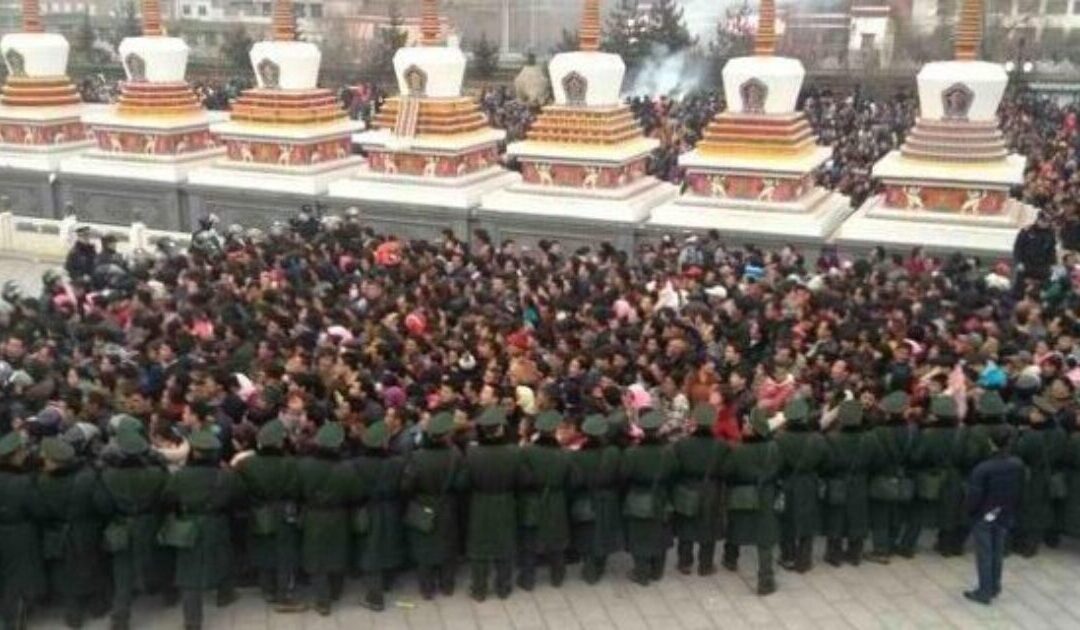
China’s new National Unity Law could mean greater repression for Tibetans and other minorities. It could also be used to prosecute foreigners for pro-Taiwan statements made abroad. Chinese police encircle Tibetans during a religious festival in Kumbum. Photo courtesy of Tibet.net.
China’s Law on Promoting Ethnic Unity and Progress was submitted to the National People’s Congress on September 8, 2025, passed by a vote of 2,756 to 3 with three abstentions, signed by Xi Jinping on March 12, 2026, and takes effect July 1, 2026. The 62-article law codifies Xi’s sinicization policies and extends their reach into every sector of Chinese society, and beyond China’s borders.
The law also applies to foreign nationals living in or visiting China, who could now be punished or possibly jailed for advocating freedom for Tibet or independence for Taiwan. The law’s preamble frames China as a civilization with more than 5,000 years of history that has forged “a unified multi-ethnic nation” under the CCP. This is despite the fact that China has 56 recognized ethnic groups and five ethnic autonomous regions: Xinjiang, Tibet, Inner Mongolia, Guangxi, and Ningxia. Several of these regions have movements seeking independence or greater autonomy.
China also includes Hong Kong, a Special Administrative Region whose residents have mounted sustained resistance to Beijing’s encroachment on political freedoms. Taiwan, meanwhile, already functions as an independent democratic country despite lacking official international recognition.
Its Chapter II mandates fostering identification with the “great motherland, the Chinese nation, Chinese culture, the Communist Party of China, and socialism with Chinese characteristics” through patriotic education, official historical narratives, and promotion of Chinese cultural symbols. Article 14 directs authorities to “establish and highlight … Chinese cultural symbols” in public facilities, architecture, and tourist sites, including in the naming of places.
The law imposes ideological obligations on a sweeping range of actors, including public employees, mass organizations, enterprises, public-service institutions, industry groups, religious institutions, neighborhood committees, and the military. Under Article 20(2), parents and guardians are required to “educate and guide minors to love the Chinese Communist Party” and are forbidden from teaching minors “concepts detrimental to ethnic unity and progress.”
The provision reinforces existing law. The CCP’s 1982 Document 19 banned religious education among minors, a prohibition the U.S. State Department confirms remains in force: children younger than 18 are prohibited from participating in religious activities and receiving religious education, even in schools run by religious organizations, and the law mandates the teaching of atheism in schools.
The Congressional-Executive Commission on China (CECC) has documented enforcement of these prohibitions against minority communities specifically, with Uyghur and Tibetan children, among whom religion and ethnic identity are inseparable, subject to the strictest application.
Language policy is a central mechanism that builds on previous restrictive legislation. In December 2025, the National People’s Congress Standing Committee revised the Law on the Standard Spoken and Written Chinese Language, originally adopted in 2000. The revision removed a provision that had allowed minority languages to be used as the medium of instruction in schools, declaring such education “no longer necessary.” The changes took effect on January 1, 2026.
A years-long trend of replacing Mongolian-, Tibetan-, and Uyghur-medium instruction with Mandarin was thereby codified into law. Students in those communities are now permitted to study their mother tongue only as a standalone class, while all other subjects are taught in Chinese.
The March 2026 ethnic unity law reinforced and expanded that framework. It codifies the predominance of Standard Chinese (Putonghua) in public life, sets a goal of preschool-level Mandarin proficiency, and requires Chinese characters to be displayed more prominently than minority scripts wherever both appear.
The CECC found that the law promotes Mandarin-language instruction for ethnic minority children beginning in preschool. It also embeds ideological education prescribing a single “correct” understanding of history, ethnicity, culture, and religion as defined by the CCP.
The new laws conflict with the Chinese Constitution. Article 4 states that “all ethnic groups shall have the freedom to use and develop their own spoken and written languages and to preserve or reform their own traditions and customs.”
However, unlike the U.S. Constitution, China’s is not enforced by an independent judiciary. Courts cannot invalidate unconstitutional laws, and constitutional interpretation resides solely within the Party’s political machinery. In practice, the Chinese Communist Party sits on top of the political and legal hierarchy, making constitutional guarantees contingent on Party approval rather than enforceable as law.
The law’s call for mutually embedded community environments raises concern among scholars who say it may result in the breakup of minority-heavy neighborhoods, with the stated goal of encouraging Han and ethnic minority populations to migrate into each other’s communities. The provision has precedent in decades of documented demographic control policies.
The U.S. State Department’s 2024 Human Rights Report states that the government continued to promote Han Chinese migration into minority areas such as Xinjiang, which significantly increased the population of Han there. In Tibet, the State Department found that major development projects and other central government policies contributed to the considerable influx of Han Chinese into the Tibetan Autonomous Region and other Tibetan areas, with Han professionals and migrant workers from other provinces staffing major infrastructure projects rather than local residents.
In Xinjiang, Radio Free Asia documented that Han migrants arriving in Uyghur-majority southern Xinjiang were provided free housing, utilities, land, and relocation costs paid by the government, while simultaneously Chinese authorities forcibly moved thousands of Uyghurs deeper into the interior as both a source of forced labor and a method to dilute their political influence.
The U.S. Department of Labor confirms that the CCP’s Poverty Alleviation Through Labor Transfer program relocated minority workers to industrial areas inside and outside Xinjiang, subjecting them to constant surveillance, isolation, and political indoctrination. In Xinjiang, the Han population has grown from 7 percent in 1945 to over 36 percent, with similar demographic shifts documented in Inner Mongolia and Guangxi. Enforcement provisions give the law its power domestically and internationally.
Citizens may report conduct that “undermines ethnic unity and progress,” and procuratorates may initiate public-interest litigation when such conduct also undermines national or public interests.
Article 63 provides a pretext for Beijing to target individuals outside China for acts that “undermine ethnic unity and progress or create ethnic division,” language legal scholars say is broad enough to reach diaspora communities. This extraterritorial reach echoes the National Security Law China imposed on Hong Kong in 2020, under which the government has issued bounties for 34 overseas activists.
The law’s primary impact falls on China’s ethnic minorities, concentrated in Xinjiang, Tibet, and Inner Mongolia. The CECC documented that authorities in Xinjiang have conducted mass detentions and coercive family planning measures targeting Turkic Muslims. Reported restrictions include bans on the hijab, beards, fasting, Friday prayers, and rituals, as well as forcible inter-ethnic marriages. An estimated 16,000 mosques have been demolished in Xinjiang over the past decade, and over a million Uyghurs have been held in detention facilities.
In Tibet and Inner Mongolia, Mandarin was made compulsory in place of local ethnic languages, alongside restrictions on religious symbols, colonial-style boarding schools, and mass surveillance through facial recognition cameras, DNA databases, and social media monitoring.
As is often the case, the actions of the Chinese Communist Party violate international human rights law and basic principles of linguistic and religious freedom.
Even more concerning, Americans could be charged for comments or social media posts made inside or outside China.
NYT and Telegraph SURRENDER to the Truth, Report on Russian Siege of Konstantinovka and the Advance for the Final Donetsk Battle: The Kramatorsk-Slavyansk Fortress Belt
June 23, 2026
The end of the war in Donbas is near.
In the last few weeks, an Information Op was taking place in the western mainstream media, in which all voices chanted in unison that ‘finally, Ukraine is winning the war’.
But while there’s no denying the increased success of the Kiev regime’s long-range strikes, the fact of the matter in the ground is that, not only is Russia winning, but it is moving into the endgame in the vital Donbas region – the cradle of the war.
We have been reporting on the siege and encircling of Konstantinovka, and how this fortified bastion was the key for the final assault on the Slavyansk-Kramatorsk agglomeration, the last region of Donetsk still held by Ukrainian forces.
But yesterday (22), with the usual delay, we watched several MSM outlets discreetly acknowledge the Russian advances and the oncoming endgame.
As the Western Media tells you “Ukraine is winning” (again)
More last messages from Zelenskys conscripts, hiding in the basements of strategically crucial Konstantinovka.
Ask yourselves why the British, French and German media doesn’t want you to hear this, from Ukrainians. pic.twitter.com/7gY75sxxeK
The British ‘Conservatives’ from The Telegraph, who are rabid Kiev regime fans, reported:
“Russian troops have infiltrated Ukraine’s fortress belt city of Konstantinovka, a crucial gateway to the rest of the Donbas. Ukrainian soldiers said the entire city, which is part of the country’s eastern defenses, was effectively in a ‘grey zone’, no longer controlled by either side. Russia’s defense ministry claimed its forces had intensified operations in the south-west of the city, surrounding Ukrainian units.”
So, while the posh hyphenated-name columnists laugh and laugh of ‘clueless Vladimir Putin’, they were forced to report the obvious truth.
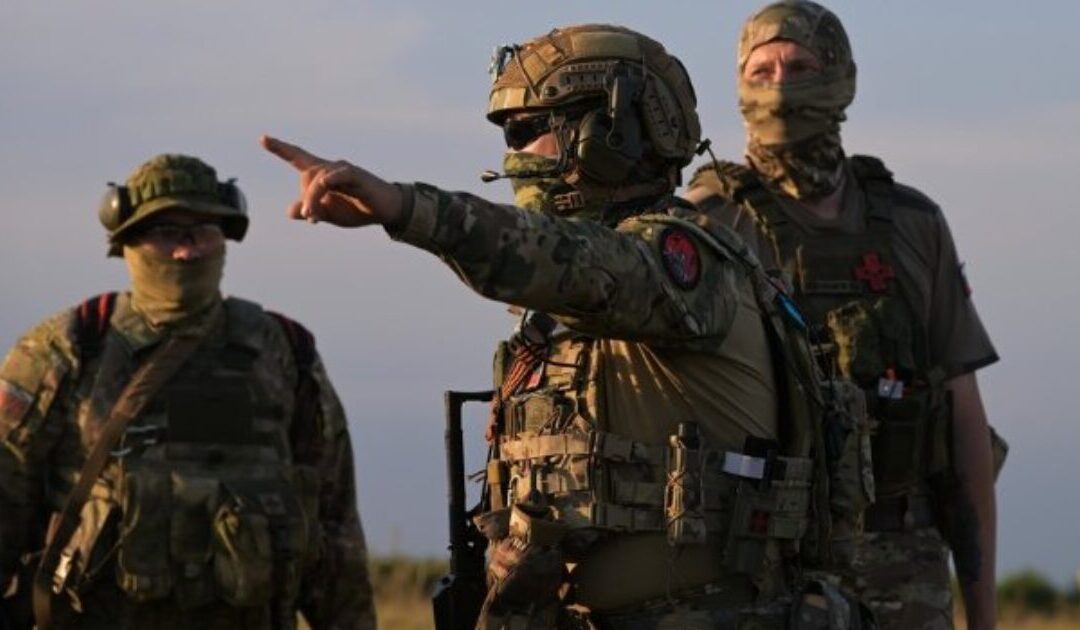
With their tried and tested playbook, the Russian forces don’t smash head-on against the fortified city, but rather flank it in multiple prongs, encircle it, attack the supply lines, put the defenders into fire pockets, conquer it.
“Last month, reports citing Ukrainian intelligence claimed Russia’s top commanders had convinced Vladimir Putin they could seize Kramatorsk and Slovyansk, the towns at the center of the fortress, by the end of the year.
Such a breakthrough would bring the Kremlin closer to achieving one of its most significant remaining war aims: the conquest of the entire Donbas region.”
THE LAST of the MAIN BATTLES of the DONBASS are coming Shortly !!!!!
TOTAL LIBERATION SOON !
After the liberation of Konstantinovka, the main task of the Russian army will be to capture Slavyansk and Kramatorsk. The loss of this agglomeration by Ukraine will put an… https://t.co/YeFPwfT2BZpic.twitter.com/Bkm0U92Wxe
The New York Times came out with a long, emotional report, filled with corrected information:
“The sense of foreboding in Donetsk is a sobering development for Ukraine at a moment when it has otherwise received a boost from a campaign of longer-range strikes and the stalling of Russian forces along most of the front.
Russia still has superior numbers and firepower. And after years of grinding warfare in the region, its forces have been concentrating on the ‘fortress belt’ cities of Sloviansk, Kramatorsk, Druzhkivka and Konstantinovka, part of the roughly 20 percent of Donetsk that Ukraine still controls.”
Le Ministère de la Défense a diffusé une vidéo montrant l’installation de drapeaux sur la rue Preobrazhenka à Konstantinovka. Située dans la partie Nord-Ouest de la ville, cette zone indique que le centre géographique et une grande partie des quartiers environnants… pic.twitter.com/LAitqaDkJb
While Sloviansk and Kramatorsk are not in ‘imminent danger’ of being conquered, Russian attackers are battering them with glide bombs and kamikaze drones.
“Ukraine has resisted Trump administration pressure to hand over the Donbas region, which includes Donetsk, and grant President Vladimir V. Putin of Russia his central demand in peace negotiations. While Kyiv insists that it will keep fighting for the region, there might be little left of its main cities to defend.
Bakhmut. Avdiivka. Chasiv Yar. Toretsk. All of these cities suffered that fate, and are front of mind to those now evacuating from Sloviansk, Kramatorsk and their surroundings.”
The Kramatorsk-Slavyansk agglomeration was fortified over the last 12 years, but the NYT is forced to admit that ‘the links of the fortress belt began to crack’.
Clean up operations continue in Konstantinovka, the Russian army also advances in Krasny Liman, crushing any enemy reinforcements. pic.twitter.com/adq9qd3bnn
We use technologies like cookies to store and/or access device information. We do this to improve browsing experience and to show (non-) personalized ads. Consenting to these technologies will allow us to process data such as browsing behavior or unique IDs on this site. Not consenting or withdrawing consent, may adversely affect certain features and functions.
Functional
Always active
The technical storage or access is strictly necessary for the legitimate purpose of enabling the use of a specific service explicitly requested by the subscriber or user, or for the sole purpose of carrying out the transmission of a communication over an electronic communications network.
Preferences
The technical storage or access is necessary for the legitimate purpose of storing preferences that are not requested by the subscriber or user.
Statistics
The technical storage or access that is used exclusively for statistical purposes.The technical storage or access that is used exclusively for anonymous statistical purposes. Without a subpoena, voluntary compliance on the part of your Internet Service Provider, or additional records from a third party, information stored or retrieved for this purpose alone cannot usually be used to identify you.
Marketing
The technical storage or access is required to create user profiles to send advertising, or to track the user on a website or across several websites for similar marketing purposes.


Chile: “far-right” Kast won
Bolivia: “far-right” Paz won
Peru: “far-right” Fujimori won
Ecuador: “far-right” Noboa won
Honduras: “far-right” Asfura won
Colombia: “far-right” Espriella won
Costa Rica:…





 In effective cooperation with UAV teams, the artillerymen…
 After the liberation of Konstantinovka, the main task of the Russian army will be to capture Slavyansk and Kramatorsk. The loss of this agglomeration by Ukraine will put an…
  Clean up operations continue in Konstantinovka, the Russian army also advances in Krasny Liman, crushing any enemy reinforcements.