GOOD RIDDANCE: 300 of 400 DOJ Civil Rights Attorneys QUIT Rather Than Clean America’s Voter Rolls and KILL DEI — Dhillon Says They “Self-Deported”
September 25, 2026
Harmeet Dhillon (Screenshot: DOJ Civil Rights Division)
Assistant Attorney General Harmeet Dhillon just confirmed what every honest observer already knew: the old Civil Rights Division was a woke fortress inside Main Justice.
When President Trump’s team told those lawyers the American people had voted to end illegal DEI discrimination and scrub dirty voter rolls, about 300 of the division’s 400 attorneys walked out.
Dhillon did not mourn them. She called it what it was.
In an interview this week with Col. Kurt Schlichter filling in on the Hugh Hewitt Show, Dhillon said the Civil Rights Division is one of the largest shops at Main Justice in Washington.
When she arrived, it had about 400 attorneys. After her office made clear it would implement the president’s executive orders, “prioritizing getting rid of DEI and cleaning up voter rolls,” “eventually about 300 of those attorneys quit, and so they self-deported.”
Then she rebuilt.
“We then had the task of, while we had DOJ restrictions and budgetary constraints, building back the Civil Rights Division,” Dhillon said. “And I’m really happy to say that I recruited over 100 great legal professionals here to the DOJ.”
WATCH:
Assistant Attorney General @HarmeetKDhillon says about 300 of the roughly 400 attorneys in the Justice Department’s Civil Rights Division quit after she told staff the Trump administration would implement the President’s executive orders, end DEI policies, and focus on cleaning…
As The Gateway Pundit previously reported, Dhillon told Tucker Carlson last year that holdouts inside the division held “crying sessions” and “unhappy hours” after she made it clear the era of weaponized civil-rights law was over. According to the New York Post, she later said those lawyers “self-deported with a nice golden parachute from the government.” She didn’t fire them. She told them the job had changed. They left.
The numbers line up with other reporting. Bloomberg Law reported this month that more than 300 of the division’s 400-plus lawyers departed over the past 19 months as Dhillon redirected the office toward voter-roll enforcement, campus discrimination, and religious-liberty cases.
What did those lawyers refuse to do?
They refused to treat race discrimination as race discrimination when the victims were Asian students, white applicants, or anyone else locked out by DEI. They refused to help states stop illegal voting. They refused to treat dirty rolls — dead registrants, movers, duplicates, and noncitizens — as a civil-rights problem for actual American citizens.
The Gateway Pundit has documented that fight for months. TGP reported last December that a limited review of 47.5 million records turned up more than 260,000 dead people still on the rolls and thousands of noncitizens registered for federal elections.
In March, Dhillon said a review of 50 to 60 million records had found hundreds of thousands of ineligible registrations, including more than 300,000 dead voters still listed. The division has sued states that stonewalled the data and put election officials on notice that knowingly leaving noncitizens on the rolls can be a federal crime.
That is the work the old guard would not touch.
Dhillon told Schlichter the rebuilt division is now operating as one unit. The priorities, she said, are the ones voters chose: stopping race discrimination in hiring, helping states stop illegal voting, cleaning voter rolls, going after universities that take federal money and still discriminate, targeting antisemitism on campus, and prosecuting church blockades, including the so-called protesters in Minnesota who obstructed churchgoers.
“We’re just really proud of the work that we’ve done here in the Civil Rights Division,” she said, pointing to findings letters against universities for ongoing discrimination after the Supreme Court’s fair-admissions ruling and to new categories of cases the old division would never have opened.
BRITISH DYSTOPIA: Rightwing Activist Denied Bail for Slashing Migrant Dinghy – Danny Tommo Pleads Not Guilty to Criminal Damage Charges – Large Group of Protesters Demand His Release
September 25, 2026
Screengrab Social Media/Telegram, Upscaled by Grok AI
To fight the UK invasion carries a hefty price.
The small boats invasion of the British Isles continues unabated under new Labour leader Andy Burnham, ‘the premier without a mandate’.
They arrive by the hundreds, almost exclusively military-aged males, ready to rob, pillage, rape, murder – and to collect benefits, free housing and money to burn.
Citizens face the Globalist police
It’s taken the Britons quite a while to wake up from their Globalist-induced coma, but now we have begun to see mobilization by the fed-up citizens against the relentless stream of ‘asylum seekers’.
But there’s a price to pay for rebelling against the Globalist state apparatus.
Take activist Danny Tommo, for example: his seemingly innocuous act of slashing the inflatable boat that had just carried 60 invaders into the UK was turned into a major criminal offense.
Sky’s Sadiya Chowdhury explains what is next for Danny Tommo after he pleaded not guilty to criminal damage after appearing via video link at Basingstoke Magistrates’ Court. pic.twitter.com/4U5p86hi90
“Daniel Thomas, widely known as ‘Danny Tommo’, has built a large online following and recently founded Patriot Platform, a group focused on people arriving in Britain across the Channel on small boats.
Earlier this month, hundreds of black-clad protesters gathered twice in two days on Britain’s south coast, blocking streets in response to arrivals of small boats, which a government minister described as ‘thuggish’.”
Reuters insists on the leftist talking point that ‘the numbers of those arriving in small boats have fallen’, but immediately after they are forced to admit that 781 people arrived on Wednesday (23) alone.
Yes, you read it right. Almost 800 military-aged invaders arrived in a single day.
No wonder a crowd of people dressed in black wearing balaclavas turned up to demand the release of Tommo.
BREAKING: Hundreds in masks have taken over Basingstoke to demand the immediate release of Danny Tommo
“He appeared in court after being charged by Hampshire and Isle of Wight Constabulary with criminal damage and not disclosing to police the access code to his mobile phone.
The court heard that a crew member was on the boat whilst it was heard leaking air.”
Breaking News: “It is the British Government who are endangering the lives of our people, NOT Danny Tommo. Home Secretary Mahmood is practicing within a political ‘two-tiered judicial system’. For instance, the muslims who battered and hospitalized two females police… pic.twitter.com/smcoa5Woog
French policemen violently slash a dinghy in the water with migrants still in it!
I wonder if they have been charged with criminal damage with intent to endanger life and “destroying ships”???
AfD Tops Poll in Germany’s Most Populous State as CDU Hits Record Low
September 25, 2026
CDU leader Friedrich Merz and AfD’s Alice Weidel
The right-wing, anti-globalist AfD party has crossed another political threshold in Germany, taking first place in a federal-election poll in North Rhine-Westphalia for the first time.
In Germany’s most populous state, Forsa puts the AfD at 24%, ahead of Chancellor Friedrich Merz’s CDU on 22%, according to reports from the German press.
The location is as significant as the numbers. North Rhine-Westphalia is the industrial heartland of western Germany, home to Cologne, Düsseldorf, Dortmund and the Ruhr — territory where the AfD once struggled to approach its eastern German strength.
Only six months ago, the CDU still led the AfD by four percentage points on the Bundestag question. That advantage has not merely disappeared; it has flipped, with the AfD rising as Merz’s party falls to its weakest NRW result ever measured by Forsa.
The CDU’s 22% breaks below its previous Forsa low of 23% from December 2021. For a party that once treated western Germany as secure political ground, the result points to an erosion that can no longer be explained solely by the peculiarities of the former communist east.
The other parties remain well behind. In the state-election polling, the Greens register 18%, the SPD 14%, the Left 8% and the FDP only 3%, leaving the CDU and AfD as the two strongest forces by a clear margin.
On the federal-election question, the AfD’s position is even stronger. Its 24% places it ahead of the CDU on 22%, with the Greens on 18%, SPD on 14%, the Left on 12% and FDP on 3%.
Forsa questioned 1,030 eligible voters between September 7 and 18, and the stated sampling error is around 2.5 percentage points. The AfD’s two-point advantage over the CDU therefore falls within the margin of error, so the poll shows a statistical contest for first rather than proof of a settled lead.
The trend, however, comes at a disastrous moment for Merz. Recent state elections have already exposed deep weakness in the CDU, including its catastrophic 4.9% result in Mecklenburg-Western Pomerania, where it failed to clear the parliamentary threshold while the AfD finished first with 38.3%.
That followed the AfD’s overwhelming victory in Saxony-Anhalt earlier in September. Taken together, the results have intensified arguments over whether Germany’s political center is losing voters faster than its established parties can explain them away.
Merz himself has become a major liability in NRW according to the same Forsa survey. Just 11% of respondents said they were satisfied with his performance, while 87% said they were dissatisfied.
Even among CDU voters, the numbers are punishing. Only 36% of the party’s own supporters expressed satisfaction with Merz, while 64% said they were dissatisfied with the chancellor and CDU leader.
Wüst performs considerably better at home, helping explain why the CDU retains more support in the state-election question than in the federal one. Forsa founder Manfred Güllner said Wüst still provides the CDU with a state-level advantage, but warned that it can no longer fully compensate for the support being lost under Merz.
That creates an awkward problem for the CDU establishment: voters are increasingly separating their view of the NRW government from their judgment of the national party. The closer the state election gets, the harder it may become for Wüst to insulate himself from anger directed at Berlin.
Migration remains one of the clearest dividing lines. AfD NRW argues that Merz promised a fundamental migration reversal before taking power but failed to deliver one, pointing to continued net migration and demanding significantly tougher enforcement.
The party’s NRW program calls for more deportations, an end to repeated long-term toleration of people required to leave Germany, centralized return enforcement and stronger police deportation units. It also argues that people without a legal right to remain should be prepared for return rather than permanent integration.
The AfD has also openly adopted the politically explosive term “remigration.” In May, AfD NRW promoted an event entitled “The right to remigration — consistent application of existing laws,” tying the concept publicly to tougher enforcement of existing residence and deportation rules.
At precisely the moment the AfD is gaining voters, parts of Germany’s political establishment are debating whether the state should examine legal options against it. Wüst recently called for a federal-state working group to study the constitutional handling of the party, while stressing that any eventual ban proceeding would have to remain a last resort rather than a predetermined outcome.
That juxtaposition is politically combustible. The AfD is expanding beyond its eastern strongholds and competing for first place in the country’s biggest western state at the same time officials are considering whether constitutional mechanisms against the party should be explored.
Supporters of such scrutiny argue that electoral popularity cannot immunize a party from constitutional examination. Critics of the approach counter that attempting to contain an increasingly large opposition movement through institutions rather than defeating it politically risks deepening the very alienation driving its growth.
The CDU’s continuing refusal to cooperate with the AfD leaves that dilemma unresolved. Reuters reports that the established “firewall” remains under growing pressure as AfD support expands, while Merz has acknowledged that the party’s recent electoral breakthroughs have inflicted serious damage on his own political position.
The NRW numbers, for the AfD, mark something more significant than another favorable survey: they show the party competing at the top in Germany’s densely populated western industrial heartland while campaigning against migration, support for Ukraine and the governing establishment.
Recent state results show that those themes are increasingly finding voters well beyond the party’s original eastern base.
The political direction is difficult to ignore: Merz is deeply unpopular, the CDU is registering historic lows, the AfD is closing or erasing gaps once considered enormous, and Germany’s establishment now faces an increasingly uncomfortable question — whether isolating the AfD can remain a durable strategy while ever more voters continue choosing it anyway.
How Greenland Fits Into the Arctic Strategies of the U.S., China, Russia and Canada
September 25, 2026
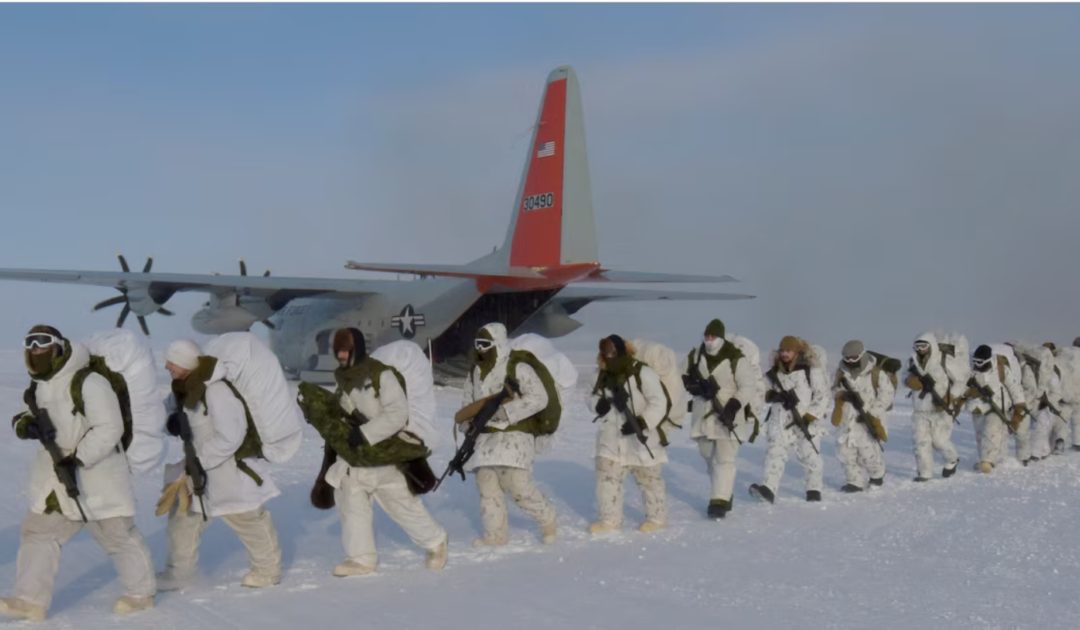
Greenland is crucial to U.S. national security as China and Russia expand their Arctic activities. President Trump has secured expanded U.S. military access under an agreement with no end date. Photo courtesy of the U.S. Department of War.
The September 22, 2026, agreement between the United States, Denmark, and Greenland expands U.S. military access to the island. It bars non-NATO countries from establishing military installations there and restricts certain foreign investments in mining and critical infrastructure.
President Trump’s insistence on greater U.S. control of Greenland is part of a broader Arctic rivalry among the world’s three most powerful militaries: the United States, Russia and China. Canada, with a far smaller military and a focus on defending its own territory, is drawn into the rivalry by geography. The Northwest Passage runs through its Arctic archipelago, and its northern territory lies across the Arctic Ocean from Russia. All four countries have published their Arctic aims in government strategy documents.
Greenland is part of the Kingdom of Denmark, one of eight members of the Arctic Council, an intergovernmental forum founded in 1996 for cooperation on environmental protection and sustainable development in the Arctic. The Council’s mandate excludes defense topics. The other members are Canada, Finland, Iceland, Norway, Russia, Sweden, and the United States. China has no Arctic territory, but its 2018 Arctic white paper calls China a “Near-Arctic State.” China became an Arctic Council observer in 2013.
After Russia’s full-scale invasion of Ukraine in 2022, the other seven members paused their participation in the Council. They announced a limited resumption in June for projects excluding Russia. Norway took over the chairmanship from Russia in May 2023.
In February 2024, Russia suspended its annual payments pending reinstatement of its participation. That month, the eight members agreed to resume working-group meetings virtually, while senior diplomatic meetings remained on pause.
Greenland lies beside two routes connecting the Arctic Ocean to the North Atlantic. The Northwest Passage runs through Canada’s Arctic archipelago and reaches the Atlantic through Baffin Bay and Davis Strait, between Greenland and Baffin Island. A map in the U.S. 2024 Arctic Strategy shows the route and Pituffik Space Base on Greenland’s Baffin Bay coast.
The U.S. Space Force operates Pituffik as a defense area on Danish sovereign territory. The 2004 Igaliku Agreementidentified the base, then called Thule Air Base, as Greenland’s only defense area at the time. Pituffik operates missile-warning radar, while the 2026 agreement cites a possible Golden Dome missile-defense system among the reasons for U.S. military access to Greenland.
The DoD’s 2024 Arctic Strategy defines the North American Arctic as including Alaska and “the Kingdom of Denmark’s autonomous territory of Greenland.” It calls the region “vital for homeland defense” because it hosts NORAD’s aerospace warning, aerospace control, and maritime warning capabilities. It also describes the region as the northern flank for projecting military force to the Indo-Pacific. The strategy commits DoD to maintaining access to key ally and partner bases through bilateral defense agreements that allow a presence using existing allied infrastructure.
Greenland forms the western border of the Greenland-Iceland-United Kingdom (GIUK) gap, Gen. Christopher Cavoli, then NATO’s top commander in Europe, told the Senate Armed Services Committee in April 2025 testimony. He said Russian Northern Fleet submarines pass through the gap to reach the Atlantic. The DoD strategy lists allied air and maritime patrols across the gap among routine Arctic operations and calls the Arctic “vital to the defense of Atlantic sea lines of communication between North America and Europe.”
Russia’s Kola Peninsula hosts the Northern Fleet and its submarine-launched ballistic missile force. The DoD strategy says Russia “has a clear avenue of approach to the U.S. homeland through the Arctic.” Its Arctic capabilities could threaten the U.S. homeland and allied territory and constrain U.S. power projection to Europe and the Indo-Pacific.
Canada’s 2024 defense policy, Our North, Strong and Free, says melting ice has made the Northwest Passage and the wider Arctic more accessible. It warns that competitors are exploring Arctic waters and the sea floor, probing Canadian infrastructure and collecting intelligence. The policy points to a growing number of Chinese dual-purpose research vessels collecting data on northern Canada that Chinese law makes available to China’s military.
The policy states that Canada’s Arctic waters, airspace, and territory must not be used to harm Canada, the United States, or other NATO allies. It says Russian submarines are probing across the Atlantic, Arctic, and Pacific Oceans, and China is expanding its underwater fleet. It also projects that the Arctic Ocean could become the most efficient shipping route between Europe and East Asia by 2050.
A 2020 Marine Policy study found that climate models forecast summer sea ice loss could open a Transpolar Sea Route across the central Arctic Ocean via the North Pole as early as the 2040s. Today, only icebreakers and submarines make the crossing. The route would run between the Bering Strait and the Fram Strait, which lies between Greenland and Svalbard.
China’s 2018 Arctic white paper lists this “Central Passage” as one of three Arctic shipping routes it intends to develop as part of a “Polar Silk Road.” Unlike Russia’s Northern Sea Route, the transpolar route crosses mostly high seas, where ships are free of Russian jurisdiction and escort fees. The study found that the route could reduce the Northern Sea Route’s value to Russia.
The United States issued its first National Strategy for the Arctic Region in 2013 and replaced it in 2022 with a ten-year strategy covering 2022 to 2032. The Department of Defense published separate Arctic strategies in 2013, 2016, 2019, and 2024. Canada released its Arctic and Northern Policy Framework in 2019, its defense policy in April 2024, and an Arctic Foreign Policy in December 2024.
China published its only Arctic white paper in January 2018. Russia adopted Basic Principles of Arctic policy in 2008 and replaced them in 2020 with a version running to 2035, amended in 2023. Its Arctic Zone development strategy, first issued in 2013, was replaced by a 2020 strategy amended in 2021 and 2023.
China’s 2018 white paper does not name Greenland. It encourages Chinese enterprises to help build infrastructure for Arctic shipping routes, participate in the exploitation of Arctic oil, gas, and mineral resources, and cooperate with Arctic states on clean energy and tourism.
In 2018, China Communications Construction Company, a Chinese state-owned firm, bid on a $560 million project to build Greenland airports. Denmark reportedly offered to fund the project instead. Greenland holds 1.5 million tons of rare earth reserves, the eighth-largest in the world, including the Kvanefjeld and Tanbreez deposits. Chinese firm Shenghe Resources is the second-largest shareholder in Kvanefjeld.
The 2022 U.S. National Strategy states that China doubled its Arctic investments over the preceding decade, “with a focus on critical mineral extraction.” Under Strategic Objective 3.4, the United States commits to working with allies and partners to expand private investment in Arctic critical minerals through the Export-Import Bank, the U.S. International Development Finance Corporation, and the U.S. Trade and Development Agency.
The DoD strategy says China’s “Polar Silk Road” has pursued investments in infrastructure and natural resources, “including in the territory of NATO Allies.” Trump stated that “Russia or China” would take over Greenland if the United States did not act.
Russia’s Arctic Basic Principles to 2035, as amended in 2023, define the Northern Sea Route as a “national transport corridor.” They call for systems to control shipping and manage traffic along the route, as well as updated baselines for measuring Russia’s territorial sea and exclusive economic zone. The DoD strategy says Russia claims authority to regulate Northern Sea Route waters beyond what UNCLOS permits and could use its maritime infrastructure to enforce those “excessive and illegal” claims.
The Basic Principles direct Russia to expand the combat capabilities of its Arctic forces, modernize military infrastructure, and improve monitoring of air, surface, and undersea activity. They list the buildup of foreign military forces, attempts by some states to revise treaties governing Arctic activity, and the incomplete delimitation of Arctic maritime spaces among Russia’s main challenges.
Russia’s separate 2020 Arctic Zone Strategy, amended in 2021 and 2023, states that the region hosts facilities of Russia’s strategic deterrence forces. It calls for Arctic-adapted weapons, expanded basing infrastructure, and dual-use military facilities, including in Murmansk and at Tiksi, to counter the region’s “growing conflict potential.”
It also calls for at least seven Project 22220 nuclear icebreakers, the lead “Lider” nuclear icebreaker, and a headquarters to manage shipping along the Northern Sea Route. Other measures include continuous satellite communications, long-range vessel tracking, a trans-Arctic undersea fiber-optic line, and research into the Arctic Ocean’s underwater environment.
Both Russian documents call for continued work on continental shelf boundaries. The Basic Principles call for cooperation with Arctic states on delimiting the shelf in the Arctic Ocean. The 2020 strategy directs Russia to prepare evidence supporting the outer limit of its claim and seek its formal recognition under international law.
The September 22 agreement between the United States, Denmark, and Greenland expands U.S. military access to the island and bars non-NATO countries from establishing military installations there, unless the parties agree otherwise. Its restrictions on sensitive investments would also limit opportunities for Chinese or Russian control of critical infrastructure and resources. Together, those measures strengthen the U.S. position in the Arctic and help prevent Russia or China from gaining military or strategic control in Greenland.
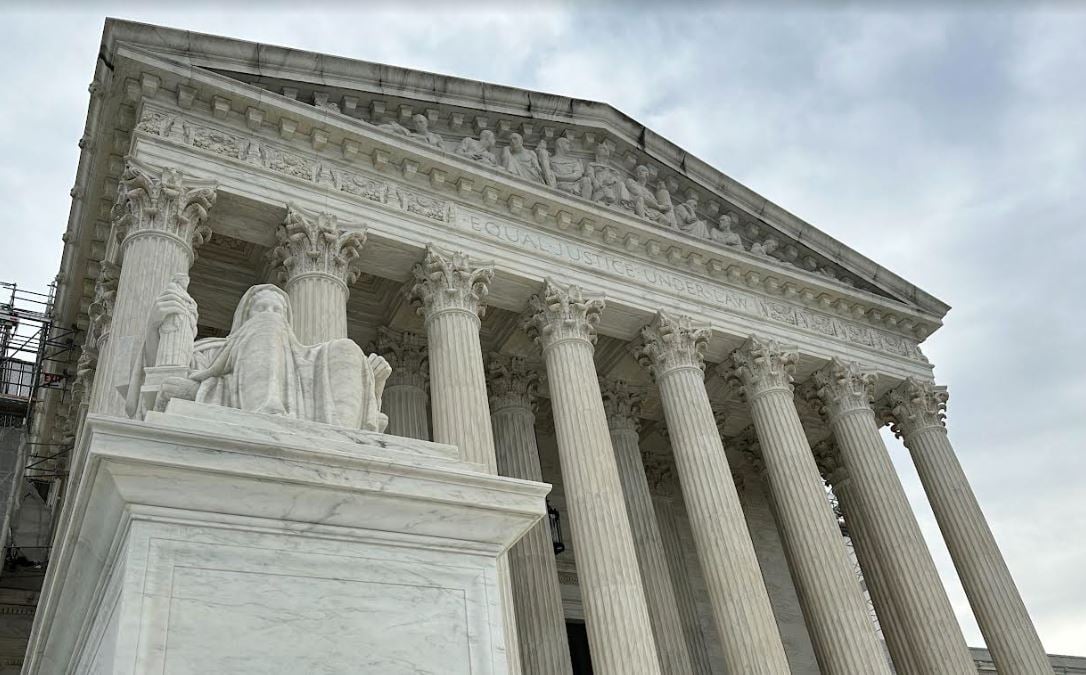
BREAKING: Supreme Court Reinstates Database for Voter Citizenship Verification – Ketanji Brown Jackson Fumes
September 25, 2026
The US Supreme Court on Friday reinstated President Trump’s database for voter citizenship verification.
In an unsigned order, the high court, in a 6-3 decision, allowed the Trump Administration to use an expanded database that contains citizenship information.
Liberal Justices Sotomayor, Kagan, and Jackson dissented.
“[The] harm caused by burdening or disenfranchising even a few lawful voters outweighs the nonexistent harm that the government experiences when it is prevented from taking an action that it likely lacks the authority to take,” Jackson wrote.
The Supreme Court on Friday permitted the Trump administration to use an expanded federal database containing citizenship information, as the president encourages states to purge people from voter rolls.
The justices, divided 6-3 on ideological lines with conservatives in the majority, granted an emergency request filed by the government after lower courts ruled that the Trump administration’s changes to the database were likely unlawful.
But the court noted in its unsigned ruling that the National Voter Registration Act bars the broad purging of voter rolls in the weeks leading up to an election, which “limits the potential impact” of the decision this year. States can still make individualized queries about voters.
Last March, President Trump signed an executive order aimed at preserving and protecting the integrity of US elections.
“Free, fair, and honest elections unmarred by fraud, errors, or suspicion are fundamental to maintaining our constitutional Republic. The right of American citizens to have their votes properly counted and tabulated, without illegal dilution, is vital to determining the rightful winner of an election,” Trump’s executive order said.
“Under the Constitution, State governments must safeguard American elections in compliance with Federal laws that protect Americans’ voting rights and guard against dilution by illegal voting, discrimination, fraud, and other forms of malfeasance and error. Yet the United States has not adequately enforced Federal election requirements that, for example, prohibit States from counting ballots received after Election Day or prohibit non-citizens from registering to vote,” Trump said.
We use technologies like cookies to store and/or access device information. We do this to improve browsing experience and to show (non-) personalized ads. Consenting to these technologies will allow us to process data such as browsing behavior or unique IDs on this site. Not consenting or withdrawing consent, may adversely affect certain features and functions.
Functional
Always active
The technical storage or access is strictly necessary for the legitimate purpose of enabling the use of a specific service explicitly requested by the subscriber or user, or for the sole purpose of carrying out the transmission of a communication over an electronic communications network.
Preferences
The technical storage or access is necessary for the legitimate purpose of storing preferences that are not requested by the subscriber or user.
Statistics
The technical storage or access that is used exclusively for statistical purposes.The technical storage or access that is used exclusively for anonymous statistical purposes. Without a subpoena, voluntary compliance on the part of your Internet Service Provider, or additional records from a third party, information stored or retrieved for this purpose alone cannot usually be used to identify you.
Marketing
The technical storage or access is required to create user profiles to send advertising, or to track the user on a website or across several websites for similar marketing purposes.




 (@TRobinsonNewEra)
 BREAKING: Danny Tommo has been DENIED bail and REMANDED

 : “It is the British Government who are endangering the lives of our people, NOT Danny Tommo. Home Secretary Mahmood is practicing within a political ‘two-tiered judicial system’. For instance, the muslims who battered and hospitalized two females police…
 (@HerdImmunity12)
 Behold the hypocrisy of the establishment!