
Birthright Citizenship Is Not Parental Immunity
July 1, 2026

Birthright Citizenship Is Not Parental Immunity
Opinion piece by Christine Bish
The child is a citizen. The parents are still subject to the law.
The Supreme Court’s birthright citizenship ruling has a lot of conservatives angry, and I understand why.
In Trump v. Barbara, the Court held that children born in the United States to parents who are unlawfully or temporarily present are “subject to the jurisdiction” of the United States and are citizens at birth under the Fourteenth Amendment’s Citizenship Clause. The Court struck down President Trump’s executive order attempting to deny citizenship to those children. [1]
That is the ruling.
But that is not the end of the argument.
The left wants to spike the football and pretend this decision means illegal immigration just won some sweeping constitutional protection. It did not. The Court protected the citizenship of the child. It did not legalize the parents. It did not grant amnesty. It did not create a green card. It did not erase illegal entry. It did not say parents who violate immigration law are immune from deportation.
That distinction matters.
A child’s citizenship belongs to the child.
A parent’s illegal status belongs to the parent.
Those are two separate legal questions, and conservatives should not let the left blur them together.
We already understand this principle when American citizens break the law. If a citizen parent commits a crime and is sentenced to prison, the child does not go to prison with them. The child may go to the other parent, a grandparent, a relative, a lawful guardian, or, when necessary, into the child welfare system.
The child is not punished for the parent’s conduct.
But the parent is still held accountable.
Immigration law should be treated with the same clarity. If parents broke the law to enter or remain in this country, the fact that they had a child here should not become a shield against enforcement. Their child may be a United States citizen, but that does not transform the parents into citizens. It does not make them untouchable. It does not give them a family-based veto over federal immigration law.
Even under current immigration law, a U.S. citizen child cannot immediately sponsor a parent for permanent residency. USCIS states that a citizen must be at least 21 years old to petition for a mother or father to live in the United States as a green card holder. [2]
So the so-called “anchor baby” argument is often misstated.
The child may be anchored.
The parents are not.
Yes, parents in removal proceedings may try to argue hardship to a U.S. citizen child. But that is not automatic protection either. DOJ’s immigration court materials state that cancellation of removal for nonpermanent residents requires, among other things, “exceptional and extremely unusual hardship” to a U.S. citizen or lawful permanent resident spouse, parent, or child. [3]
That is not immunity. That is a legal standard.
And it is a high one.
This is where conservatives need to stop panicking and start focusing. The Supreme Court answered one constitutional question. It did not end immigration enforcement. It did not strip the federal government of the power to remove people who are here unlawfully. It did not say a child’s citizenship cancels a parent’s illegal presence.
The ruling may be disappointing, but it is not the giant liberal victory they want us to believe it is.
This also makes holding the United States Senate that much more important.
Immigration enforcement will continue to be fought in the courts. Executive authority will be challenged. Agency decisions will be reviewed. Relief standards will be interpreted. Federal judges will decide whether the law means what it says or whether every enforcement action gets buried under activist exceptions.
That is why judicial appointments matter.
That is why the Senate matters.
If Republicans want immigration law enforced, they cannot treat Senate control like a side issue. The President nominates federal judges, but the Senate confirms them. Those judges will shape the legal battlefield for years.
The Court said the child is a citizen.
Fine.
Now enforce the rest of the law.
If a parent broke immigration law, that parent should still be subject to removal. If that creates a hardship, then the parent must make lawful arrangements for the child, just as American citizen parents must do when their own illegal conduct separates them from their families.
That is not cruelty.
That is equal treatment under the law.
The left wants this ruling to mean the whole family gets protected because the child was born here. It does not. The child’s citizenship is not a permission slip for the parents to stay. It is not a reward for violating our borders. It is not a loophole big enough to swallow immigration enforcement.
The proper conservative response is not panic.
It is precision.
Birthright citizenship may stand.
Parental immunity does not.
The child is a citizen.
The parents are still subject to the law.
And America had better have the courage to enforce the difference.
Source Notes
[1] Trump v. Barbara, No. 25-365, slip opinion (U.S. June 30, 2026). Official Supreme Court PDF: https://www.supremecourt.gov/opinions/25pdf/25-365_4hdj.pdf
[2] USCIS, “Bringing Parents to Live in the United States as Permanent Residents,” stating a U.S. citizen must be at least 21 to petition for a parent: https://www.uscis.gov/family/family-of-us-citizens/bringing-parents-to-live-in-the-united-states-as-permanent-residents
[3] DOJ EOIR, “Cancellation of Removal for Nonpermanent Residents” and EOIR-42B materials on the exceptional and extremely unusual hardship standard: https://www.justice.gov/eoir/cancellation-removal-nonpermanent-residents
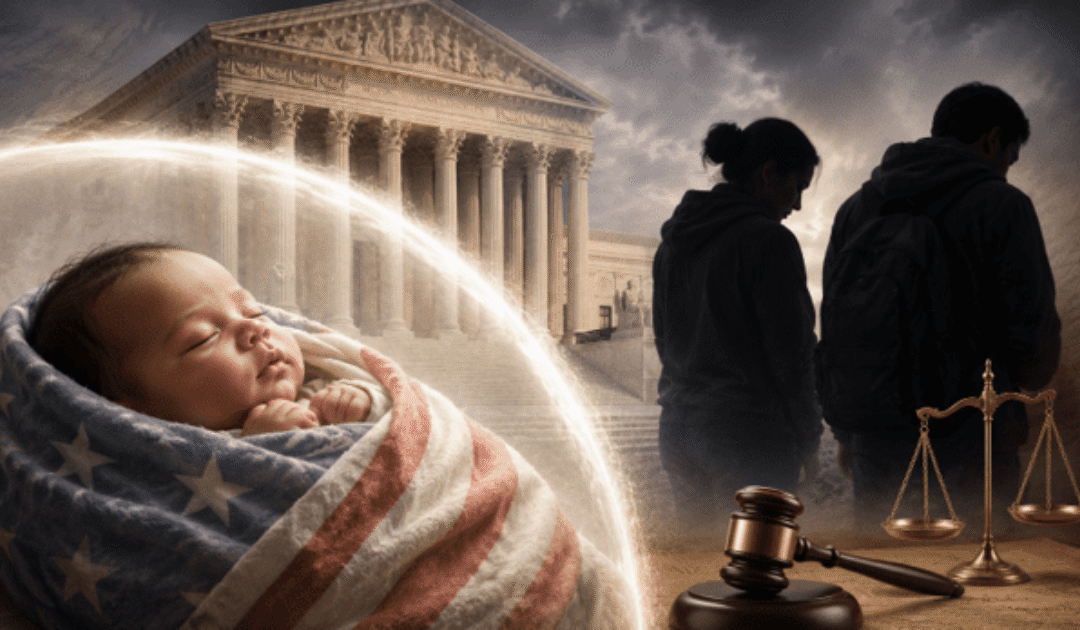
Feature image: AI-generated editorial illustration created for this article. Replace with publisher-owned artwork if preferred.
The post Birthright Citizenship Is Not Parental Immunity appeared first on The Gateway Pundit.
Go to Source
Author: Joe Hoft