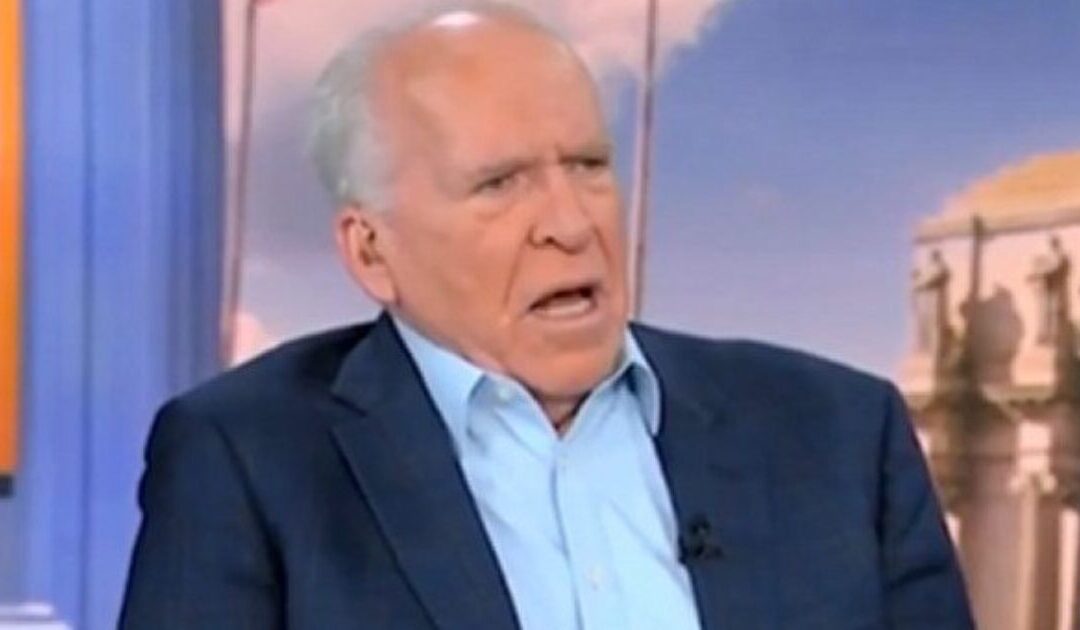

Pete Buttigieg Says He Was Swatted and Separated From Children by Child Protective Services After Being Accused of “Unspeakable Violent Crimes”
June 26, 2026
Pete Buttigieg on CNN
Biden Transportation Secretary Pete Buttigieg claims he was swatted this week by Child Protective Service agents and separated from his four-year-old twins.
Buttigieg ran to Substack to write a column about the incident.
“Someone decided to hurt our family this week. I’m furious, and I want to share what happened,” he began the posting.
Buttigieg wrote:
You’ve probably heard of “swatting.” It’s a cruel and dangerous kind of hoax that has started happening more frequently in recent years. Someone anonymously calls 911 with a false report of imminent danger, such as a hostage situation, at the home of a public figure. Law enforcement swarms the house, guns drawn, terrifying the unsuspecting homeowner and family and sometimes even leading to deaths or injuries in the confusion. It’s happened to dozens of lawmakers, judges, celebrities, and others. (When I was in the Cabinet, someone attempted to do this to our home, but fortunately the hoax was quickly detected.) It’s become enough of a problem that the FBI now has a dedicated database to track such incidents.
Now imagine the same concept, but with Child Protective Services instead of a SWAT team. Hadn’t thought of that? Me neither, until a few days ago when a police officer and a CPS worker showed up at our home and politely asked to speak with me.
I showed them in, invited them on the deck so that we could hear each other over the barking dog, and asked what was going on. They explained that there had been an allegation against me, that it concerned our four-year-old twins, and that a forensic interview had been arranged for the children the following day. I could not be present at the children’s interview, nor could any family member sit in. Afterwards, they would come back and interview me. And only then would they tell me anything about the nature of the allegation.
Describing himself as “bewildered and troubled,” Buttigieg went on to reveal that “the CPS worker told me something that made my stomach turn: I was not to be alone around the children, at least until the interview took place the next day.”
“The twenty-four hours until they returned are among the darkest hours of my life. I tried to get my head around the idea that I had been accused of something so serious that I couldn’t be alone around my own children, and had consented to have them interviewed by strangers, without my knowing where the accusation had come from or even what it contained,” he wrote.
After a “sleepless night,” he says, the officers told him that an anonymous tipster told police that he had spoken to a woman, and she said that Buttigieg had “committed unspeakable violent crimes, and the caller believed my children were still at risk.”
“After the officer spoke, the CPS worker likewise indicated she had not found anything to substantiate the allegation, though her process would take a bit longer to be formally completed. I no longer needed to avoid being around my children unsupervised. Chasten was invited to come back downstairs and hear the same information that had just been shared with me. Then, per standard procedure, she verified that there was adequate food in our kitchen and asked to take a look at the kids’ bedroom,” Buttigieg wrote.
“After the officer, the CPS worker, and the lawyers all left, Chasten and I hugged each other as tightly as we have any time since the day our son was put on life support as a critically ill infant just weeks after the adoption. We went to get the kids, had dinner with them and their grandparents, brought them home and gave them the most normal bedtime we could – with a few more bedtime books than usual. Then we went and sat under the light at our kitchen table, trying to begin to process our feelings.”
Then he cried victim, claiming it was an attack on homosexuality and pride month. “I don’t know who did this, or exactly what prompted them to try. It’s not lost on me that this happened soon after we shared photos of our family on social media for Father’s Day. Or that this occurred during a month meant to make families like ours feel welcome and safe,” he wrote.
Michigan State Police said in a statement that the police and CPS “determined the report was false,” according to CBS.
Harvey Weinstein Judicial Drama: Appeals Court Upholds Disgraced Mogul’s California Conviction, But Orders Judge To Re-Sentence Him
June 26, 2026
Weinstein is winning some battles, but will he win the war?
Another day, another Weinstein judicial plot-twist.
If you are confused about the endless comings and goings in the various trials, retrials and appeals regarding disgraced movie mogul Harvey Weinstein, well – join the club.
There are two clusters, so to speak: one in Los Angeles, one in New York.
We have been reporting on the THREE NYC rape trials: he was convicted in two counts in a trial, the conviction was overturned on appeal, on the first retrial, he was convicted of one count, but the jury deadlocked in the second.
Hang on, there’s more: in his second NYC retrial, the jury AGAIN deadlocked, and it ended up in a mistrial.
Finally, NYC prosecutors dismissed the remaining rape charge because the alleged victim, Jessica Mann, refused to go through with a FOURTH trial, getting grilled by Weinstein’s high-octane legal team led by Marc Agnifilo.
But he is still convicted on one sexual assault charge, against former Project Runway production assistant Miriam Haley in 2020 – and the prosecutors are asking for a 20-year sentence.
NOW, we get to the other cluster: in Los Angeles.
Today, an appeals court upheld Weinstein’s 2022 rape and sexual assault conviction in California, but ordered his trial judge to ‘resentence’ him.
California court upholds Harvey Weinstein’s rape conviction, but says he must be resentenced https://t.co/LrpGZnE2se
While all these developments take place, the former movie magnate remains behind bars, having said that he is afraid to die in prison.
“In California, Weinstein, 74, was convicted in December 2022 of one count of rape and two counts of sexual assault against an Italian model and actor known during the trial as Jane Doe 1. Weinstein was sentenced to 16 years in prison.
The former movie magnate’s lawyers argued in his appeal that in his Los Angeles County trial, the testimony of the head of a film festival was unfairly limited by Superior Court Judge Lisa B. Lench, and had been seeking a new trial.”
Weinstein will be sentenced for his NY conviction in September. His California prison term would be served only after that.
Weinstein still stands convicted of another sexual felony in New York and others in California. He remains behind bars at New York’s maximum-security prison, Rikers Island. https://t.co/944T4Crta8pic.twitter.com/wFj7Fwkx0n
Five Years Of Secrets: Motion Filed To Expose Hidden J6 Evidence The Government Won’t Let America See
June 26, 2026
Dominic Pezzola (RT) with fellow J6ers and Proud Boys, Joe Biggs (middle) and Zach Rehl.
For more than five years, Americans have been told that January 6 was among the most thoroughly investigated events in our nation’s history. Thousands of hours of surveillance footage were collected. Millions of pages of documents were produced. One of the largest criminal investigations in Department of Justice history unfolded in federal courtrooms across Washington, D.C.
Yet one question has persisted:
Why can’t the American people see the evidence for themselves?
That question is now squarely before a federal judge.
On Friday, attorney Roger I. Roots and paralegal Emily Lambert of The Ticktin Law Group filed a motion on behalf of January 6 defendant Dominic Pezzola asking the court to lift the sweeping protective order that has restricted public access to much of the government’s January 6 discovery.
The motion asks not only that the protective order be dissolved, but that the government’s Evidence.com and Relativity databases be preserved and ultimately made available for journalists, historians, researchers, and the American people to examine.
The filing rests on a straightforward proposition: transparency strengthens confidence in the justice system. It cites longstanding Supreme Court precedent recognizing a presumptive right of public access to criminal proceedings and judicial records and argues that circumstances have changed dramatically since the protective orders were first entered in 2021.
As the motion notes, President Donald Trump’s January 20, 2025 proclamation described the January 6 prosecutions as a “grave national injustice.” The filing also points to continued national interest in the cases, developments concerning the Capitol pipe bomb investigation, and what it characterizes as a growing historical need to preserve and examine the evidence.
For many who have spent years following these cases, the request for transparency is hardly new.
“The Gateway Pundit covered this ground back when Cara Castronuova was the journalist covering the Proud Boys trial,” Evans said. “The Proud Boys and Oath Keepers so-called trials were two of the most visible miscarriages of justice in recent times,” he added.
Evans argues that releasing the government’s evidence would allow Americans to evaluate issues that defendants and defense attorneys have raised throughout the litigation, including allegations of entrapment, selective or vindictive prosecution, discovery violations, and prosecutorial misconduct involving various officials.
Those allegations have been disputed by the government, but Evans contends that broad public access to the underlying evidence would allow independent scrutiny rather than reliance on competing narratives alone.
“Brady violations, the government’s failure to adhere to discovery obligations, were almost a daily occurrence and served up as the injustice du jour,” Evans said.
Whether one agrees with Evans or with the Department of Justice is ultimately beside the point.
The larger question is whether transparency should be feared. If the government’s actions throughout the January 6 investigation were proper, public access to the evidence should reinforce confidence in the justice system.
If mistakes were made, public access allows those mistakes to be identified, debated, and, where appropriate, corrected. Either outcome serves the interests of justice.
The Ticktin Law Group has continued to pursue litigation arising from the January 6 prosecutions, while Condemned USA has remained active in supporting defendants and advocating for greater transparency surrounding the government’s investigation.
The court will now decide whether the protective order should remain in place. The American people should hope the answer is simple. History belongs to the public—not behind a password-protected database.
Ukraine Oil Refinery Strikes and Russia’s Options to Avert a Fuel Crisis
June 26, 2026
As a result of Ukrainian strikes on Russian refineries, fuel production has declined, and prices are rising. Russia has several options for short-term, partial fixes, but no lasting solution is apparent. Meanwhile, further strikes are likely. Photo courtesy of The Insider.
Ukrainian drone strikes disabled Moscow’s Kapotnya refinery, the capital’s largest fuel supplier, in June 2026, taking it offline until at least early 2027 and contributing to a nationwide gasoline production shortfall of approximately 25%. Russia has four potential workarounds: redirecting supplies through alternative inland pipelines, transporting fuel by rail from inland refineries, importing gasoline by sea through western ports, and buying back refined gasoline from India.
Each option carries significant constraints, and at best, some combination may reduce the shortage without fully offsetting it. As Ukraine continues to strike refineries and export infrastructure, the situation is more likely to worsen than improve.
On June 16 and June 18, 2026, Ukraine struck Moscow’s Kapotnya refinery, disabling both primary processing units and halting all crude refining. The June 16 strike destroyed the ELOU-AVT-6 unit, rated at 140,000 barrels per day and accounting for 47% of the plant’s total capacity. The June 18 strike disabled the second primary unit, along with storage tanks, pipelines, and auxiliary equipment. Reuters reported on June 24 that the plant requires at least six months of repairs and will not resume production this year.
The facility supplied approximately 40% of Moscow’s fuel. Together with the strike on Tatneft’s TANECO refinery, the two attacks removed an estimated 600,000 barrels per day of refining capacity from Russia’s total refining output, according to the Carnegie Endowment.
Before the strikes, the remaining 60% of Moscow’s fuel came from refineries in Yaroslavl, Ryazan, and Kstovo. According to Carnegie Russia Eurasia Center senior fellow Sergey Vakulenko, a former Gazprom Neft department head, all three facilities have also come under repeated Ukrainian attack and are operating below normal capacity. The Ryazan refinery alone has been struck 15 times.
Since the invasion began in January 2022, refinery runs fell from nearly 6 million barrels per day to 4.69 million barrels per day by April 2026. As of late June 2026, gasoline production was running approximately 25% below year-earlier levels. The decline has two distinct causes.
Western sanctions cut Russian refineries off from Western spare parts and process control equipment, which the IEA links to specific production declines. Drone strikes drove the acceleration from 2025 onward, with Ukraine hitting ten refineries by August 2025 and disrupting an estimated 1.1 million barrels per day of capacity. Russia also entered the war with roughly 20–22% of its nameplate refining capacity already idle. That excess capacity initially absorbed strike damage without visible output loss. That buffer is now gone.
To compensate, Russia has downgraded fuel quality and introduced rationing. Since autumn 2025, refineries have been permitted to sell Euro-3 grade fuel on the domestic market. Fuel sold under the Euro-5 label can now legally contain up to 150 milligrams of sulfur per kilogram, 15 times the permitted level. The dispensation was extended indefinitely in May 2026. Analysts attribute the downgrade specifically to damage to secondary refining units that produce high-quality fuel. This suggests the strikes have degraded the more complex processing steps, not only raw throughput. A total ban on gasoline exports remains in force through July 31.
Russia’s official retail gasoline price rose 9.8% year-to-date through late June 2026, according to Rosstat data cited by Bloomberg. It was nearly double the official inflation rate of 5.85%. That figure nonetheless understates real gasoline inflation by approximately 35 to 40 percentage points. The government holds pump prices 20 to 30 rubles per liter below actual market cost through subsidies, with the difference absorbed by the state budget rather than passed on to consumers.
As of June 15, the official Rosstat retail price stood at 65.41 rubles per liter for AI-92 and 71.11 rubles for AI-95. By contrast, the actual small-wholesale market price on June 22 was 95 to 105 rubles per liter, the price commercial buyers actually pay. Measured against real market costs rather than the subsidized retail baseline, gasoline inflation runs approximately 45 to 50%.
The subsidies are another cost absorbed by Moscow’s wartime economy. In 2025, before the current wave of refinery strikes, they cost approximately 2.6 trillion rubles ($35.43 billion), roughly half the federal budget deficit.
With gasoline production now running 25% below year-on-year levels and wholesale prices 80 to 90% above the official benchmark, the 2026 subsidy burden is certain to be substantially higher. This compounds an already deteriorating fiscal position. Russia’s Q1 2026 budget deficit reached 4.58 trillion rubles, already exceeding the government’s full-year target of 3.79 trillion rubles before the June strikes.
Russia has four options to compensate for Kapotnya’s loss, each with hard constraints. The first is diverting supply through existing inland pipelines from Yaroslavl, Ryazan, and Kstovo. The infrastructure is in place, but all three refineries have themselves been struck and are running below normal. There is no surplus capacity to redirect.
The second is rail transport from refineries deeper inland in the Urals and Siberia. Russian Railways (RZD) transports 87% of all Russian cargo, including non-pipeline oil, making it the backbone of any inland fuel redistribution. However, the network is under severe strain. Military cargo has been formally prioritized over civilian freight, disrupting commercial traffic.
Approximately 11% of Russian freight wagons are currently unusable because of a maintenance crisis. RZD carries a record debt of approximately $45 to $51 billion, cancels around 200 trains per day because of staff shortages, and has cut its investment program by 40%. The destruction of regional refineries is already forcing the military to procure fuel by rail from distant inland regions, directly competing with civilian supply chains.
Belarus is another option that can serve as a near-term rail source. Rail shipments of gasoline from Belarusian refineries to the Russian market rose nearly 13-fold in the first five months of 2026 compared to the same period in 2025, reaching 270,000 tons, while diesel deliveries tripled to 179,000 tons. However, Belarus’s two refineries cannot sharply increase supplies on demand, as production is allocated under long-term contracts, placing a hard ceiling on how much volume can be redirected to Russia. Small, temporary volumes could also be sourced from Kazakhstan, although Central Asian countries are themselves facing gasoline shortages.
The third option is seaborne gasoline imports, an unprecedented step for a major oil-exporting nation. Russia’s western ports, primarily Ust-Luga and St. Petersburg, are the theoretical entry points. However, Ust-Luga was struck by Ukrainian drones five times between March 22 and March 31 alone.
At least one oil-loading berth was destroyed, and operations were repeatedly suspended. The port that would receive imported fuel is itself an active target. Significant seaborne imports are unlikely this summer because of limited import infrastructure and high delivered costs.
The fourth and most significant emerging option is importing already refined gasoline from India, a consequence of the circular trade loop that has developed since 2022. India became Russia’s largest crude buyer after the invasion, purchasing 1.5 to 2 million barrels per day and reaching a record 2.66 million barrels per day in June 2026. Indian refineries, including those at Vadinar and Jamnagar, where Russian crude volumes rose 36% and 14%, respectively, in May 2026, process that crude and re-export refined petroleum products globally.
Russia could buy that fuel back. To offset the higher cost, Moscow could amend its Tax Code and introduce subsidies for oil companies importing gasoline from abroad, calculated using Indian market prices and shipping costs from Indian ports. One technical complication, however, is that Indian gasoline contains approximately 20% ethanol, roughly double Russia’s current permitted standard of 10%. Russian regulators would need to address this compatibility issue.
China is a source of last resort. It has a fleet of independent refineries with underutilized capacity. The strategy would not involve shipping Chinese fuel directly to Moscow because the distances and transportation costs make that impractical. Instead, Chinese refined products would be delivered to eastern Russia, allowing eastern Russian refineries to divert more of their own output westward. Transportation costs for this route remain high, and no timeline has been established.
The reduction in fuel supplies, combined with the broader economic effects of the war, is increasing the strain on Russia’s ability to continue fighting. Liquid assets in the National Wealth Fund have fallen from 6.5% of GDP at the start of the war to 1.8% as of April 2026. Oil and gas revenues dropped 45% year over year in the first quarter of 2026.
The federal budget deficit reached 5.9 trillion rubles in the first four months of 2026 alone, already eclipsing the total deficit of 2025 and blowing past the government’s planned budget target for the entire year. Russia also faces critical labor shortages as young men are conscripted into the military and many working-age people have left the country. High central bank interest rates, VAT tax increases, stagnating economic growth, and declining reserves add to the pressure. However, there is no indication of when, if ever, Moscow will succumb to economic and logistical pressure and end the war.
A member of the Zizians cult, described by authorities as a radical collective focused on transgender ideology, veganism, and anarchism, has been charged with the first-degree murders of her parents in what prosecutors say was a planned execution.
Michelle Zajko, 33, a biological female who is “transitioning” to male, was charged on Wednesday in Delaware County, Pennsylvania, with two counts of first-degree murder in the December 31, 2022, shooting deaths of her father, Richard Zajko, 71, and mother, Rita Zajko, 69.
The murders occurred at the couple’s home in Chester Heights on the alleged killer’s 30th birthday.
Delaware County District Attorney Tanner Rouse announced the charges at a press conference, stating that an exhaustive multi-year investigation had pieced together evidence showing Michelle Zajko was “at least in part responsible” for the deaths and did not act alone.
“We don’t have a smoking gun. It is piece after piece after piece of evidence that’s been collected painstakingly over years,” Rouse said. “But we are finally at the point where we can say beyond a doubt that Michelle Zajko was at least in part responsible for the death of her parents.”
The mainline Democrat party has gone off the deep end, supporting open communists in New York City, celebrating murder and attempted assassinations of right-wing figures, and all but worshiping the mutilation of children in the form of transgenderism.
Who better to represent their party than a woman who is trying to transition into a man and has been arrested in connection with the execution style murder of her own parents?
Exhausted Troops, Supply Routes Under Constant Fire: French Reporters from Le Monde, on the Ground in Slavyansk-Kramatorsk, Experience the Ukrainian Collapse in the Donbas (VIDEOS)
June 26, 2026
The Donbas war on the ground is not like they paint on MSM
In the last Ukrainian bastion in the Donetsk region, the ‘amazing’ victories on the MSM are nowhere to be found.
While there’s no denying that the recent Ukrainian drone and missile strikes are taking a toll on the Russian war effort, especially in the Crimean peninsula, the most salient feature of the war on the ground is going mostly unreported.
The siege on Konstantinovka is about to bear fruit for the conquering Russian forces.
Surrounded Ukrainian militans are unable to find shelter from our drones in Konstantinovka.
Drone operators spotted scattered groups of militants retreating from the village.
Trying to avoid defeat, they hid in built-up areas. The fighters destroyed them, along with… pic.twitter.com/6uXtuUKAh7
Meanwhile, the two last Ukrainian-controlled strongholds in Donetsk are already under major stress, as Slavyansk and Kramatorsk are under heavy drone strikes, with civilians and soldiers fearing the bombings ‘will intensify’.
French newspaper Le Monde reported from the ground:
“Of all the roads leading to Sloviansk, only one remains relatively safe from Russian drones: The one that runs from Barvinkove, a west-east route lined with sad, dusty villages. Just like several other areas near the front lines, the road is covered with nets stretched between poles, forming an endless tunnel that ripples in the wind. The nets are designed to intercept explosive-laden Russian drones that dive onto vehicles, and the makeshift defenses they form have become one of the most visible symbols of how the war between Kiev and Moscow has changed.”
All the other routes are heavily targeted by enemy artillery and drones.
Watch: Russian aviation increasingly pressures the logistic supply routes to Slaviansk and Kramatorsk.
De plus en plus d’éléments indiquent que l’aviation cherche à isoler les voies logistiques des Forces dans les secteurs de Slaviansk et de Kramatorsk
Des images montrent notamment la destruction d’un passage sur la rivière Donets du Nord, près du village de… pic.twitter.com/zio63L3iah
Aux abords de Slaviansk, pratiquement à l’entrée même de la ville, dans le secteur de Raygorodok, on voit clairement que les combats se rapprochent progressivement de l’agglomération
Le principal indicateur est l’apparition d’une “route de la mort”, par laquelle la… pic.twitter.com/MDabXABpA3
Before the war, Slavyansk, Kramatorsk, Druzhkovka and Kostantinovka formed an urban area (an ‘agglomeration’) with more than 350,000 residents in total.
The region was heavily fortified since 2014, and at this point, the cities mostly serve as ‘rear area military bases for this strategic zone’.
“The men who come here often show similar symptoms: lost weight, extreme exhaustion, neglected wounds and accumulated psychological trauma after months under bombardment. ‘They are exhausted, physically but also mentally’, said Yuriy, the head of the medical unit.”
24.06.26 Slavyansk – Nikolaevka
Destruction of Ukrainian infrastructure facilities. Air-delivered bomb strikes by the Russian Aerospace Forces (VKS RF) on production facilities located on the territory of the Slavyansk Thermal Power Plant (TPP).
While the Russian forces are not yet besieging the cities, there is already a Russian troop presence, as infiltrations happen every day, usually in groups of two or three men, Ukrainian servicemen told the French reporters.
“Conversations almost always end up coming back to the same name: Kostantinovka, about 20 kilometers away, where one of the fiercest battles in Ukraine has been raging for several months. The Russian forces have been razing the city to allow their infantry to slip in. In the fog of war, it is hard to assess exactly how the fighting is going, but one thing seems clear: The Ukrainian defenders’ situation continues to deteriorate.
[…] Military analysts from the Ukrainian group DeepState estimated, on June 16, that the fighting in Kostantinovka was following ‘the worst-case scenario’ for Ukraine. They also added that the city represents the ‘gateway’ to the Sloviansk-Kramatorsk urban area, with the two cities being only separated by the city of Druzhkivka, which plays a vital logistical role in the fighting. If Kostantinovka were to fall, they said, “the logistics of defense forces in this area would be profoundly disrupted, creating new difficulties for all movements (…) and merely staying in Kramatorsk would become extremely dangerous.”
Why so many more fallen Ukrainians than Russians get handed back in the body exchanges explains itself, as long as bombs this size keep landing on their positions.
The Aerospace Forces are dropping FAB-3000 bombs on AFU fortifications along the Seversky Donets riverbed near… pic.twitter.com/Ssua2ZvoDM
We use technologies like cookies to store and/or access device information. We do this to improve browsing experience and to show (non-) personalized ads. Consenting to these technologies will allow us to process data such as browsing behavior or unique IDs on this site. Not consenting or withdrawing consent, may adversely affect certain features and functions.
Functional
Always active
The technical storage or access is strictly necessary for the legitimate purpose of enabling the use of a specific service explicitly requested by the subscriber or user, or for the sole purpose of carrying out the transmission of a communication over an electronic communications network.
Preferences
The technical storage or access is necessary for the legitimate purpose of storing preferences that are not requested by the subscriber or user.
Statistics
The technical storage or access that is used exclusively for statistical purposes.The technical storage or access that is used exclusively for anonymous statistical purposes. Without a subpoena, voluntary compliance on the part of your Internet Service Provider, or additional records from a third party, information stored or retrieved for this purpose alone cannot usually be used to identify you.
Marketing
The technical storage or access is required to create user profiles to send advertising, or to track the user on a website or across several websites for similar marketing purposes.