Serbian Protests Intensify with Clashes and Vandalism Against Ruling Party Offices

Serbian Protests Intensify with Clashes and Vandalism Against Ruling Party Offices

Serbian Protests Intensify with Clashes and Vandalism Against Ruling Party Offices
August 20, 2025

Via news.az

In Serbia, anti-government protesters clashed with riot police in Belgrade on August 18, 2025, as demonstrations demanding early elections entered their sixth consecutive day.

Demonstrators vandalized offices of President Aleksandar Vučić’s Serbian Progressive Party (SNS) in the Palilula municipality, prompting police to intervene with tear gas and arrests.

Similar incidents occurred in other cities, including Kragujevac and Novi Sad, where crowds gathered to voice frustration over alleged corruption and governance issues.

President Vučić addressed the unrest on national television, vowing decisive state action within three to four days to restore order.

He described the protests as orchestrated by foreign influences aiming to destabilize Serbia, while rejecting calls for snap elections.

Government officials reported over 100 arrests and injuries to more than 120 police officers during the clashes.

In Valjevo, protesters set fire to SNS party offices on August 16, leading to confrontations where flares and firecrackers were exchanged.

Riot police deployed tear gas to disperse the crowds, resulting in multiple detentions. Local reports indicated that masked individuals, allegedly linked to pro-government groups, contributed to the escalation.

Novi Sad saw protesters demolish ruling party facilities on August 14, with crowds chanting against Vučić and discarding office items into the streets. Authorities responded by reinforcing security around government buildings.

The violence marked a shift from earlier peaceful gatherings, drawing thousands across multiple urban centers.

Interior Minister Ivica Dačić urged calm while emphasizing legal measures against attacks on officers. Reports confirmed at least 80 civilian injuries alongside police casualties.

Opposition figures accused law enforcement of excessive force, including arbitrary detentions.

Russia’s foreign ministry expressed support for Vučić, stating that security forces used appropriate measures against aggressive elements.

The Council of Europe’s human rights commissioner raised concerns over disproportionate police tactics. International observers noted the protests’ potential to deepen instability if demands remain unaddressed.

Student-led groups announced plans to continue demonstrations in dozens of towns on August 19. Vučić maintained that no state of emergency would be declared but hinted at surprising decisions ahead.

The post Serbian Protests Intensify with Clashes and Vandalism Against Ruling Party Offices appeared first on The Gateway Pundit.

Go to Source
Author: Robert Semonsen

President Trump Extended Official Invitation by Putin to Visit Moscow – Says Russian Foreign Minister Sergey Lavrov

President Trump Extended Official Invitation by Putin to Visit Moscow – Says Russian Foreign Minister Sergey Lavrov

President Trump Extended Official Invitation by Putin to Visit Moscow – Says Russian Foreign Minister Sergey Lavrov
August 20, 2025

As the Russia-Ukraine negotiations continue, President Trump revealed on a FOX & Friends interview that Putin has had “no communication with the White House for years” and “wouldn’t talk to the people from Europe.”

WATCH: Trump Discusses Phone Call with Putin on Fox and Friends – Reveals Putin had “No Communication with the White House for Years” Under Biden and “Wouldn’t Talk to the People from Europe”


Now, on the brink of a historic peace deal brokered by President Trump, one of many since he reassumed the Presidency, Russian Foreign Minister Sergey Lavrov said that President Putin has officially extended an invitation to visit Moscow.

According to RT.com, Lavrov said President Trump "has an invitation" and said that Trump found it "interesting."

RT.com reports:

In an interview with the television channel Rossiya 24 on Tuesday, Lavrov stated that Trump “has an invitation” and recalled that during the summit, the US president had indicated that the idea of him visiting Russia is “interesting.”

During their joint press conference with Putin last week, Trump admitted, however, that he could “get a little heat” for traveling to Moscow. Nevertheless, he said he [could] “see it possibly happening.”

On Monday, President Trump met with European leaders and Ukraine's Volodymyr Zelensky.  During the meeting, President Trump abruptly walked away to make a phone call to the Russian President.

Yesterday, The Gateway Pundit reported on the revelation from President Trump that Putin had offered security guarantees for Ukraine and that "European nations are going to take a lot of the burden."

Both Presidents have signaled that Ukraine will have to cede some of the occupied territories in order to reach a peace deal.  This cession would include the Donbas region, made up by Donetsk and Luhansk, currently occupied by Russian forces.  The Kremlin declared Luhansk, Donetsk, Zaporizhzhia and Kherson as annexed in 2022.

As the Russia-Ukraine negotiations continue, President Trump revealed on a FOX & Friends interview that Putin has had "no communication with the White House for years" and "wouldn't talk to the people from Europe."

Now, on the brink of a historic peace deal brokered by President Trump, one of many since he reassumed the Presidency, Russian Foreign Minister Sergey Lavrov said that President Putin has officially extended an invitation to visit Moscow.

According to RT.com, Lavrov said President Trump "has an invitation" and said that Trump found it "interesting."

RT.com reports:

In an interview with the television channel Rossiya 24 on Tuesday, Lavrov stated that Trump “has an invitation” and recalled that during the summit, the US president had indicated that the idea of him visiting Russia is “interesting.”

During their joint press conference with Putin last week, Trump admitted, however, that he could “get a little heat” for traveling to Moscow. Nevertheless, he said he can “see it possibly happening,” according to RT's reporting.

On Monday, President Trump met with European leaders and Ukraine's Volodymyr Zelensky.  During the meeting, President Trump abruptly walked away to place a phone call with the Russian President.

Yesterday, The Gateway Pundit reported on the revelation from President Trump that Putin had offered security guarantees for Ukraine and that "European nations are going to take a lot of the burden."

Both Presidents have signaled that Ukraine will have to cede some of the occupied territories in order to reach a peace deal.  This cession would include the Donbas region, made up by Donetsk and Luhansk, currently occupied by Russian forces.  The Kremlin declared Luhansk, Donestk, Zaporizhzhia and Kherson as annexed in 2022.

On Monday, Dan Scavino, White House Deputy Chief of Staff and Assistant to the President, posted a black and white photo of President Trump with Volodymyr Zelensky in front of a map of the Russia-Ukraine conflict.  The map, posted below, shows the percentage of Russian occupation throughout the regions of Ukraine, highlight the Donbas, which is overwhelmingly occupied by Russian forces.

The peninsula of Crimea, which is home to Russia's Black Sea Fleet in Sevastopol, voted for Russian annexation in March 2014 following the Maiden Revolution in Kyiv that overthrew Ukrainian President Viktor Yanukovych and led to the election of Petro Poroshenko, a favorable replacement for the West.

Ukraine has called the annexation of Crimea illegitimate, despite an April 2014 Gallup poll showing 74% of Crimeans said that becoming a part of Russia would make their lives better.

In 2014, Voice of America reported:

The survey of Crimeans after the Russian takeover showed they are overwhelmingly happy to be part of Russia, with nearly three-quarters of those surveyed saying their life will improve as part of Russia rather than Ukraine.

Five years later, Russia's Russian Public Opinion Research Center (VCIOM) supported the initial numbers recorded by Gallup with 72% of Crimeans saying that "Crimean's reunification with Russia has had positive impacts on their life and their families."

However, Freedom House, a U.S. State Department and USAID-funded NGO, insists Crimea is "Not Free" and gave them an 8/100 in a 2019 study.

The peninsula of Crimea, which is home to Russia's Black Sea Fleet in Sevastopol, voted for Russian annexation in March 2014 following the Maiden Revolution in Kyiv that overthrew Ukrainian President Viktor Yanukovych and led to the election of Petro Poroshenko, a favorable replacement for the West.

Ukraine has called the annexation of Crimea illegitimate, despite an April 2014 Gallup poll showing 74% of Crimeans said that becoming part of Russia would make their lives better.

In 2014, Voice of America reported:

The survey of Crimeans after the Russian takeover showed they are overwhelmingly happy to be part of Russia, with nearly three-quarters of those surveyed saying their life will improve as part of Russia rather than Ukraine.

Five years later, Russia's Russian Public Opinion Research Center (VCIOM) supported the initial numbers recorded by Gallup with 72% of Crimeans saying that "Crimea's reunification with Russia has had positive impacts on their lives and their families."

However, Freedom House, a U.S. State Department and USAID-funded NGO, insists Crimea is "Not Free" and gave it an 8/100 in a 2019 study.

The post President Trump Extended Official Invitation by Putin to Visit Moscow – Says Russian Foreign Minister Sergey Lavrov appeared first on The Gateway Pundit.


Go to Source
Author: Brian Lupo

SHOCKING: South Korean Police RAID Former Prime Minister Hwang Kyo-ahn’s Party Office After He Dared to Question ELECTION FRAUD — Democracy Under Siege

SHOCKING: South Korean Police RAID Former Prime Minister Hwang Kyo-ahn’s Party Office After He Dared to Question ELECTION FRAUD — Democracy Under Siege

SHOCKING: South Korean Police RAID Former Prime Minister Hwang Kyo-ahn’s Party Office After He Dared to Question ELECTION FRAUD — Democracy Under Siege
August 20, 2025

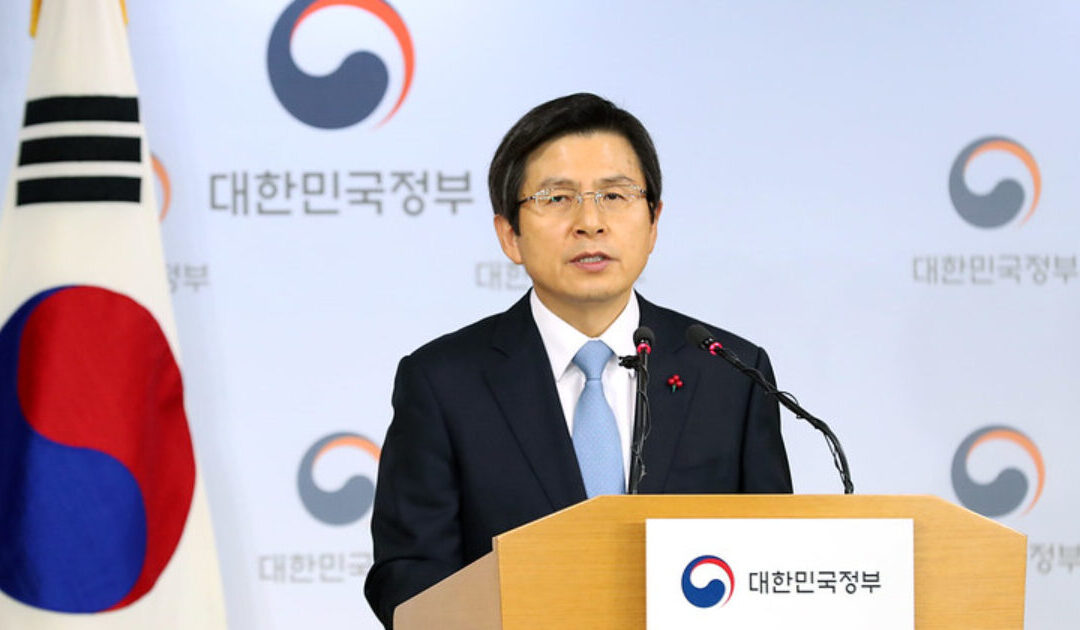
Former Prime Minister Hwang Kyo-ahn (Credit: Republic of Korea)

South Korea, once hailed as a beacon of democracy in Asia, is now carrying out police raids on political opponents who dare raise questions about election fraud under the current pro-Chinese regime.

On August 20, armed police stormed the office of the Free and Innovation Party, led by former Prime Minister Hwang Kyo-ahn, under the guise of investigating so-called “election law violations,” according to our contact in South Korea, Kim Yu-jin.

Hwang, along with hundreds of citizens organized under the Committee for Preventing Election Fraud, had officially registered as election monitors.

They followed legal procedures, participated transparently, and documented what they believed were serious irregularities. Instead of being commended for strengthening democracy, they are now being treated as criminals.

According to reports in the Herald Economy, the National Election Commission (NEC) filed complaints accusing Hwang and his group of “interfering” with elections, claiming they trained monitors on how to disrupt voting, induced invalid ballots, and even held rallies near polling places.

Police used those accusations as the basis for sweeping raids, ransacking offices and seizing materials.

Herald Economy reported:

The Seoul Metropolitan Police Agency conducted a search and seizure at 10 a.m. on the 20th, following allegations of election fraud by a group headed by former Prime Minister Hwang Kyo-ahn.

[Herald Economy = Reporters Lee Yong-kyung and Kim A-rin] Police have confirmed that they are conducting a search and seizure of the offices of the Anti-Corruption and Election Fraud Unit (BFRU) on the 20th, following a complaint filed by the National Election Commission. This group is headed by former Prime Minister Hwang Kyo-ahn, who alleges election fraud.

According to a Herald Economy report on the 20th, the Seoul Metropolitan Police Agency’s Public Crime Investigation Unit has been searching and seizing the BFRU office in Yongsan-gu, Seoul, since 10:00 AM that day.

The National Election Commission (NEC) previously filed a complaint against former Prime Minister Hwang and the BFRU in May, ahead of the 21st presidential election, on charges of establishing a similar organization under the Public Official Election Act and interfering with and obstructing voting and counting.

The NEC alleged that former Prime Minister Hwang and the BFRU trained their members on methods to disrupt voting processes ahead of the presidential election and induced invalid votes. The NEC also alleged that the BFRU organized a rally within 100 meters of a polling station on early voting days, thereby systematically disrupting election operations.

Last June, the police also conducted a search and seizure at the Bubangdae office in Busan.

Kim Yu-jin warned in an exclusive statement to The Gateway Pundit:

“This incident is therefore not an isolated case. It is a clear indication of the erosion of democratic rights in South Korea, where dissenting voices are being systematically silenced through police investigations and prosecutions.
I respectfully and urgently call on the international community to pay close attention to these developments. Freedom of expression and political diversity are foundational to democracy, and what is happening in South Korea is not just a domestic concern but a broader threat to the values of the free world.
In addition, while I am sending this email and engaging in community activities to inform the international community, I live in constant fear that I could be suddenly arrested at any moment.”

The post SHOCKING: South Korean Police RAID Former Prime Minister Hwang Kyo-ahn’s Party Office After He Dared to Question ELECTION FRAUD — Democracy Under Siege appeared first on The Gateway Pundit.

Go to Source
Author: Jim Hᴏft

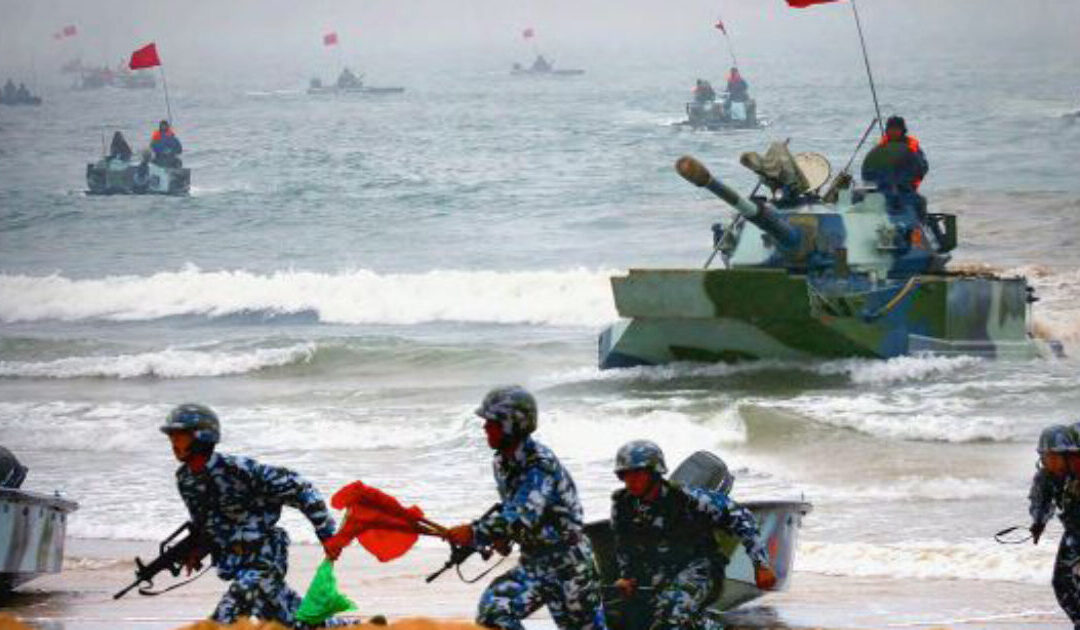
China’s People’s Liberation Army Defense Strategy Against an Amphibious Assault

China’s People’s Liberation Army Defense Strategy Against an Amphibious Assault

China’s People’s Liberation Army Defense Strategy Against an Amphibious Assault
August 20, 2025

Defense Intelligence Agency 2019 China Military Power report


The U.S. Navy conducts freedom of navigation patrols in the Pacific and remains the only force powerful enough to keep global shipping lanes open in the face of Chinese aggression. China claims almost the entire South China Sea, and one key reason it is imperative to prevent China from taking Taiwan is that it would give Beijing control of the Taiwan Strait.

Each year, 44–48% of the world’s container fleet and 88% of the largest ships by tonnage pass through this strait. It is also a vital corridor for energy supplies to Japan and South Korea.

According to a recent U.S. military analysis, China’s People’s Liberation Army (PLA) defense strategy against amphibious assault is a crucial issue for American national security. The concern extends beyond individual operations to how these capabilities fit into China’s broader “anti-access/area-denial” strategy, which is designed to limit U.S. military effectiveness in regional conflicts.

China’s People’s Liberation Army (PLA) sees defense against amphibious assault as part of its broader strategy of active defense. While this posture is strategically disadvantageous, it offers operational benefits in terrain and time, enabling the PLA to weaken enemy forces and create opportunities for counterattack.

Deterrence and anti-access/area-denial (A2/AD) capabilities remain central, with the goal of preventing an assault from ever reaching Chinese shores. Should deterrence fail, the PLA would aim to absorb the initial momentum of an attack, inflict attrition, and then transition back to offensive operations.

This strategy integrates information, cyber, space, and economic actions designed to delegitimize foreign intervention and present China’s response as defensive. The PLA seeks to make any amphibious assault prohibitively costly, employing a layered A2/AD system with naval, air, and missile forces to disrupt and delay adversaries.

The Navy would conduct maneuver defense at sea, supported by coastal missile batteries, surface ships, and even maritime militia to congest sea lanes. The Air Force would attempt to deny adversaries air superiority through aggressive targeting of aircraft and air defense systems, focusing on strikes while enemy forces are still on the ground. Rocket Forces would provide strategic deterrence, targeting airfields and carrier groups with precision missile strikes.

On land, the PLA would avoid static defenses of beachheads and instead position combined arms brigades in depth, using obstacles, mines, and layered defenses to slow and degrade enemy units. Engineers would shape the battlefield with fortifications and kill zones, while joint fires targeted logistics, ammunition, and fuel supplies.

The objective is to preserve combat power early, isolate landing forces, and then counterattack once the adversary has been weakened and disorganized. Rear security would be provided by the People’s Armed Police, guarding against encirclement and airborne insertions.

Ultimately, the counterattack is the decisive phase of PLA defense. By regaining naval and air advantage, or at least targeting enemy logistics and command systems, the PLA hopes to pin assault forces on unfavorable terrain and then destroy them in detail. However, analysts highlight vulnerabilities in this approach.

The PLA’s reliance on A2/AD is risky if these systems are neutralized, while its limited joint operations experience could hinder coordination in a complex, multidomain fight. Naval limitations, particularly in major surface combatants and experience, may also weaken its ability to slow an attacker before landing.

For U.S. forces, confronting this strategy would mean facing an all-domain defense that integrates missiles, electronic warfare, cyber disruption, and contested logistics from mobilization onward. The PLA’s battlefield transparency and surveillance complicate concealment, while its ability to disrupt communications and navigation adds further challenges.

Despite its growing strength, the PLA’s amphibious defense strategy remains vulnerable to adversaries capable of exploiting gaps in technology, joint integration, and naval effectiveness.

For the US, a central focus is Taiwan. The PLA’s expanding amphibious capabilities directly support Beijing’s stated goal of “reunification.” A successful Chinese assault on Taiwan would not only endanger the island’s survival but also compel U.S. involvement under the Taiwan Relations Act. Such an outcome would fundamentally alter the balance of power in the Indo-Pacific.

This threat extends beyond Taiwan itself. China’s amphibious capabilities are aimed at breaking through the “First Island Chain,” the strategic arc running from Japan through Taiwan to the Philippines. If Beijing were able to control this chain, it could project power deep into the Western Pacific while restricting U.S. naval access to key allies and vital trade routes.

The implications for America’s alliance network are profound. U.S. security guarantees to Japan, South Korea, the Philippines, and Australia depend on credible deterrence against Chinese aggression. Enhanced amphibious forces could embolden Beijing to pressure these allies, or at least create doubt about the reliability of U.S. defense commitments, weakening America’s regional influence.

The economic stakes are also immense. Approximately $3.4 trillion in annual trade passes through the South China Sea, much of it vital to both the U.S. and global economies. If China gained control over islands and sea lanes through amphibious operations, freedom of navigation would be at risk, with serious consequences for global supply chains and economic stability.

At the same time, the PLA’s investment in amphibious warfare is part of a broader modernization effort that challenges long-standing U.S. technological and operational advantages. New landing craft, expanded marine forces, and updated doctrines reflect China’s determination to build the capabilities necessary not just for Taiwan, but for wider regional dominance.

The post China’s People’s Liberation Army Defense Strategy Against an Amphibious Assault appeared first on The Gateway Pundit.
Go to Source
Author: Antonio Graceffo

AfD Candidate Excluded from German Mayoral Election with Court Upholding Decision

AfD Candidate Excluded from German Mayoral Election with Court Upholding Decision

AfD Candidate Excluded from German Mayoral Election with Court Upholding Decision
August 20, 2025

via Facebook

In Germany, the Alternative for Germany (AfD) faced a setback when one of its candidates was excluded from a local mayoral race.

Joachim Paul, an AfD state parliament member, was barred from running for mayor in Ludwigshafen am Rhein, a city of about 170,000 residents, due to concerns raised by opponents about his adherence to Germany’s constitutional principles.

An administrative court recently upheld this decision, limiting Paul’s options to a post-election challenge.

On August 5, 2025, Ludwigshafen’s election committee voted 6-1 to exclude Paul, citing doubts over his loyalty to the free democratic order outlined in Germany’s Basic Law.

The committee, composed of representatives from globalist center-left and center-right parties like the Social Democrats (SPD), Christian Democrats (CDU), and Free Democrats (FDP), but excluding the AfD, based its ruling on an 11-page report from the state’s interior ministry.

This report, requested by current mayor Jutta Steinruck, detailed Paul’s alleged connections to right-wing figures and statements deemed problematic.

The Neustadt an der Weinstraße administrative court dismissed Paul’s urgent appeal on August 18, 2025, ruling it inadmissible and stating that electoral stability takes precedence, with reviews only possible after the September 21 vote.

The judges found no clear error in the committee’s decision and noted that a full probe into the claims would be too time-consuming before the election.

They referenced Paul’s inclusion in the 2024 Rhineland-Palatinate constitutional protection report and a prior court confirmation of the AfD as a suspected extremist group.

Allegations included Paul’s 2022 article praising J.R.R. Tolkien’s “The Lord of the Rings” for conservative themes like defending homeland and culture, which authorities viewed as promoting ethnic nationalism.

Other points involved his use of “remigration” for non-integrated migrants, a meeting with Austrian activist Martin Sellner, and descriptions of violence as linked to “young, male, oriental” individuals.

Paul’s office in Koblenz was described as a hub for right-wing events, including those with “New Right” affiliations.

Paul, a 55-year-old former teacher and AfD member since 2013, rejected the accusations, claiming they stem from political bias and that non-left views are unfairly labeled extremist.

He suggested the exclusion was premeditated to sideline the AfD, which polled strongly in Ludwigshafen during recent federal elections. In interviews, Paul vowed to continue fighting legally and encouraged supporters to rally.

In comments given to The Gateway Pundit, AfD MP Paul said:

“State elections are scheduled for March next year, and the SPD—after 35 years in power—fears losing its grip. Ludwigshafen is the largest city in the Palatinate, a working-class stronghold where we’ve long been the dominant force. The state SPD and its allies in the city, together with the SPD interior minister and the head of domestic intelligence, have been plotting this for some time to rob us of an almost certain victory.

They don’t care that voters are growing desperate, left with no real choice. Now there are two SPD candidates, a left-leaning CDU man, and a woman from a splinter leftist party. Their motto seems to be: ‘Power at all costs!’ I never thought such a thing was possible. But my strong performance as a district council candidate in the Ludwigshafen area clearly rattled those in charge.”

He has two weeks to appeal to the Rhineland-Palatinate Higher Administrative Court, with AfD officials like Sebastian Münzenmaier criticizing the move as an attack on democracy.

Legal experts, including constitutional law professor Volker Boehme-Neßler, have questioned the evidence’s sufficiency and the process’s fairness.

Rhineland-Palatinate, governed by an SPD-Greens-FDP coalition, has seen heightened scrutiny of the AfD, with Interior Minister Michael Ebling announcing no further hiring of AfD members as civil servants.

This case follows similar exclusions of AfD candidates elsewhere, such as in North Rhine-Westphalia. Over 120,000 voters are eligible for the Ludwigshafen election, where four other candidates have been approved.

The post AfD Candidate Excluded from German Mayoral Election with Court Upholding Decision appeared first on The Gateway Pundit.

Go to Source
Author: Robert Semonsen